What to Do When a Water Heater Floods
Emergency Answer
If the water heater is leaking, shut off its water supply if you can reach the valve safely and keep clear of wet electrical or gas equipment. If the heater was submerged or exposed to floodwater from another source, do not relight, energize, or operate it until it has been inspected. Determine whether the heater caused the flood or was damaged by it before deciding on repair, replacement, or drying.
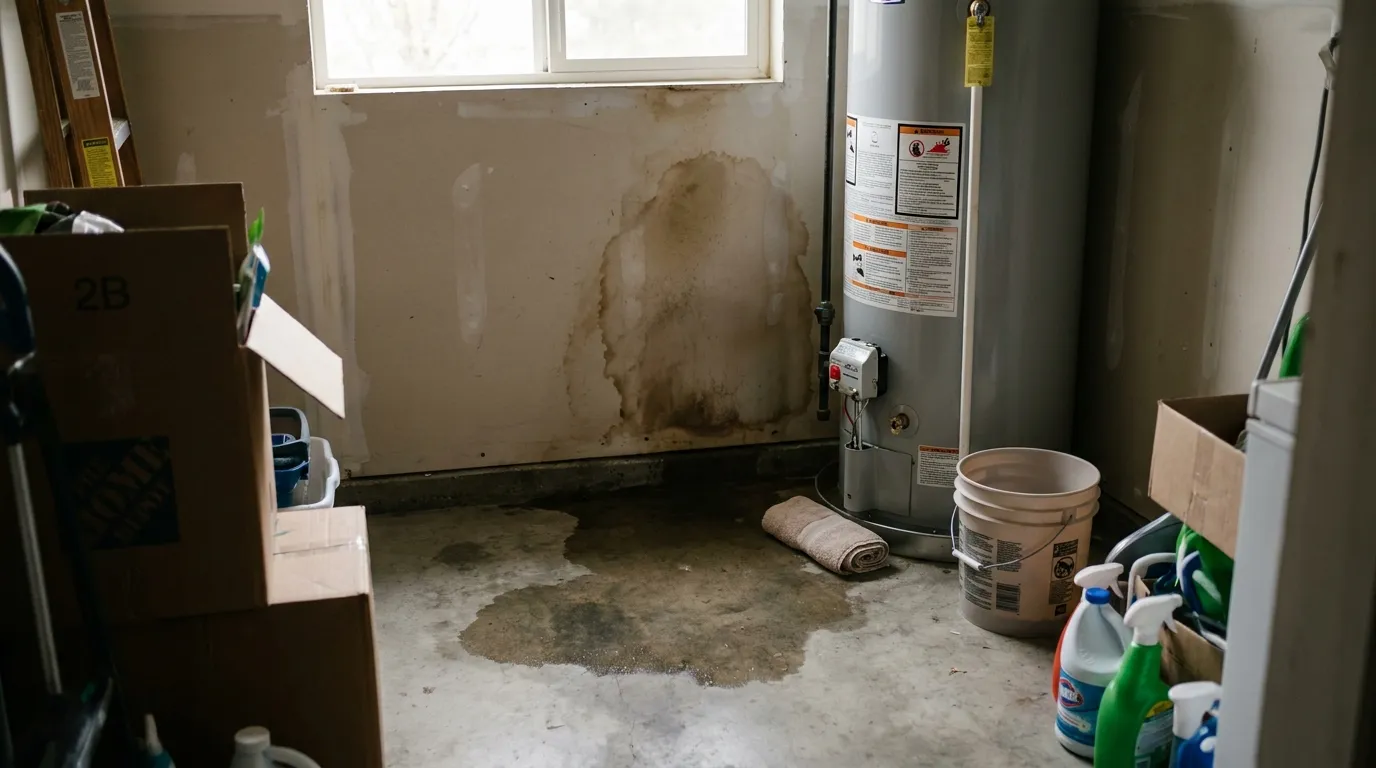
First Actions (To Do Immediately)
- 1 Determine whether the water heater caused the leak (tank rupture or valve fail) or was submerged by external basement flooding.
- 2 Shut off the cold water supply valve above the heater if it is leaking and the valve is safely accessible.
- 3 Keep clear of wet gas controls, burners, electrical panels, and heating elements near standing water.
- 4 Do not attempt to relight the pilot, restore power, or operate a water heater that was submerged or exposed to standing water.
- 5 Photograph the heater, serial plate, connections, water level lines, and surrounding damage for insurance and repair assessment.
- 6 Call a licensed plumber or technician to inspect the unit and a restoration specialist to extract standing water and dry structural materials.
DO NOT DO
- ✕ Do not attempt to relight a gas pilot or turn on electrical breakers to a wet or submerged water heater.
- ✕ Do not touch electrical controls, wires, or gas valves while standing in water.
- ✕ Do not assume a water heater is safe to operate simply because the surrounding floor has dried.
- ✕ Do not attempt to patch a ruptured or heavily corroded water heater tank as a permanent repair.
How the Water May Be Spreading
What This Usually Means
A flooded water heater involves one of two distinct situations: either the water heater itself failed and caused the flooding, or external floodwater from another source surrounded the appliance. When the heater fails, pressurized water continues pouring out until the supply valve is shut off. When external floodwater submerges a heater, delicate gas valves, thermostats, insulation, and electrical components absorb water, rendering the unit unsafe to operate without professional inspection.
Why Hidden Moisture Matters
Hidden moisture matters because it provides the perfect environment for secondary damage. Mold can begin developing within 24 to 48 hours in dark, damp spaces like wall cavities, under subfloors, or inside HVAC ducts. Additionally, prolonged exposure to moisture degrades structural integrity—wood rots, drywall crumbles, and metal fixtures can corrode. The longer the materials stay wet, the more complex and expensive the restoration process becomes.
How Serious Is It?
A flooded water heater carries high risk due to the combination of large water volumes, fuel gas lines, and high-voltage electrical circuits. Immediate shutoff of supply water and power is required, followed by professional inspection before any attempt to operate or drain the appliance.
What You Can Check Safely
- Listen for dripping or running water: Can help identify active leaks behind walls or above ceilings.
- Check the water meter: If all fixtures are off but the meter is spinning, you have an active plumbing leak.
- Inspect adjacent rooms: Water travels horizontally along floor joists and subfloors.
What Professionals Look For
- Thermal imaging (infrared) to detect temperature anomalies indicating hidden moisture.
- Moisture meters to test the exact saturation levels of wood, drywall, and masonry.
- Borescope inspections to look inside wall cavities without removing large sections of drywall.
- Hygrometers to measure the relative humidity of the affected rooms and evaluate the risk of condensation and mold.
Severity Matrix: Critical
Life-safety hazard. Evacuate if necessary. Requires complete professional mitigation and potential reconstruction.
Who to Call
Licensed Plumber or Water Damage Restoration Professional
Insurance & Documentation
- Documentation and claim context only; no coverage conclusion
Frequently Asked Questions
What should I do if my water heater is leaking and flooding the basement?
Shut off the cold water supply valve located on the pipe leading into the top of the heater if safe. If the valve is seized or submerged, turn off the home's main water supply, turn off fuel or power to the unit, and call a plumber.
Can I turn a water heater back on after it gets wet?
No. Operating a wet or submerged water heater creates electrical shock, explosion, or fire hazards. Internal insulation, gas control valves, and electrical thermostats retain moisture and require professional inspection or replacement.
Does a flooded water heater always need to be replaced?
Not always, but submerged gas control valves, electrical components, and saturated insulation frequently require replacement or complete unit replacement per manufacturer guidelines and local plumbing codes.
Get Professional Help Now
Connect with a local water damage expert immediately.