Should You Pop a Water Bubble in the Wall? No—Do This
Emergency Answer
No—do not peel, slash, or blindly pop a water bubble in your wall. Slashing it tears the delicate wet paper facing off the sheetrock, turning a small patch into a full drywall replacement.
- Electrical Safety: If the bubble is within 3 feet of an electrical outlet, switch, or sconce, shut off that room's circuit breaker first.
- Catch the Water: Press a bucket and towels firmly against the baseboard directly below the bubble.
- Controlled Relief: Only if the bubble is sagging heavily or expanding, pierce the lowest edge with a single sewing pin to let water drain cleanly into the bucket.
- Stop the Source: Locate the plumbing leak, roof line, or upstairs drain causing the moisture before patching.
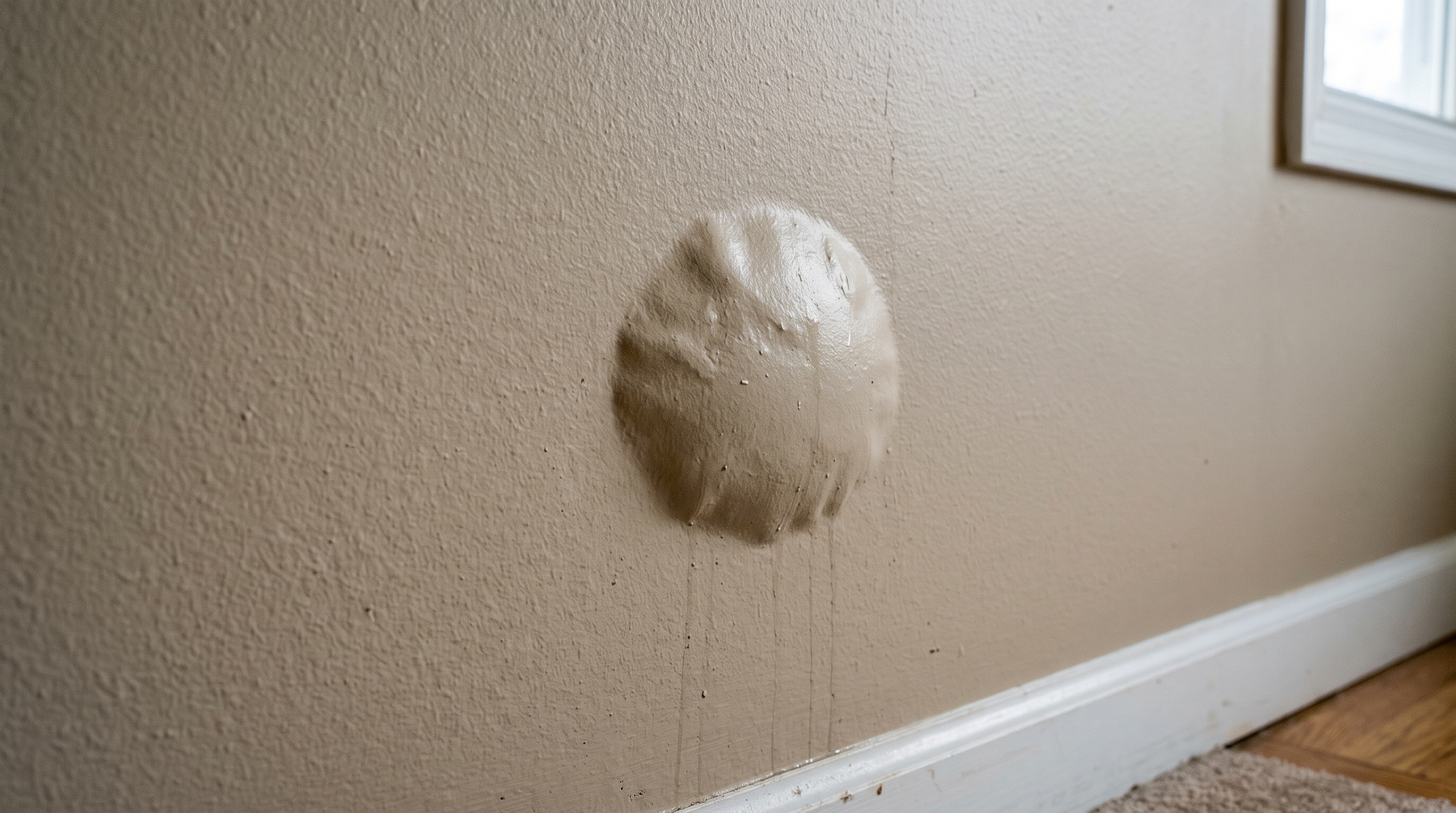
First Actions (To Do Immediately)
- 1 Turn off the main water supply if the source is active and safe to reach.
- 2 Document the damage thoroughly with clear photos and videos before any cleanup.
- 3 Move valuable or easily damaged items out of the affected area if safe to do so.
DO NOT DO
- ✕ Do not assume the damage will dry on its own without professional assessment.
How the Water May Be Spreading
CROSS-SECTION: WATER TRAPPED BEHIND WALL PAINT
Why Paint Bubbles on Walls (And Why Slashing It Causes More Damage)
Latex paint is elastic and creates a waterproof seal over your walls. When a plumbing pipe leaks inside a wall cavity or roof runoff seeps down the exterior framing, water saturates the porous gypsum drywall and pools behind the paint, stretching it out like a balloon.
If you cut the bubble open with a utility knife or peel it with your fingers, the wet paper facing of the drywall tears away with the paint. This turns an easily patched pinhole into a large divot that requires cutting out and replacing the entire sheetrock section.
4 Steps to Safely Drain and Diagnose
- Kill Power to the Circuit (If Outlets are Nearby): Wet sheetrock conducts electricity. If the bubble is situated above or near switches, wall receptacles, or baseboard heaters, switch off the breaker before touching the area.
- Set Up Containment: Place towels against the baseboard and place a wide bucket or plastic bin directly under the bubble.
- Controlled Relief with a Single Pinprick: Use a clean sewing needle or safety pin to make one tiny puncture at the lowest point of the bubble. Press a clean dry sponge gently against the sides of the bubble to push remaining water toward the hole.
- Identify the Hidden Leak Source:
- Directly above the bubble: Check for upstairs bathroom drains, toilets, or supply line fittings.
- Exterior wall: Look for failing window flashing, cracked caulking, or clogged gutter downspouts saturating the exterior sheathing.
- Interior partitions: Check for leaking refrigerator water lines, laundry supply hoses, or HVAC condensation lines running through the stud bay.
What You Can Check Safely
- Listen for dripping or running water: Can help identify active leaks behind walls or above ceilings.
- Check the water meter: If all fixtures are off but the meter is spinning, you have an active plumbing leak.
- Inspect adjacent rooms: Water travels horizontally along floor joists and subfloors.
What Professionals Look For
- Thermal imaging (infrared) to detect temperature anomalies indicating hidden moisture.
- Moisture meters to test the exact saturation levels of wood, drywall, and masonry.
- Borescope inspections to look inside wall cavities without removing large sections of drywall.
- Hygrometers to measure the relative humidity of the affected rooms and evaluate the risk of condensation and mold.
Severity Matrix: Medium
Requires professional extraction equipment and dehumidifiers. Moderate risk of mold and structural damage.
Who to Call
Licensed Plumber or Water Damage Restoration Professional
Insurance & Documentation
- Documentation and claim context only; no coverage conclusion
Frequently Asked Questions
What is the first thing I should do for should i pop water bubble in wall?
Ensure personal safety by turning off power if electrical hazards are present, then shut off the water source if possible.
Should I call a professional for should i pop water bubble in wall?
Yes, professional assessment is recommended to identify hidden moisture and ensure proper drying to prevent mold.
Get Professional Help Now
Connect with a local water damage expert immediately.