Water Leaking From Ceiling Vent - Diagnosis & Action Guide
Emergency Answer
Keep people away from the affected area, stop the source if safe, and document the damage before cleanup. Water in vents, ceiling cavities, flooring, sewage, or electrical areas needs professional assessment.
First Actions (To Do Immediately)
- 1 Turn off the main water supply if the source is active and safe to reach.
- 2 Document the damage thoroughly with clear photos and videos before any cleanup.
- 3 Move valuable or easily damaged items out of the affected area if safe to do so.
DO NOT DO
- ✕ Do not assume the damage will dry on its own without professional assessment.
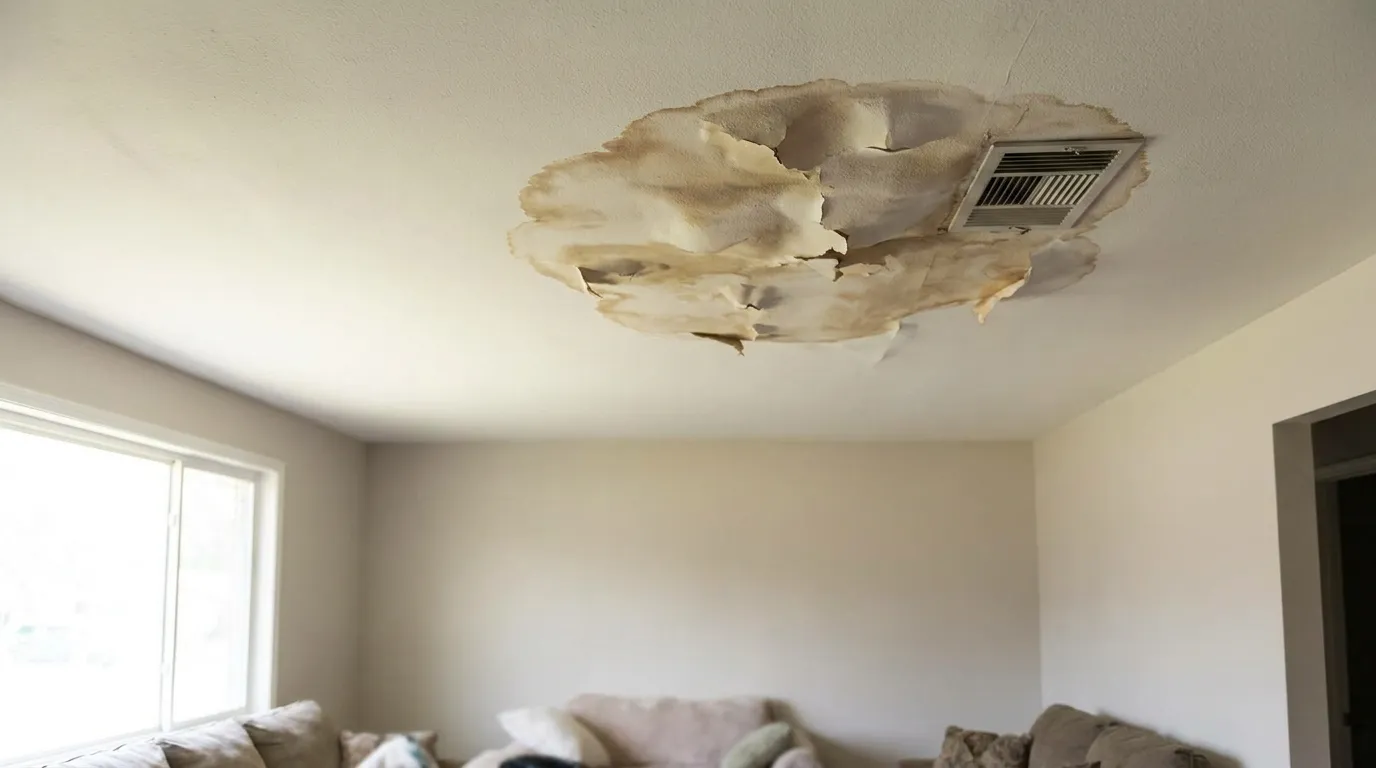
- ✕ Do not stand under sagging drywall, bubbling ceilings, or compromised structural elements.
- ✕ Do not pop or puncture water bubbles in ceilings as this may cause sudden collapse and injury.
How the Water May Be Spreading
CROSS-SECTION: CEILING WATER BLISTER & CONTROLLED DRAINAGE
What This Usually Means
Visible water damage usually indicates that moisture has moved beyond the immediate surface. Depending on the materials involved, water can wick upward, seep downward, or pool in hidden cavities. Identifying and stopping the source is critical because the visible damage may represent only part of the moisture footprint.
Why Hidden Moisture Matters
Hidden moisture matters because it provides the perfect environment for secondary damage. Mold can begin developing within 24 to 48 hours in dark, damp spaces like wall cavities, under subfloors, or inside HVAC ducts. Additionally, prolonged exposure to moisture degrades structural integrity—wood rots, drywall crumbles, and metal fixtures can corrode. The longer the materials stay wet, the more complex and expensive the restoration process becomes.
How Serious Is It?
Seriousness depends on the water source, duration, affected materials, and extent of migration. Clean water is generally easier to mitigate when caught early, while contaminated water introduces additional health precautions. Prompt source control and drying reduce the chance of hidden material damage.
What You Can Check Safely
- Listen for dripping or running water: Can help identify active leaks behind walls or above ceilings.
- Check the water meter: If all fixtures are off but the meter is spinning, you have an active plumbing leak.
- Inspect adjacent rooms: Water travels horizontally along floor joists and subfloors.
What Professionals Look For
- Thermal imaging (infrared) to detect temperature anomalies indicating hidden moisture.
- Moisture meters to test the exact saturation levels of wood, drywall, and masonry.
- Borescope inspections to look inside wall cavities without removing large sections of drywall.
- Hygrometers to measure the relative humidity of the affected rooms and evaluate the risk of condensation and mold.
Severity Matrix: High
Requires immediate professional intervention. High risk of structural weakening, electrical hazards, and mold.
Who to Call
Licensed Plumber or Water Damage Restoration Professional
Insurance & Documentation
- Documentation and claim context only; no coverage conclusion
Frequently Asked Questions
What is the first thing I should do for water leaking from ceiling vent?
Ensure personal safety by turning off power if electrical hazards are present, then shut off the water source if possible.
Should I call a professional for water leaking from ceiling vent?
Yes, professional assessment is recommended to identify hidden moisture and ensure proper drying to prevent mold.
Get Professional Help Now
Connect with a local water damage expert immediately.