Squishy Floor in Front of Dishwasher? Subfloor Rot & Hidden Leak Triage
Emergency Answer
A soft, spongy, or squishy kitchen floor directly in front of a dishwasher indicates subfloor structural decay from a chronic hidden leak. Typical culprits include hairline cracks in the water inlet valve, leaking circulation pump seals, or degraded bottom door gaskets. When water seeps beneath kitchen flooring over weeks, OSB or plywood subflooring delaminates and loses structural shear strength.
- Confirm Active Seepage: Remove the lower kickplate/toe-kick and shine a light under the dishwasher basin while running a short fill-and-drain cycle to confirm active seepage.
- Inspect From Below: If you have an accessible basement or crawlspace, inspect the subfloor and ceiling joists directly below the kitchen sink and dishwasher for mold or wood rot.
- Keep Weight Off the Soft Spot: Avoid walking on the compromised section to prevent subfloor punch-through or floor joist cracking.
- Contact Your Insurer Carefully: Sudden leaks are covered, but slow leaks over 14 days require invoking hidden decay policy clauses.
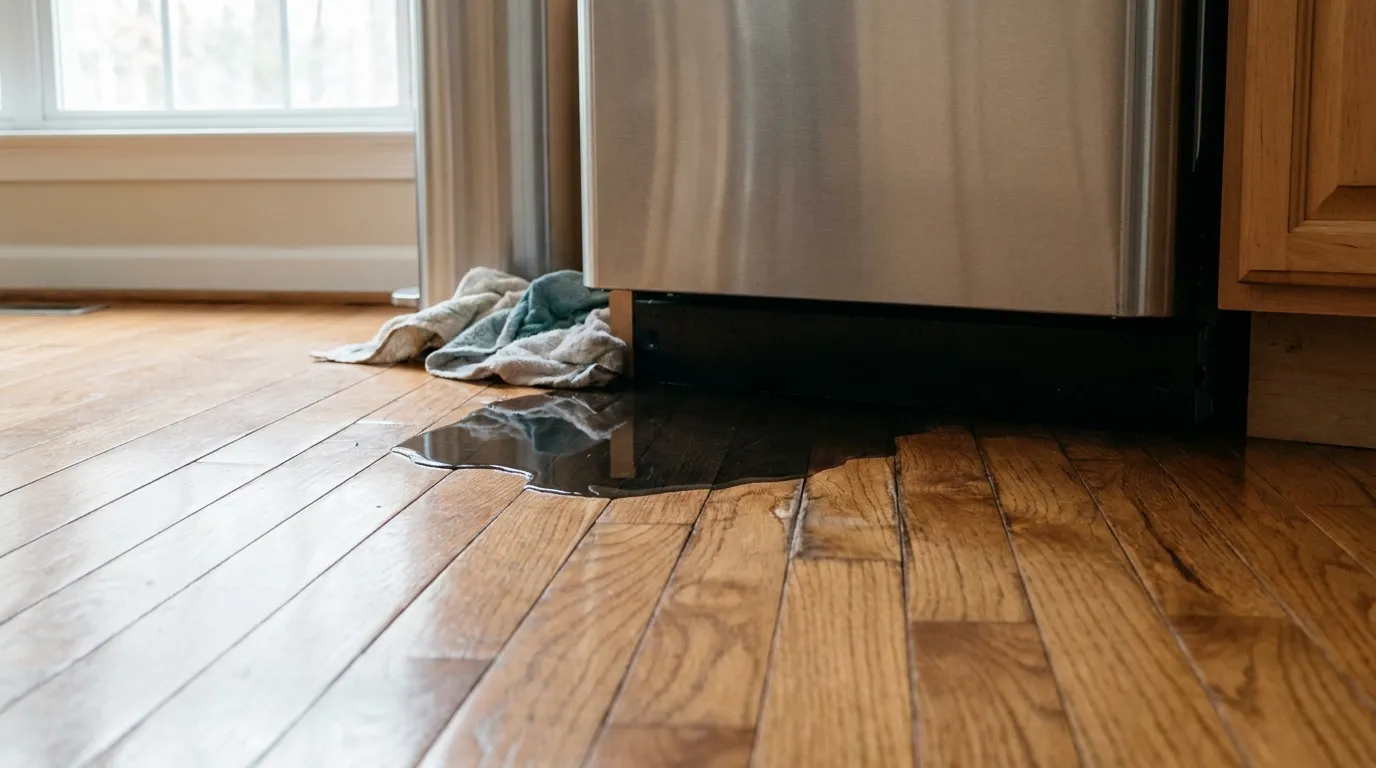
First Actions (To Do Immediately)
- 1 Shut off the hot water supply valve to the dishwasher located under the kitchen sink.
- 2 Remove the lower kickplate/toe-kick screws to visually inspect the subfloor beneath the appliance tub.
- 3 Avoid stepping with concentrated weight on the spongy floor area to prevent punching through weakened subflooring.
- 4 Check the basement or crawlspace ceiling directly beneath the dishwasher for wet joists or active hanging drips.
DO NOT DO
- ✕ Do not install new surface flooring over soft subflooring without cutting out and replacing rotted plywood back to the floor joists.
- ✕ Do not guess or estimate for your insurance adjuster how long the floor has felt soft; report only what you observed and when you discovered it, because timeline statements decide whether the standard 14-day continuous seepage exclusion applies.
- ✕ Do not place heavy kitchen carts or step with concentrated heel pressure on spongy floor areas.
How the Water May Be Spreading
CUTAWAY: SLOW DISHWASHER LEAK TO SQUISHY, BOUNCING SUBFLOOR
What This Usually Means
A squishy kitchen floor indicates advanced subfloor delamination caused by a chronic, slow leak behind or beneath the dishwasher. Moisture degrades the resin binders in OSB or rots plywood layers, destroying structural load capacity. The floor will not harden once dry; compromised decking must be cut out and patched back to the joists.
Why Hidden Moisture Matters
Hidden moisture matters because it provides the perfect environment for secondary damage. Mold can begin developing within 24 to 48 hours in dark, damp spaces like wall cavities, under subfloors, or inside HVAC ducts. Additionally, prolonged exposure to moisture degrades structural integrity—wood rots, drywall crumbles, and metal fixtures can corrode. The longer the materials stay wet, the more complex and expensive the restoration process becomes.
How Serious Is It?
Seriousness depends on the water source, duration, affected materials, and extent of migration. Clean water is generally easier to mitigate when caught early, while contaminated water introduces additional health precautions. Prompt source control and drying reduce the chance of hidden material damage.
What You Can Check Safely
- Listen for dripping or running water: Can help identify active leaks behind walls or above ceilings.
- Check the water meter: If all fixtures are off but the meter is spinning, you have an active plumbing leak.
- Inspect adjacent rooms: Water travels horizontally along floor joists and subfloors.
What Professionals Look For
- Thermal imaging (infrared) to detect temperature anomalies indicating hidden moisture.
- Moisture meters to test the exact saturation levels of wood, drywall, and masonry.
- Borescope inspections to look inside wall cavities without removing large sections of drywall.
- Hygrometers to measure the relative humidity of the affected rooms and evaluate the risk of condensation and mold.
Severity Matrix: Medium
Requires professional extraction equipment and dehumidifiers. Moderate risk of mold and structural damage.
Who to Call
Licensed Plumber or Water Damage Restoration Professional
Insurance & Documentation
- Documentation and claim context only; no coverage conclusion
Frequently Asked Questions
Will a squishy subfloor harden back up once it dries?
No. Once moisture degrades the resin adhesives in OSB or causes wet rot in plywood, the structural wood fibers are permanently broken. The rotted section must be cut out and patched with new exterior-grade plywood.
Does homeowners insurance pay for rotted subfloors from a dishwasher leak?
Standard HO-3 policies exclude gradual leaks you knew about. However, if the leak was entirely concealed behind cabinetry or under flooring and discovered only when the floor softened, it frequently qualifies under hidden continuous seepage provisions.
Get Professional Help Now
Connect with a local water damage expert immediately.