Sump Pump Problems: Call a Plumber, Electrician, or Restoration Pro?
Emergency Answer
Who to call depends on what failed. A pump that hums but won't move water or a stuck float is usually a plumber or sump specialist job, a pump with no power often points to an electrical problem, and water already on the basement floor needs a restoration company to extract and dry it. If water is rising toward outlets or appliances, shut off power to the basement first.
- Check Power First: Confirm the pump is plugged in and the GFCI outlet or breaker has not tripped. Do not reset anything while standing in water.
- Check the Float: Look into the pit with a flashlight; a float stuck against the pit wall or an inlet screen packed with debris keeps the pump from starting.
- Lower the Water: If the pit is close to overflowing, use a backup pump or wet/dry vacuum to buy time until help arrives.
- Call the Right Pro: A plumber or sump specialist for a failed pump, check valve, or discharge line; an electrician for a dead circuit; a restoration company for water on the floor.
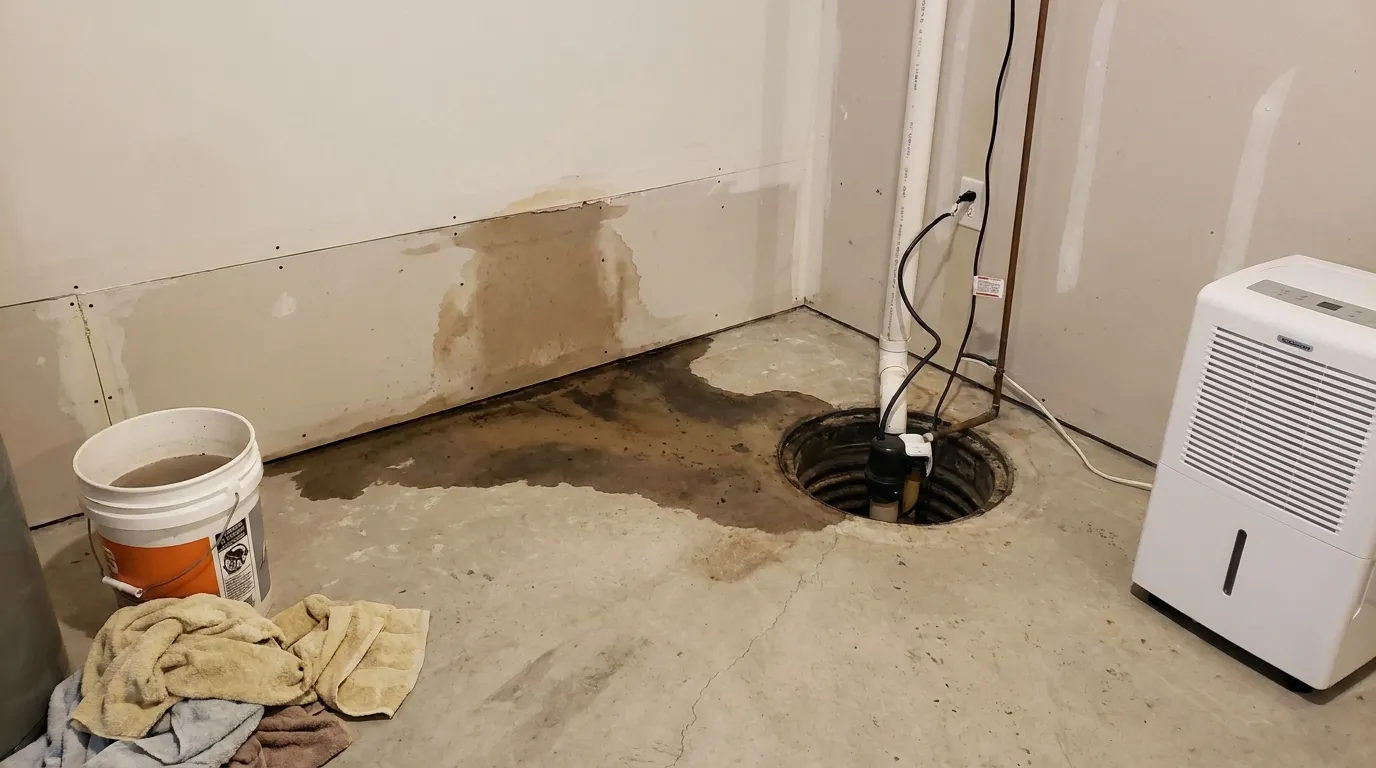
First Actions (To Do Immediately)
- 1 Check whether the pump has power: the GFCI reset button, the breaker, and the plug.
- 2 Look for a stuck float switch, a clogged inlet screen, or a frozen or blocked discharge line outside.
- 3 Move valuables, boxes, and electronics up off the basement floor.
- 4 Shut off power to the basement at the breaker if water is near outlets, the furnace, or the water heater.
DO NOT DO
- ✕ Do not wade into a flooded basement while the power is on.
- ✕ Do not unplug or reset the pump while standing in water.
- ✕ Do not run a gasoline generator or gas-powered pump indoors or in an attached garage.
How the Water May Be Spreading
SUMP PIT ANATOMY & 4 IMMEDIATE FAILURE CHECKS
What This Usually Means
A sump pump problem usually comes down to one of three things: the pump is not getting power, the switch is not telling it to run, or the pump runs but cannot push water out. Each one points to a different trade, and figuring out which you have before you call saves time and a second service visit.
Why Hidden Moisture Matters
Groundwater keeps coming in during heavy rain whether the pump works or not, so a failed pump can let a basement flood within hours. Once water is on the floor, drywall, carpet, and stored items start wicking it up, and mold can begin within 48 hours.
Symptom-to-Pro Guide
- Pump hums but does not pump: Jammed impeller or failed motor. Call a plumber or sump pump specialist.
- Pump runs nonstop: Stuck float, failed check valve, or a pump too small for the inflow. Call a plumber or waterproofing contractor.
- Pump is completely silent: Tripped GFCI or breaker, a bad outlet, or a dead motor. Check power, then call an electrician or plumber.
- Water already on the basement floor: Call a water damage restoration company to extract the water and dry the space.
Repair or Replace the Pump?
Pumps older than 7 to 10 years, pumps with burned-out motors, and pumps that cannot keep up during storms are usually replaced. A stuck float, clogged inlet, or bad check valve can often be repaired the same day. A battery backup pump protects against the most common cause of failure: losing power during a storm.
Documenting a Sump Pump Flood
Photograph the pit, the failed pump, the water level, and damaged items before cleanup, and keep the old pump. Many homeowners policies only cover sump overflow damage when a water backup endorsement has been added, so check your declarations page.
What You Can Check Safely
- Listen for dripping or running water: Can help identify active leaks behind walls or above ceilings.
- Check the water meter: If all fixtures are off but the meter is spinning, you have an active plumbing leak.
- Inspect adjacent rooms: Water travels horizontally along floor joists and subfloors.
What Professionals Look For
- Thermal imaging (infrared) to detect temperature anomalies indicating hidden moisture.
- Moisture meters to test the exact saturation levels of wood, drywall, and masonry.
- Borescope inspections to look inside wall cavities without removing large sections of drywall.
- Hygrometers to measure the relative humidity of the affected rooms and evaluate the risk of condensation and mold.
Severity Matrix: Medium
Requires professional extraction equipment and dehumidifiers. Moderate risk of mold and structural damage.
Who to Call
Licensed Plumber or Water Damage Restoration Professional
Insurance & Documentation
- Documentation and claim context only; no coverage conclusion
Frequently Asked Questions
Who do I call when my sump pump stops working?
Start with a plumber or sump pump specialist. If the pump has no power and the breaker or GFCI keeps tripping, an electrician is the better first call. If the basement has already flooded, call a water damage restoration company as well.
Why is my sump pump running but not pumping water?
Common causes are a clogged inlet screen, an air-locked pump, a stuck check valve, or a frozen or crushed discharge line. A plumber can tell which one it is.
How fast can a basement flood if the sump pump fails?
During heavy rain, a pit can fill and overflow in as little as an hour or two. Keep a backup pump or wet/dry vacuum ready and move valuables off the floor.
Get Professional Help Now
Connect with a local water damage expert immediately.