How to Handle a Flooded Basement: What to Do First
Emergency Answer
If your basement is flooded, do not enter standing water if electrical equipment, outlets, appliances, or sewage may be involved. From a safe location, identify the likely source and stop incoming water if it can be done safely. Document the damage before major cleanup, then begin extraction and drying as soon as the area is safe.
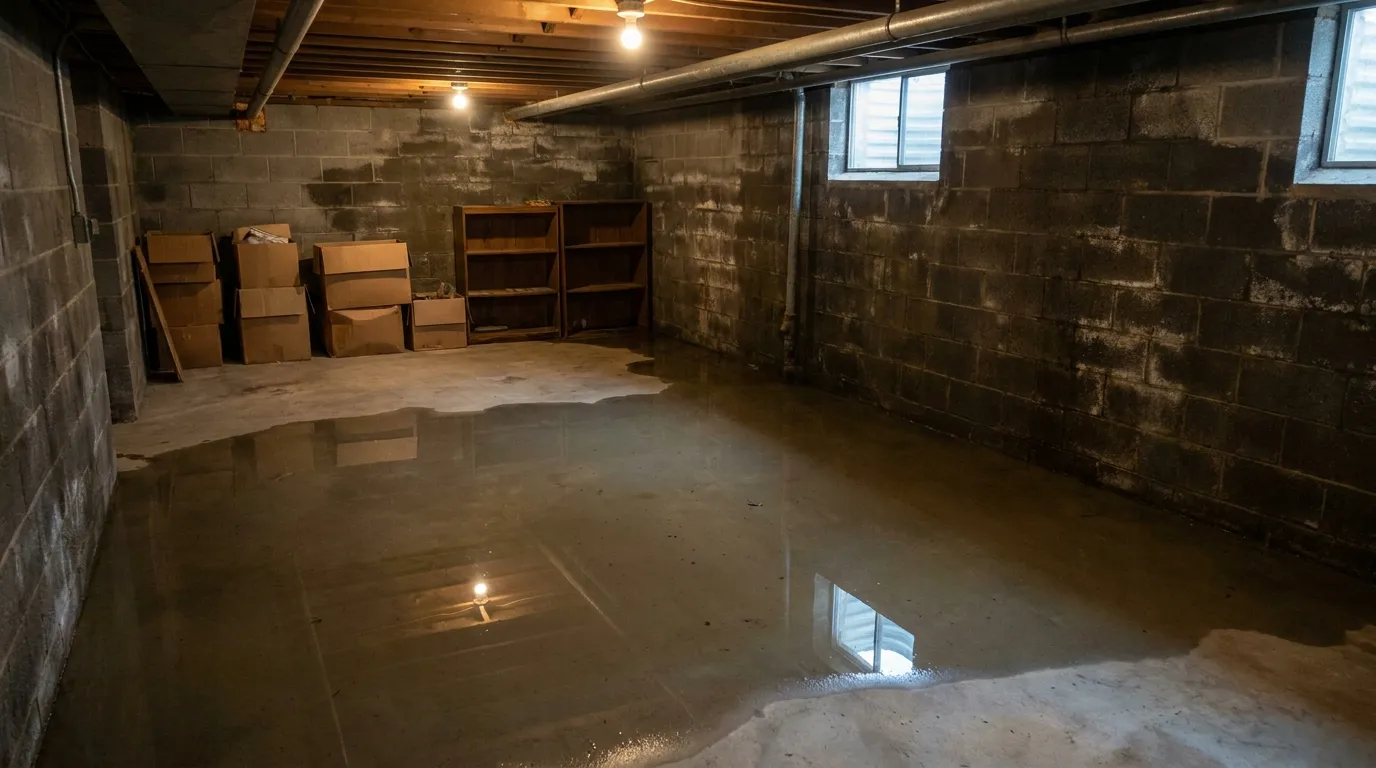
First Actions (To Do Immediately)
- 1 Keep people and pets out of standing water when electrical hazards, submerged equipment, or sewage backups are possible.
- 2 Identify the likely source from a safe vantage point: sump pump failure, sewer or floor drain backup, plumbing leak, water heater failure, or exterior runoff.
- 3 Stop incoming water if the shutoff valve is safely reachable; if not or if the source is external or municipal, call the appropriate plumber, utility, or restoration professional.
- 4 Photograph water depth, affected rooms, the water source, damaged belongings, and visible structural migration before major extraction or disposal.
- 5 Arrange professional water extraction and structural drying promptly once the area is confirmed safe to enter.
DO NOT DO
- ✕ Do not enter standing basement water near electrical panels, outlets, appliances, or submerged wiring.
- ✕ Do not use household vacuums or non-submersible electric pumps to drain standing water.
- ✕ Do not treat sewage backups or unknown drain water as clean water—wear protective gear or call biohazard specialists.
- ✕ Do not assume a surface-dry floor means subfloors, finished walls, or insulation are dry.
How the Water May Be Spreading
What This Usually Means
A flooded basement is a symptom rather than a single distinct problem. The correct response depends entirely on the water source: sump pump failure allows groundwater entry, sewer backups introduce biohazard risks, plumbing leaks release pressurized supply water, and exterior runoff indicates drainage or grading issues. Identifying the source before stepping into the water determines whether you need an electrician, plumber, drain specialist, or water mitigation team.
Why Hidden Moisture Matters
Hidden moisture matters because it provides the perfect environment for secondary damage. Mold can begin developing within 24 to 48 hours in dark, damp spaces like wall cavities, under subfloors, or inside HVAC ducts. Additionally, prolonged exposure to moisture degrades structural integrity—wood rots, drywall crumbles, and metal fixtures can corrode. The longer the materials stay wet, the more complex and expensive the restoration process becomes.
How Serious Is It?
Treat any basement flood as serious due to electrical shock, structural damage, and mold risks. Urgency is critical when water reaches electrical outlets or appliances, when sewage or drain backup is present, or when standing water sits for more than 24 hours. Immediate source control and extraction prevent widespread material ruin.
What You Can Check Safely
- Listen for dripping or running water: Can help identify active leaks behind walls or above ceilings.
- Check the water meter: If all fixtures are off but the meter is spinning, you have an active plumbing leak.
- Inspect adjacent rooms: Water travels horizontally along floor joists and subfloors.
What Professionals Look For
- Thermal imaging (infrared) to detect temperature anomalies indicating hidden moisture.
- Moisture meters to test the exact saturation levels of wood, drywall, and masonry.
- Borescope inspections to look inside wall cavities without removing large sections of drywall.
- Hygrometers to measure the relative humidity of the affected rooms and evaluate the risk of condensation and mold.
Severity Matrix: Medium
Requires professional extraction equipment and dehumidifiers. Moderate risk of mold and structural damage.
Who to Call
Licensed Plumber or Water Damage Restoration Professional
Insurance & Documentation
- Documentation and claim context only; no coverage conclusion
Frequently Asked Questions
What should I do first when my basement floods?
Prioritize personal safety by checking for electrical and contamination hazards from outside the water. If safe, stop incoming water at the valve and call a professional to extract standing water and dry structural materials.
Is it safe to walk through water in a flooded basement?
No. Standing water in a basement can conceal energized electrical outlets, submerged appliances, sharp debris, or toxic raw sewage. Stay out of the water until power is safely verified off and the contamination level is known.
How quickly does a flooded basement need to be dried?
Standing water should be extracted immediately, and structural drying should begin within 24 to 48 hours to prevent mold growth, subfloor warping, drywall deterioration, and rot.
Get Professional Help Now
Connect with a local water damage expert immediately.