Toilet Overflowed Into Floor Vents: Blackwater HVAC Triage & Duct Cleanup
Emergency Answer
Turn the heat or AC off so it doesn't blow contaminated air through the house, close the valve behind the toilet, and vacuum the water out of the metal boot under the grille. Toilet water is treated as contaminated: a rigid metal boot can be cleaned and disinfected, but flex duct, duct board, or insulation it soaked gets replaced. Check the ceiling below for drips, since water often follows the duct.
- Shut Down the HVAC: Shut down your HVAC system immediately at the thermostat and breaker. Running forced air will aerosolize bacteria and circulate airborne pathogens throughout your home.
- Classify the Water: If the bowl contained waste or backed up from the drain stack, it is IICRC Category 3 (Blackwater).
- Extract the Duct Boot: Remove the floor register grate and use a shop-vac to extract standing water sitting inside the vertical duct boot.
- Inspect Duct Construction: Rigid galvanized sheet metal ducts can be decontaminated with EPA-registered antimicrobials and dried with negative air. Flexible spiral-wound ducts or fiberglass ductboard must be cut out and discarded—fiberglass insulation cannot be sanitized once contaminated.
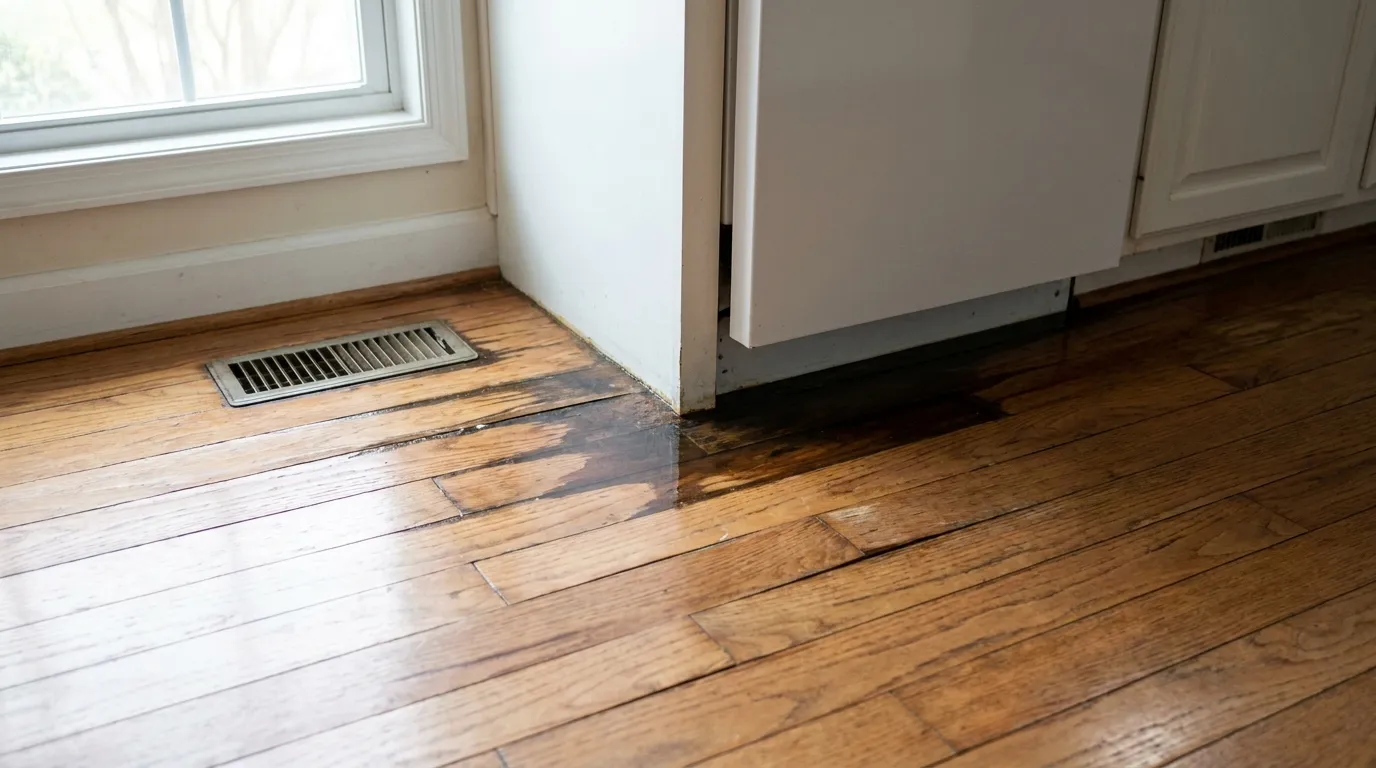
First Actions (To Do Immediately)
- 1 Kill HVAC power immediately at the thermostat and breaker to prevent airborne spore and pathogen circulation.
- 2 Shut off the toilet angle-stop valve by turning the oval handle clockwise until it stops.
- 3 Shop-vac standing water out of the vertical duct boot using a dedicated wet-dry vacuum.
- 4 Cover and seal the floor register opening with 6-mil plastic sheeting and painter's tape to isolate the duct run.
DO NOT DO
- ✕ Do not turn on the furnace fan or AC to 'air out' the ductwork; this circulates contaminated bio-aerosols into every room.
- ✕ Do not attempt to wash or salvage fiberglass-lined flex ducts that absorbed contaminated toilet water.
- ✕ Do not use chlorine bleach inside galvanized metal ducting; bleach rapidly corrodes zinc coatings and produces toxic fumes.
How the Water May Be Spreading
CUTAWAY: TOILET BLACKWATER IN GALVANIZED VS. FLEX DUCTWORK
What This Usually Means
Toilet overflow entering an HVAC register introduces Category 3 (Blackwater) bio-contaminants directly into the home's primary airflow pathway. Rigid galvanized metal duct boots can be decontaminated with EPA-registered antimicrobials, but flexible foil or fiberglass ductboard absorbs pathogens and must be cut out and replaced before running heat or air conditioning.
Why Hidden Moisture Matters
Hidden moisture matters because it provides the perfect environment for secondary damage. Mold can begin developing within 24 to 48 hours in dark, damp spaces like wall cavities, under subfloors, or inside HVAC ducts. Additionally, prolonged exposure to moisture degrades structural integrity—wood rots, drywall crumbles, and metal fixtures can corrode. The longer the materials stay wet, the more complex and expensive the restoration process becomes.
How Serious Is It? Clean Bowl Water vs. Waste
Restoration standards (IICRC S500) treat an overflow of bowl water with no waste as Category 2 (gray water) and one with waste as Category 3 (black water). Gray water left standing for a day or two is treated as Category 3 too. The category decides what can be cleaned: a rigid metal boot can be cleaned and disinfected either way, while flex duct, duct board, and insulation that got Category 3 water are replaced.
Where the Water Went: Boot, Duct, Subfloor and Ceiling Below
The register boot under the grille catches the first water. More than a cup or two runs along the duct and leaks out at the joints onto the subfloor, insulation, and, on an upper floor, the ceiling below. Check under the bathroom: a stain or drip at a ceiling register or light downstairs means the water followed the duct. In a basement or crawlspace, look at the duct run below the bathroom for drips. See water leaking from a ceiling vent.
Cleaning a Toilet-Contaminated Duct: DIY or Pro?
DIY is reasonable only for a small amount of bowl water with no waste, in a rigid metal boot, cleaned up within hours. Wear gloves, vacuum it out, wash with detergent, wipe with an EPA-registered disinfectant, and let it dry with the HVAC off. Call a restoration company if there was waste, the duct is flex or duct board, water ran past the boot, or the ceiling below got wet. Don't mix bleach with other cleaners, and don't fog ducts with ozone. See what happens if water gets into a floor vent.
What You Can Check Safely
- Listen for dripping or running water: Can help identify active leaks behind walls or above ceilings.
- Check the water meter: If all fixtures are off but the meter is spinning, you have an active plumbing leak.
- Inspect adjacent rooms: Water travels horizontally along floor joists and subfloors.
What Professionals Look For
- Thermal imaging (infrared) to detect temperature anomalies indicating hidden moisture.
- Moisture meters to test the exact saturation levels of wood, drywall, and masonry.
- Borescope inspections to look inside wall cavities without removing large sections of drywall.
- Hygrometers to measure the relative humidity of the affected rooms and evaluate the risk of condensation and mold.
Severity Matrix: Medium
Requires professional extraction equipment and dehumidifiers. Moderate risk of mold and structural damage.
Who to Call
Licensed Plumber or Water Damage Restoration Professional
Insurance & Documentation
- Documentation and claim context only; no coverage conclusion
Frequently Asked Questions
Does ductwork need to be replaced if toilet water gets in a vent?
If your duct runs are flexible foil with interior fiberglass insulation, yes—fiberglass cannot be decontaminated. Rigid smooth sheet metal ductwork can usually be sanitized in place by restoration specialists.
Can toilet water in floor vents cause toxic mold?
Yes. Heating ducts provide dark, warm environments rich in settled dust. When organic toilet moisture is introduced, bacterial blooms and fungal colonies can begin multiplying within 24 to 48 hours.
What should you do first when a toilet overflows onto the floor?
Turn the valve behind the toilet clockwise to stop the water. If it won't turn, lift the tank lid and push the flapper down or lift the float. Turn the HVAC off if water is near a floor register, then put on gloves and soak up the water with towels.
Can a clogged vent cause a toilet to overflow?
That's the plumbing vent on the roof, not an HVAC floor vent. A blocked plumbing vent causes gurgling and weak flushes but rarely an overflow by itself. An overflow almost always means a clog in the toilet or the drain line.
Does homeowners insurance cover a toilet overflow into the vents?
A sudden, accidental overflow is usually covered, including cleaning or replacing the ductwork, minus the deductible. Repeated overflows or a slow leak may not be. See [does homeowners insurance cover an overflowing toilet](/insurance/does-homeowners-insurance-cover-damage-from-an-overflowing-toilet/).
Get Professional Help Now
Connect with a local water damage expert immediately.