Washer Leaked Through the Ceiling? Shut It Off and Drain It Safely
Emergency Answer
A washing machine leak upstairs can push gallons through the laundry floor in minutes, soaking the subfloor and pooling on the drywall ceiling below. Stop the water at the washer valves, cut power to the washer and the ceiling below, and keep everyone out from under any sagging or dripping area.
- Close the Washer Valves: Turn both hot and cold supply valves behind the washer clockwise, or shut the home's main water valve if they will not close.
- Unplug and Cut Power: Unplug the washer if the outlet and floor are dry, and switch off the breaker for the ceiling lights in the room below.
- Contain the Ceiling: Put buckets under drips and keep people out from under bulging drywall; relieve a sagging pocket with one small puncture made from the side.
- Find the Failure: Check the fill hoses, the drain hose at the standpipe, the door seal, and the drain pan before running the washer again.
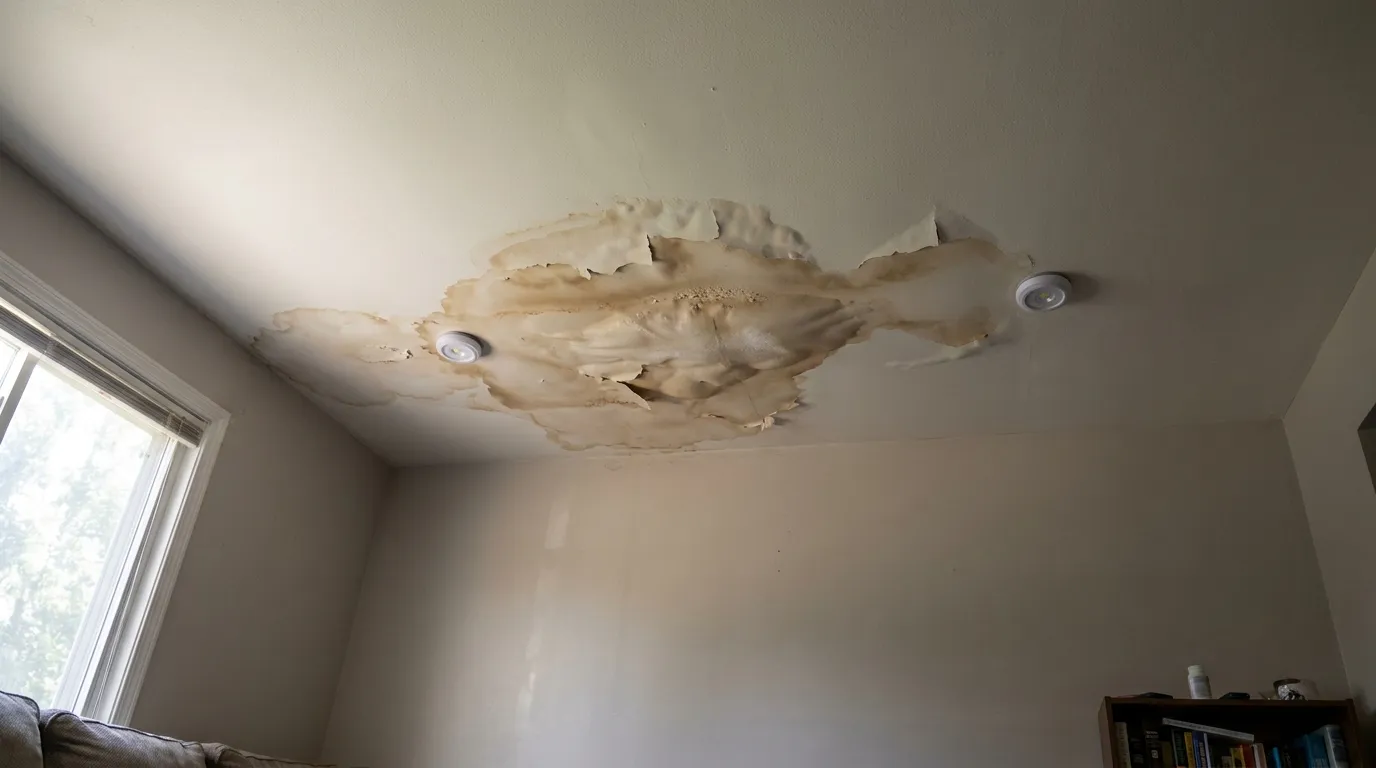
First Actions (To Do Immediately)
- 1 Turn off both washer supply valves or the main water shutoff.
- 2 Turn off the breaker for the ceiling fixtures under the laundry room.
- 3 Mop and wet-vac standing water off the laundry floor so less of it drains through.
- 4 Photograph the laundry area, the failed part, and the ceiling below before cleanup.
DO NOT DO
- ✕ Do not run another load to see where it leaks until the hoses, drain, and pan have been checked.
- ✕ Do not turn on lights or fans in the room below while water is coming through the ceiling.
- ✕ Do not stand under a bulging ceiling to puncture or inspect it.
How the Water May Be Spreading
CROSS-SECTION: CEILING WATER BLISTER & CONTROLLED DRAINAGE
What This Usually Means
Water from the washer has gone through the laundry room flooring and subfloor and is now traveling along the joists above the room below. It collects wherever the ceiling drywall is lowest, which is why the stain or drip may not sit directly under the washer. The subfloor, joists, and any insulation in that cavity are all wet.
Why Hidden Moisture Matters
A burst fill hose can release several gallons a minute, so the hidden cavity can hold far more water than what you see dripping. Wet drywall can sag and fall, ceiling wiring can short, and the subfloor under the washer can rot or grow mold if the cavity is not dried.
Which Washer Part Failed?
- Fill hoses: Bulges, cracks, or a split near the crimped end. Replace rubber hoses with braided stainless hoses.
- Drain hose and standpipe: Water around the standpipe, or a hose that popped out during the drain cycle.
- Door seal or tub: Water under the front of the machine only while it is washing or spinning.
- Drain pan: A pan with no drain line, or a clogged drain line overflowing onto the floor.
Drying the Ceiling Cavity
Small wet spots may dry with fans and a dehumidifier if the drywall stays firm. Larger leaks usually need a section of ceiling opened so the joist bay and insulation can dry, followed by a moisture meter check before patching. Restoration crews can often dry the cavity with less demolition using air movers and injection drying.
Preventing a Repeat
Install braided stainless fill hoses, a drain pan plumbed to a drain, and a leak sensor or automatic shutoff valve behind the washer. Close the supply valves when you will be away for more than a day.
What You Can Check Safely
- Listen for dripping or running water: Can help identify active leaks behind walls or above ceilings.
- Check the water meter: If all fixtures are off but the meter is spinning, you have an active plumbing leak.
- Inspect adjacent rooms: Water travels horizontally along floor joists and subfloors.
What Professionals Look For
- Thermal imaging (infrared) to detect temperature anomalies indicating hidden moisture.
- Moisture meters to test the exact saturation levels of wood, drywall, and masonry.
- Borescope inspections to look inside wall cavities without removing large sections of drywall.
- Hygrometers to measure the relative humidity of the affected rooms and evaluate the risk of condensation and mold.
Severity Matrix: High
Requires immediate professional intervention. High risk of structural weakening, electrical hazards, and mold.
Who to Call
Licensed Plumber or Water Damage Restoration Professional
Insurance & Documentation
- Documentation and claim context only; no coverage conclusion
Frequently Asked Questions
What do I do if my washer leaks through the ceiling?
Close the washer supply valves or the main water valve, turn off power to the ceiling lights below, catch the water with buckets, and keep people out from under any sagging area. Then find which washer part failed.
Is a ceiling soaked by a washer leak dangerous?
It can be. Wet drywall can sag and fall, and water near ceiling lights can cause electrical shorts. Treat a bulging or dripping ceiling as unsafe until it has been drained and dried.
Will the ceiling dry on its own?
The surface may look dry within days, but the joist bay and insulation above usually stay wet much longer. Check with a moisture meter or open the ceiling before patching and painting.
Get Professional Help Now
Connect with a local water damage expert immediately.