Water-Damaged Ceiling Light? Cut the Breaker First, Then Do This
Emergency Answer
Water inside a ceiling light fixture is an electrical emergency. Turn off the breaker for that circuit before touching the switch, the fixture, or anything wet, keep people out from under it, and have the fixture and junction box inspected before the power goes back on.
- Shut Off the Breaker: Turn off the circuit at the panel. Leave the wall switch alone; flipping a wet switch can arc.
- Stop the Water Above: Find the source upstairs or in the attic and close the fixture, appliance, or main water valve.
- Catch the Drip: Place a bucket under the fixture from the side and keep everyone clear of the area below it.
- Leave the Fixture Alone: Do not remove the globe or trim to drain it; an electrician should open the box, dry it, and replace corroded parts.
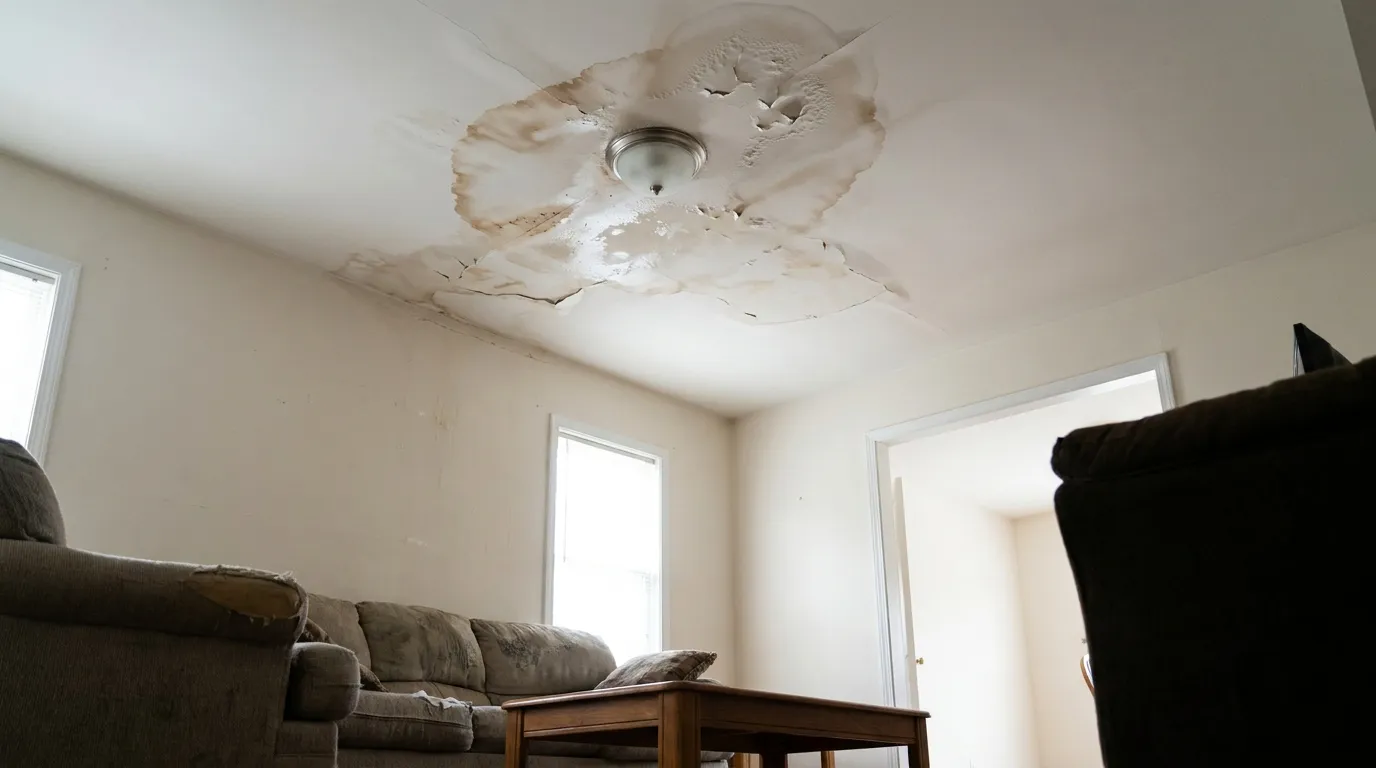
First Actions (To Do Immediately)
- 1 Turn off the breaker for the light circuit; if the panel area is wet or you are unsure which breaker it is, call an electrician.
- 2 Shut off the water source in the room or attic above.
- 3 Place a bucket below the fixture from the side and keep anyone from standing under it.
- 4 Photograph the fixture, the stain, and the water source before cleanup.
DO NOT DO
- ✕ Do not flip the wall switch on or off to test the light.
- ✕ Do not remove a glass shade full of water while the circuit could still be live.
- ✕ Do not restore power once it looks dry without having the box and connections inspected.
How the Water May Be Spreading
ELECTRICAL FIRE HAZARD: WATER INSIDE CEILING JUNCTION BOX
What This Usually Means
Fixture boxes are openings in the ceiling, so water traveling across the top of the drywall drains into them. If the light is filling or dripping, water is inside the electrical box where the wire connections are, and the drywall around the fixture is likely saturated too.
Why Hidden Moisture Matters
Water bridging live connections can cause shocks, short circuits, arcing, and fire. Corroded wire connectors, sockets, and fixture parts can keep heating up after everything dries, which is why the fixture should be inspected rather than simply left to dry out.
Can a Wet Light Fixture Be Saved?
Simple fixtures sometimes only need drying and new wire connectors. Fixtures with corroded sockets, rusted housings, or burn marks should be replaced. Recessed light housings that sat in water are usually replaced along with the surrounding wet drywall.
How to Tell the Ceiling Around the Light Is Still Wet
Brown rings around the canopy, paint bubbling near the fixture, sagging drywall, or a musty smell mean the cavity above is still wet. A moisture meter on the surrounding ceiling confirms it before any patching.
Who to Call
Call a licensed electrician for the fixture and circuit, a plumber or roofer for the leak source, and a water damage restoration company if the ceiling is sagging or wet beyond the area around the light.
What You Can Check Safely
- Listen for dripping or running water: Can help identify active leaks behind walls or above ceilings.
- Check the water meter: If all fixtures are off but the meter is spinning, you have an active plumbing leak.
- Inspect adjacent rooms: Water travels horizontally along floor joists and subfloors.
What Professionals Look For
- Thermal imaging (infrared) to detect temperature anomalies indicating hidden moisture.
- Moisture meters to test the exact saturation levels of wood, drywall, and masonry.
- Borescope inspections to look inside wall cavities without removing large sections of drywall.
- Hygrometers to measure the relative humidity of the affected rooms and evaluate the risk of condensation and mold.
Severity Matrix: Critical
Life-safety hazard. Evacuate if necessary. Requires complete professional mitigation and potential reconstruction.
Who to Call
Licensed Plumber or Water Damage Restoration Professional
Insurance & Documentation
- Documentation and claim context only; no coverage conclusion
Frequently Asked Questions
Is it safe to turn on a light that had water in it?
No. Keep it off at the breaker until an electrician has checked the fixture and box. Water and corrosion can cause shorts or arcing even after the fixture looks dry.
Should I take the light fixture down to drain it?
Not while the circuit could be live. Shut off the breaker and let an electrician open it. If water is pouring out, catch it with a bucket placed from the side.
Can a ceiling light fill with water and catch fire?
Yes. Water inside the box can cause arcing at the wire connections, and that heat can ignite nearby materials. That is why the breaker should be turned off immediately.
Get Professional Help Now
Connect with a local water damage expert immediately.