Toilet Overflowing but Not Clogged? Check the Drain Line and Vent
Emergency Answer
If a plunger finds no clog but the toilet still overflows, the blockage is usually farther down: a partly clogged branch or main drain, a blocked roof vent, or a tank that fills too high. Stop flushing, close the angle stop, and check whether other drains in the house are slow or gurgling.
- Stop the Water: Lift the tank lid and push the flapper down, then close the angle-stop valve behind the toilet.
- Check Other Drains: Run a sink and the tub. If they drain slowly, gurgle, or back up into the tub, the main drain line is partly blocked.
- Check the Tank Level: Water above the overflow tube means the fill valve is overfilling the bowl on every flush.
- Call a Plumber for the Main Line: A main or branch line clog needs a drain snake or camera inspection, not more plunging.
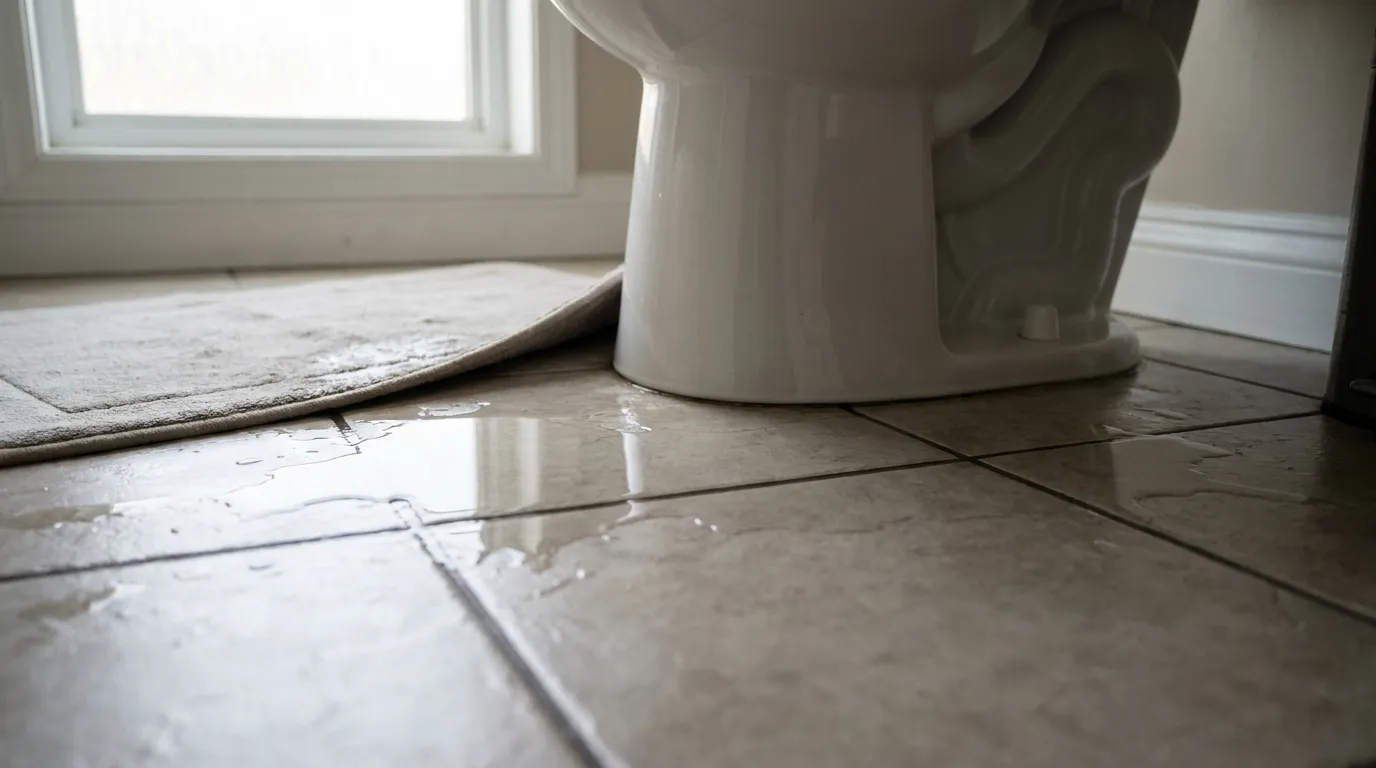
First Actions (To Do Immediately)
- 1 Close the angle-stop valve behind the toilet and stop flushing.
- 2 Run water in nearby sinks and the tub to see whether they drain slowly or gurgle.
- 3 Mop up the overflow and disinfect the floor around the toilet.
- 4 Compare the tank water level with the top of the overflow tube.
DO NOT DO
- ✕ Do not keep flushing to clear it; each flush adds water the drain cannot carry.
- ✕ Do not pour chemical drain cleaner into the toilet; it can damage the bowl and burn whoever opens the line next.
- ✕ Do not use the lowest drains in the house while the main line is backing up; they overflow first.
How the Water May Be Spreading
MECHANICS OF A BASEMENT DRAIN BACKUP
What This Usually Means
A toilet can only drain as fast as the pipe after it. When a branch or main line is partly blocked, the toilet's trap clears but the water has nowhere to go, so the bowl rises after each flush. If tubs and sinks also drain slowly or gurgle, the problem is in the shared line, not the toilet.
Why Hidden Moisture Matters
A partly clogged main drain tends to get worse and can eventually push sewage back up through the lowest drain in the house, usually a basement floor drain or a first-floor toilet or shower. Overflow water from a toilet also contaminates flooring and can soak into the subfloor.
Signs the Main Drain Is the Problem
- Gurgling from sinks or tubs when the toilet is flushed
- Water rising in the tub or shower when the toilet drains
- Several fixtures draining slowly at the same time
- Sewage odor or water at a basement floor drain
Could It Be the Plumbing Vent?
Every drain needs air from the roof vent to flow freely. Leaves, nests, or ice in the vent can slow drainage and cause gurgling and weak flushes. A plumber can check and clear the vent from the roof; do not climb onto the roof in wet or icy weather.
What a Plumber Will Do
Expect a drain snake or auger run through a cleanout, followed by a camera inspection if the clog comes back. Recurring backups can mean tree roots, a sagging pipe, or a damaged sewer line that needs repair.
What You Can Check Safely
- Listen for dripping or running water: Can help identify active leaks behind walls or above ceilings.
- Check the water meter: If all fixtures are off but the meter is spinning, you have an active plumbing leak.
- Inspect adjacent rooms: Water travels horizontally along floor joists and subfloors.
What Professionals Look For
- Thermal imaging (infrared) to detect temperature anomalies indicating hidden moisture.
- Moisture meters to test the exact saturation levels of wood, drywall, and masonry.
- Borescope inspections to look inside wall cavities without removing large sections of drywall.
- Hygrometers to measure the relative humidity of the affected rooms and evaluate the risk of condensation and mold.
Severity Matrix: Medium
Requires professional extraction equipment and dehumidifiers. Moderate risk of mold and structural damage.
Who to Call
Licensed Plumber or Water Damage Restoration Professional
Insurance & Documentation
- Documentation and claim context only; no coverage conclusion
Frequently Asked Questions
Why does my toilet overflow when it isn't clogged?
The clog is usually farther down the drain, in a branch line or the main sewer line. A blocked roof vent or a tank that fills too high can also cause it.
How do I know if my main sewer line is clogged?
Several slow drains, gurgling when the toilet flushes, water backing up into a tub or shower, or water at a basement floor drain all point to a main line clog.
Can a clogged vent make a toilet overflow?
A blocked vent usually causes slow drains and gurgling rather than a full overflow, but combined with a partial clog it can make a toilet back up.
Get Professional Help Now
Connect with a local water damage expert immediately.