Basement Floor Drain Backing Up? Local Clog vs. Main Sewer Line Test
Emergency Answer
If water is coming up through your basement floor drain, immediately stop all water use on upper floors.
- Cease All Fixture Use: Do not flush toilets, run the dishwasher, or drain sinks. Because the basement floor drain is the lowest drain fixture in the house, every gallon drained upstairs will erupt from this drain.
- The 60-Second Test: If the drain only overflows when the basement laundry runs, the clog is in that local secondary branch line. If flushing an upstairs toilet forces water or sewage out of the floor drain, your 4-inch main sewer lateral is blocked.
- Check the Sump Pit: Verify that the floor drain is not incorrectly routed to a failing sump pit.
- Call a Drain Specialist: Main lateral blockages require a motorized mechanical auger or hydro-jetting from the main cleanout.
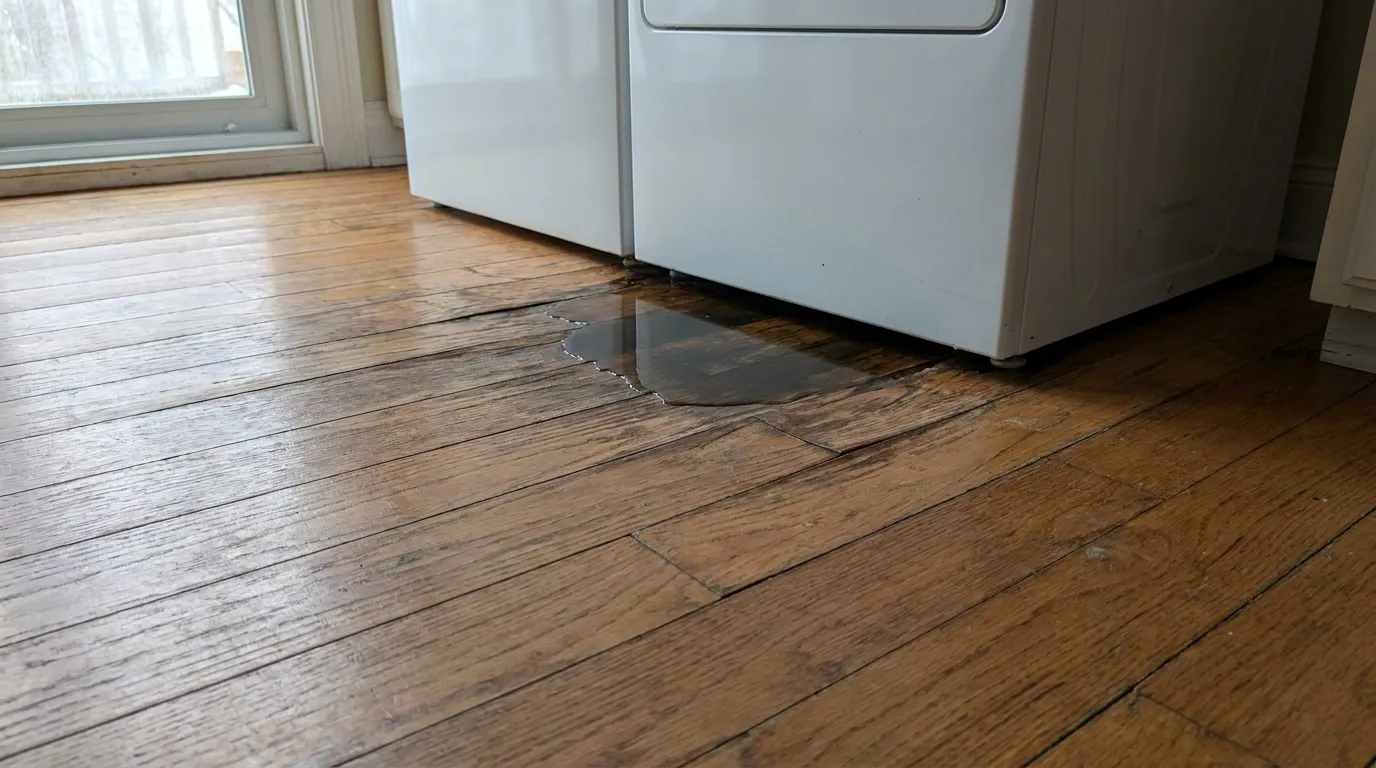
First Actions (To Do Immediately)
- 1 Evacuate the immediate area and prevent children and pets from entering.
- 2 Turn off the main water supply if the source is active and safe to reach.
- 3 Document the damage thoroughly with clear photos and videos before any cleanup.
- 4 Move valuable or easily damaged items out of the affected area if safe to do so.
DO NOT DO
- ✕ Do not assume the damage will dry on its own without professional assessment.
- ✕ Do not attempt to clean up sewage or contaminated water yourself. This requires professional biohazard remediation.
How the Water May Be Spreading
MECHANICS OF A BASEMENT DRAIN BACKUP
The 60-Second Clog Diagnosis
- Isolate Local vs. Main Line:
- Scenario A (Local Branch Clog): If water only backs up when the basement washing machine discharges, but upstairs toilets flush normally without causing bubbling, the restriction is inside the laundry standpipe or the local floor drain P-trap (often hair, soap scum, or lint).
- Scenario B (Main Lateral Blockage): If flushing an upstairs toilet or taking a shower causes gurgling sounds from the basement floor drain followed by sewage or gray water spilling onto the slab, your main 4-inch sewer lateral is blocked. Every fixture upstairs drains straight into the basement until the line is cleared.
- Locate the Main Cleanout: Look for a 4-inch cast-iron or PVC pipe fitting with a raised square plug on the basement floor or near the foundation wall where the waste pipe exits toward the street.
Related Guides
If the backup contains dark contaminated water or toilet waste, follow our backed-up sewage containment guide.
See how State Farm handles sewer backup insurance claims.
Check whether your sump system has failed simultaneously using our sump pump failure checks.
What You Can Check Safely
- Listen for dripping or running water: Can help identify active leaks behind walls or above ceilings.
- Check the water meter: If all fixtures are off but the meter is spinning, you have an active plumbing leak.
- Inspect adjacent rooms: Water travels horizontally along floor joists and subfloors.
What Professionals Look For
- Thermal imaging (infrared) to detect temperature anomalies indicating hidden moisture.
- Moisture meters to test the exact saturation levels of wood, drywall, and masonry.
- Borescope inspections to look inside wall cavities without removing large sections of drywall.
- Hygrometers to measure the relative humidity of the affected rooms and evaluate the risk of condensation and mold.
Severity Matrix: Critical
Life-safety hazard. Evacuate if necessary. Requires complete professional mitigation and potential reconstruction.
Who to Call
Professional Biohazard Remediation Company
Insurance & Documentation
- Documentation and claim context only; no coverage conclusion
Frequently Asked Questions
Why is my basement floor drain backing up?
Usually a clog or tree roots in the main sewer line, a municipal sewer overloaded during heavy rain, or a failed backwater valve. Because the floor drain is the lowest opening in the plumbing, it overflows first.
Is water from a basement floor drain dangerous?
Treat it as contaminated. Floor drain backups often carry sewage and bacteria, so wear gloves and boots, keep children and pets away, and discard porous items it soaked.
How do I stop my floor drain from backing up again?
Have the main line snaked and camera-inspected to clear roots or find damage, and ask a plumber about a backwater valve, which lets water out but blocks sewage from flowing back in.
Get Professional Help Now
Connect with a local water damage expert immediately.