Does Farmers Cover Water Backup or Sump Pump Failure?
Emergency Answer
Only if your policy has Farmers' Water Backup and Sump Overflow add-on (on some policies it's called Sewer & Drain Damage). Without it, sewage pushed into your house from the city sewer and water from a failed sump pump aren't covered. With it, Farmers pays for damage to your home and belongings up to one limit, such as $5,000 or $25,000. A clog in your own pipes that makes a toilet overflow is different: in the Farmers policy we read, the main coverage can pay for that.
- Check your declarations page: Look for Water Backup and Sump Overflow, Sewer & Drain Damage, or a water backup endorsement, and the dollar amount next to it. If none of those is there, you don't have backup coverage.
- Find out where the clog was: Get the plumber to write down whether the blockage was in your own line on your property or in the city's main. In Farmers' policy wording, that decides whether it's a "backup" the main policy can cover or a "reverse flow" only the add-on covers.
- Know the limit before drying starts: On the Farmers endorsement we read, the house and your belongings share one limit. Tell the restoration company the number before they begin.
- Photograph where the water came in: Water up a floor drain or toilet, or over the sump pit, is backup. Water through the walls or under a door is groundwater or surface water, which the add-on doesn't cover.
- Get the coverage decision from the claims department, in writing: Agents have given Farmers customers wrong answers in both directions. Ask the adjuster which coverage each part of the damage is paid under.
First Actions (To Do Immediately)
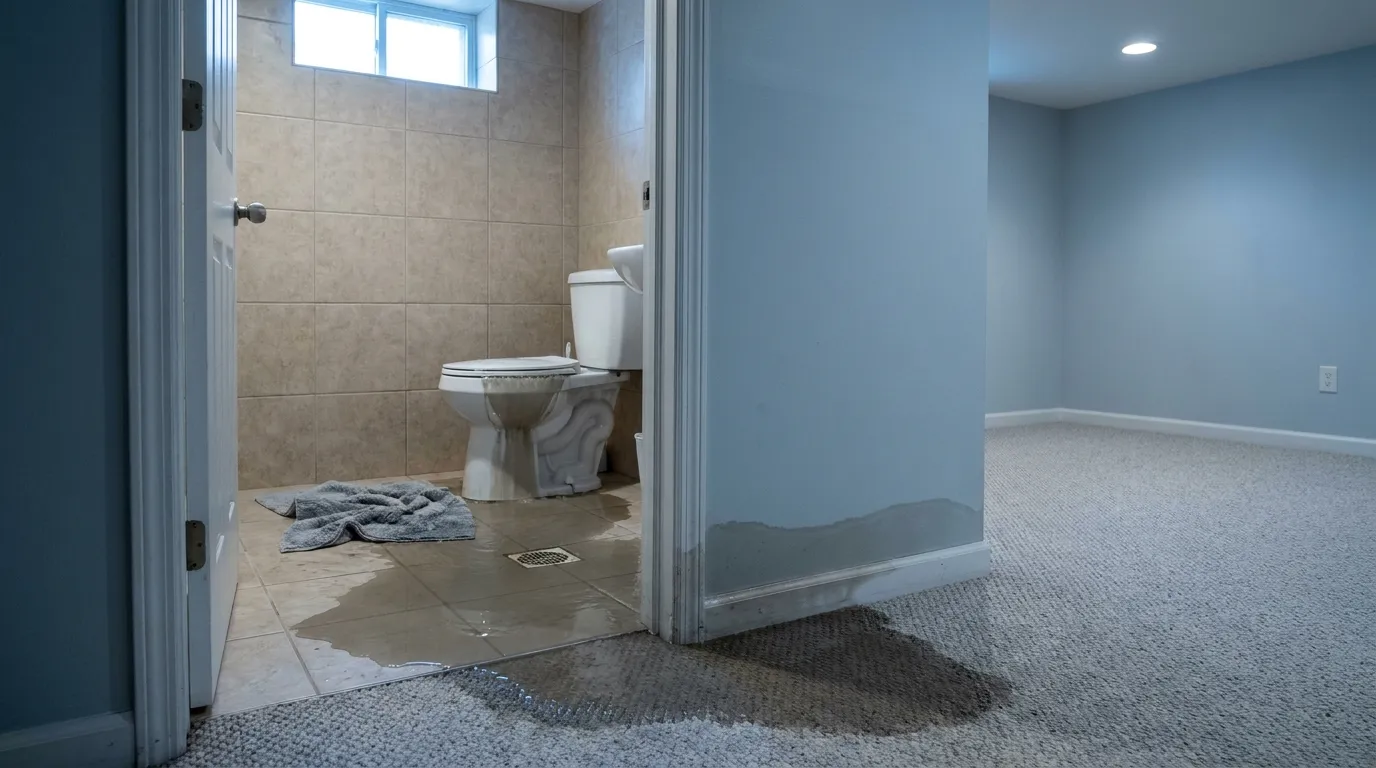
- 1 If sewage came up a drain, keep children and pets out, and stop running water and flushing until the line is cleared. Every drain in the house empties into the same pipe.
- 2 If water is near outlets, the furnace or the water heater, shut off power to the basement from a dry spot.
- 3 If the sump pump stopped, check its plug, the outlet's GFCI button and the breaker. Get a backup or rented pump running if the pit is still filling.
- 4 Take photos and video before cleanup: the water line on the walls, the drain or pit the water came from, the pump, and everything that got wet.
- 5 Have a plumber clear the line and write down what caused it and where the blockage was. Ask for the camera video if they scope the line.
- 6 Report the loss to Farmers' claims line, not only your agent, and ask which limit applies before you sign the restoration company's contract.
- 7 If you live in a condo with a shared sewer line, tell Farmers. It told one condo owner it would go after the HOA.
DO NOT DO
- ✕ Do not let the restoration company run up a bill before you know your limit. Drying and tear-out can use most of a $5,000 limit.
- ✕ Do not take your agent's word as the coverage decision. One Farmers agent said belongings were outside the backup limit; the policy wording said otherwise. Another said a slab leak wasn't covered at all; adjusters said the damage usually is.
- ✕ Do not call it a "flood" if water came up a drain or over the sump pit, and do not call water through the walls a backup. Describe exactly where the water entered.
- ✕ Do not throw anything away before the adjuster has inspected it or approved photos. Set it aside.
- ✕ Do not file a claim just to ask whether the pump or the sewer pipe is covered. Ask your agent first; a denied claim still goes on your record.
- ✕ Do not wait to dry. Wet drywall, carpet and insulation should be dried within 24 to 48 hours.
What Pays for What When Water Comes Up in the Basement
What a Farmers Policy Says Without the Add-On
Farmers' own Pennsylvania page lists "sewer backups and sump pump overflow" among the things standard homeowners insurance "typically doesn't cover," and offers Water Backup and Sump Overflow as an add-on.
The Farmers Smart Plan Home policy we read (the form Farmers filed in Nevada) shows how that works. Its water exclusion lists "a water - reverse flow" and "water from any source whatsoever, on or below the surface of the ground." Sewage pushed back from the city's sewer falls under the first. A sump pump that stops and lets groundwater rise into the basement falls under the second. Other states and newer Farmers policies use different forms, so ask for your form number.
"Reverse Flow" or "Backup": Where the Clog Was Decides It
Farmers' policy draws a line most policies don't. It defines "water - reverse flow" as water flowing "from off premises" backward through a sewer, septic, drain or sump pump system. Then it adds: "A stoppage on the premises within any of the foregoing which stops the flow of water with a resulting backing up of the water is a backup and is not a water reverse flow."
- City sewer surcharges in a storm and sewage comes up your floor drain: that's reverse flow. It's excluded unless you have the backup add-on.
- Roots or a clog in your own line on your property, and the toilet or tub overflows: that's a backup, not reverse flow. The main policy covers "a sudden, abrupt and accidental discharge, eruption, overflow or release of water, other than a water reverse flow" from a plumbing system. That includes contamination in the water, "except fungi."
- The add-on isn't meant to take that loss. One Farmers customer's backup endorsement says it "does not apply to any claim" the main policy's limited water coverage would pay. If the clog was on your property, ask Farmers to pay it under the main coverage, not the smaller backup limit.
- Two catches in the main coverage: it doesn't pay for a backup from "a stoppage of a septic system because the system is full," and it won't pay for slow leaks, "regardless of the volume of water involved."
- Why the plumber's note matters: in a thread where the insurer wasn't named, a homeowner with sewer backup coverage on the policy was denied for not having a "reverse flow water damage backup endorsement," because "the problem occurred beyond your fence line." The basement had 6 inches of sewage and the furnace and water heater alone cost $8,000. Their own agent "didn't even know that 'optional add on' even existed." Ask your Farmers agent whether your backup coverage includes water coming from the city's side.
What the Water Backup and Sump Overflow Add-On Covers
Farmers' coverage page: "Water backup and sump overflow coverage can help with repair costs when water enters your house because of a sewer or drain backup or a sump pump overflow." Its example: "A sudden storm overfills the sewer outside your home and the overflow surges into your basement, damaging the flooring, hot water heater and tools."
- The wording on a real policy: one Farmers customer's endorsement covers "sudden and accidental discharges, eruptions, overflows or releases of water from a plumbing system, sump, sump pump or sump pump well, or any system designed to remove or drain sub surface water away from the foundation area."
- It goes by several names. Farmers' site calls it Water Backup and Sump Overflow. One customer's declarations page listed "Sewer & Drain Damage - Extended Contents" up to $5,000.
- What it doesn't cover, per a Farmers agency's guide: flooding; damage from wear and tear or poorly maintained pipes; the "cost of repairing or replacing a broken sewer lateral or malfunctioning sump pump"; and surface or sub-surface water that seeps in during a big rainstorm.
- Not every policy can get it. Farmers says its options "aren't available with every policy," and availability depends on where you live.
One Limit for the House and Everything in It
A Farmers customer had a $25,000 backup limit when the sump pump failed after rain and filled the basement with standing water. They were replacing carpet upstairs, so everything they owned was in the basement. Their agent said belongings were a separate pot of money. The adjuster said everything was capped at $25,000.
The endorsement sides with the adjuster: "Aggregate coverage limit $25,000 per loss. This is not additional insurance and does not increase the stated limits or any other limit of insurance."
- Drying, tear-out, rebuilding and belongings all come out of the one limit on that endorsement.
- If your declarations page shows a separate line such as "Extended Contents," ask your agent in writing how much of the limit is for belongings.
- What's enough: limits commonly start at $5,000. If you have a finished basement or store things down there, add up drying (often several thousand dollars on its own), drywall, flooring, and the contents. That's the number to ask for.
Pump, Sewer Line, Slab or Flood: Which Coverage Pays
The backup add-on pays for water damage inside the house. The other things that go wrong are covered separately, capped, or not covered. The diagram above shows the four main ones.
- The pump itself: the add-on pays for the water damage, not a "malfunctioning sump pump." Plan on replacing it yourself.
- A collapsed or sagging sewer line: a Farmers customer with a collapsed line had $5,000 of Sewer & Drain Damage and $1,000 of Limited Plumbing System Repair, and commenters said the line takes a separate service line endorsement. The replacement was about $5,000. Another commenter: backup coverage may pay for access and resulting damage, "but the line is the cheap part. The access can be costly." Another Farmers customer's plumbers said a sag in the line under the slab was probably wear and tear and "most likely not covered"; a commenter said only a service line endorsement might pay.
- Cutting into the slab: $2,000. In the Farmers form we read, costs "to tunnel under, cut into or tear out and replace any part or portion of a foundation; slab; concrete floor" are limited to "$2,000 per loss event." A Texas adjuster wrote that most Farmers policies limit slab access "to 2k unless you have an endorsement."
- Water through the walls or along the ground: groundwater and surface water are excluded even with the add-on. A former Farmers agent: "I had a claim like that denied when I was a Farmers agent. Garage drain became clogged and the water went thru the garage into the basement."
What Happened in the Farmers Claims We Read
- Disputed: the $25,000 sump claim, where agent and adjuster disagreed on whether belongings shared the limit.
- Wrong answer from the agent: a Texas Farmers agent said a slab leak in a 22-year-old house wasn't covered "because the house is more than 20 years old." The plumber said they "work with Farmer's on this issue all the time, and that it's normally covered." Former adjusters in the thread said the pipe isn't covered but the damage to the house is, and to report it to the claims department directly.
- Condo, shared sewer line: the main line shared with other units backed up into a Farmers customer's condo. Farmers said "they will go after the HOA" and sent an adjuster. A commenter's advice: "Don't throw anything away until your insurance company has the ability to inspect."
- Not covered: the collapsed sewer line (no service line endorsement), and the clogged garage drain (water came in from outside).
- Coverage taken away: a Virginia homeowner insured through a Farmers group plan at work got a renewal notice listing "No more water coverage from sewer backup," along with other cuts. The letter said, in effect, that Farmers should have told them earlier.
- The pattern: where the water came from and which add-ons were on the policy decided every case. With few outcomes posted, the clearest lesson is to get answers from the claims department in writing, not from the agent.
Read Your Renewal Notice
Backup coverage can disappear at renewal. The Virginia homeowner above was on a group policy offered as an employee benefit, with no local agent; questions went to a call center. The renewal letter's "reduction in coverage" list also changed coverage for seepage and appliance leaks and removed actual cash value settlement.
If a renewal notice says "reduction in coverage," find the water lines in it. If backup coverage is gone, ask whether you can add it back, or shop for a policy that has it before the next storm.
Before You File: Your Claims History
- Every water claim is recorded, even one that pays $0. A commenter on a Farmers sewer line thread: "Ask your agent if it's covered before you file a claim. Oddly enough it counts against you if you file a claim and it's denied."
- If the damage is small, get a repair estimate before filing and compare it to your deductible. Ask your agent general questions rather than calling the claims line. Calls about an actual loss can be logged as a claim.
- If the damage is big, report it right away. Waiting can cost you coverage.
- How Farmers rates on claims: Farmers scored 691 in J.D. Power's 2026 property claims study, 10th of 15 insurers and below the 702 average.
Keep It From Happening Again
Test the sump pump at least once a year by pouring water into the pit, and add a battery backup for storms that knock out power. Check that the discharge line outside isn't crushed or frozen, and that it empties well away from the foundation. If the city sewer has backed up into your house before, ask a plumber about a backwater valve on your sewer line.
Farmers says a whole-house leak detector and water shutoff such as Moen's Flo may earn a discount, and that "in some locations, they're even required when Farmers insures homes with older plumbing." A shutoff stops burst pipes and appliance leaks; it won't stop a sewer backup or a sump failure.
If water is coming up through a floor drain right now, start with what to do when a basement floor drain backs up. For a pump that just quit, see signs your sump pump failed. For how other insurers handle this, see does insurance cover sump pump failure, does home insurance cover sewer backups, Travelers water backup coverage, and Liberty Mutual water backup coverage.
Sources
- Farmers Insurance, Homeowners Insurance Coverages, Farmers Flex Personal Home options, Pennsylvania Home Insurance and Home Leak Detection and Shutoff, read November 2026.
- Farmers Insurance Exchange, Smart Plan Home Policy, Nevada, form 56-5640 1st Ed. 6-15, filed with the Nevada Division of Insurance: policy form (PDF). Definition 41 (water - reverse flow), Limited Water Coverage, water exclusion.
- Farmers Insurance - Keith Wagner Agency, What Is Water Backup Coverage?, June 2026.
- J.D. Power, 2026 U.S. Property Claims Satisfaction Study.
- U.S. EPA, A Brief Guide to Mold, Moisture, and Your Home: dry water-damaged areas within 24 to 48 hours.
- About 10 Reddit threads on Farmers backup, sewer line and slab claims, plus one where the insurer wasn't named (r/Insurance, r/homeowners, r/HomeImprovement), read by Emergency Damage Pros in November 2026. US posts only. They show what happens in practice, not legal outcomes.
Documentation Checklist
- Take wide-angle photos of the entire affected room.
- Take close-up photos of the specific damage point.
- Save the broken part or pipe if a plumber replaces it.
- Keep all receipts for emergency repairs and mitigation.
- Do not throw away damaged property until the adjuster has seen it.
Severity Matrix: Medium
Requires professional extraction equipment and dehumidifiers. Moderate risk of mold and structural damage.
Who to Call
Licensed Plumber or Water Damage Restoration Professional
Insurance & Documentation
- Coverage depends on policy, cause, timing, exclusions, endorsements, and documentation
- Coverage depends entirely on your specific policy details, the exact cause of the damage, timing, exclusions, endorsements, and your documentation.
- This information is educational and does not constitute a guarantee of coverage or a promise that your claim will be approved.
Frequently Asked Questions
Does Farmers cover sump pump failure?
Only with the Water Backup and Sump Overflow add-on, which covers water damage from a sump pump overflow up to its limit. Without it, in the Farmers form we read, water that rises in the basement when the pump stops is excluded as groundwater. The add-on doesn't pay to replace the pump.
Does Farmers cover sewer backup?
Sewage pushed back from the city sewer is covered only with the backup add-on. A clog in your own line on your property is different: in the Farmers policy we read, an overflow from that "is a backup and is not a water reverse flow," and the main policy can cover it as a sudden discharge from the plumbing.
What is "water - reverse flow" in a Farmers policy?
Water flowing from off your property backward through a sewer, septic, drain or sump pump system, opposite to the way it's designed to flow. A city sewer backing up into your house is the common example. It's excluded unless you have the backup add-on.
How much water backup coverage does Farmers offer?
It varies by state and policy. The Farmers policies we saw had $5,000 and $25,000 limits, and a Farmers agency says limits commonly start at $5,000. On one Farmers endorsement, the limit was an "aggregate coverage limit" per loss for the house and belongings together.
Does Farmers water backup coverage include personal property?
On the Farmers endorsement we read, belongings are covered but share the one limit with the house: "Aggregate coverage limit $25,000 per loss. This is not additional insurance." One customer's agent said otherwise. Ask for the answer in writing with the policy wording.
Does Farmers pay to replace a collapsed sewer line?
Not under the backup add-on. Replacing the line takes a service line endorsement. In the Farmers form we read, cutting into a slab or foundation to reach a pipe is limited to $2,000 per loss.
Does Farmers water backup cover flooding or groundwater?
No. Flood, surface water, and water seeping in through the walls are excluded even with the add-on. That needs a flood policy.
Is Farmers good at paying water claims?
Farmers scored 691 in J.D. Power's 2026 property claims study, 10th of 15 insurers and below the 702 average. In the claims we read, the disputes were over which coverage applied and how far the limit went, and agents sometimes gave wrong answers.
Get Professional Help Now
Connect with a local water damage expert immediately.