Backed-Up Sewage in Basement? Immediate Containment & Cleanup Guide
Emergency Answer
Raw sewage backing up into a basement is an IICRC Category 3 biohazard containing harmful bacteria and parasites.
- Halt Household Water Usage Immediately: Stop all upper-level toilets, sinks, and showers to prevent adding volume to the basement spill.
- Cut Electrical Breakers: If standing blackwater reaches extension cords, bottom outlets, or water heater controls, switch off the basement circuit breakers from a dry location before walking on the slab.
- Relieve Head Pressure (Yard Cleanout): If sewage is violently bubbling from the floor drain, carefully loosen the threaded cap on the exterior yard cleanout to divert waste onto the lawn rather than your basement.
- Tear-Out Rules: Drywall, baseboards, carpet padding, and cardboard boxes saturated by sewage cannot be sanitized and must be removed and discarded.
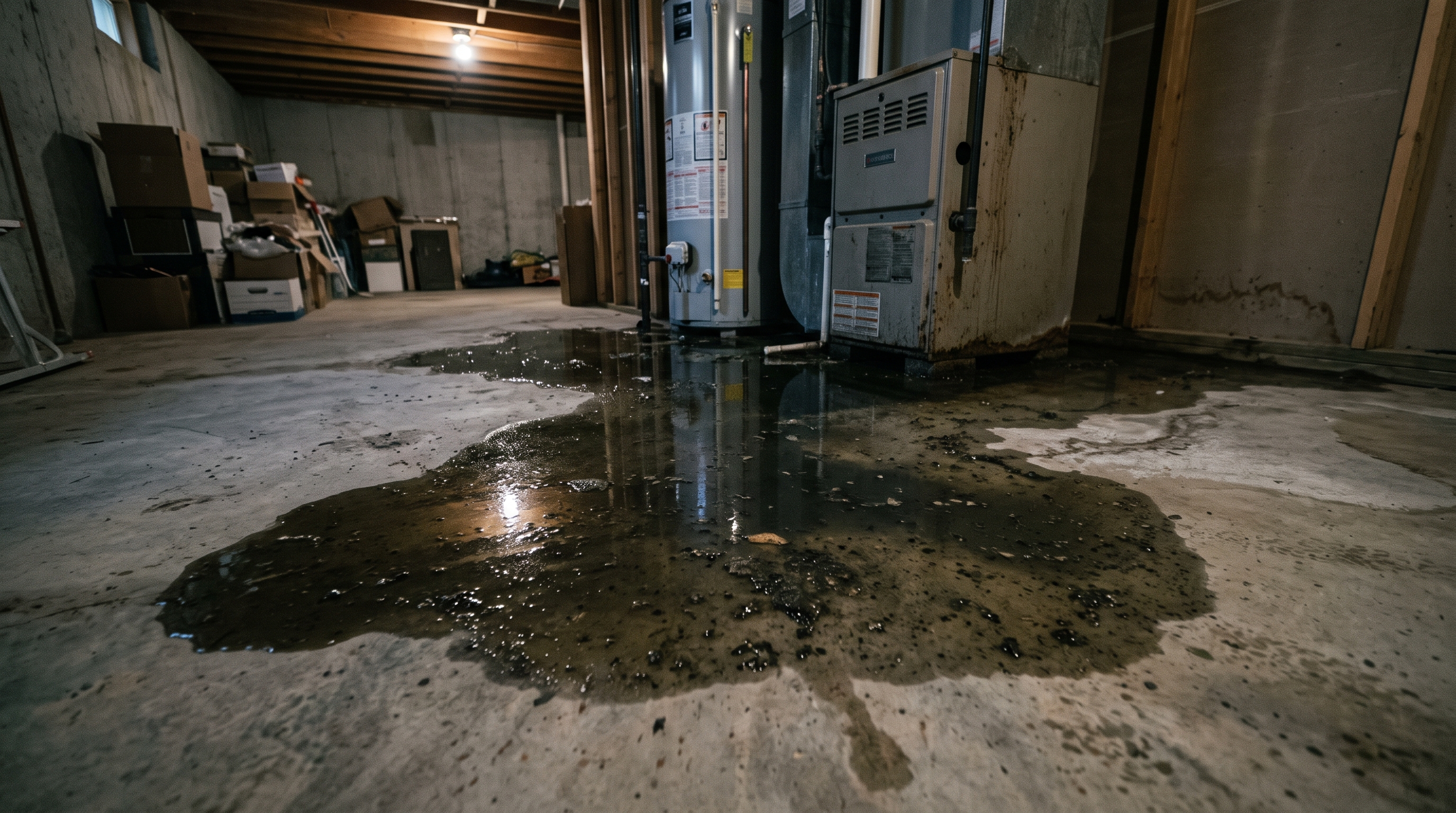
First Actions (To Do Immediately)
- 1 Stop using every toilet, sink, shower, dishwasher, and washing machine in the house so no more wastewater is sent into the backed-up line.
- 2 If sewage is near outlets, extension cords, the furnace, or the water heater, switch off basement circuits from a dry panel location; if the panel is in the flooded area, call the utility or an electrician.
- 3 Keep children, pets, and anyone with a weakened immune system out of the basement, and close the basement door to limit odor and aerosol spread.
- 4 Photograph and video the sewage depth, the drain or fixture it came from, and every damaged item before anything is moved or thrown out.
- 5 Call a plumber to clear the line and an IICRC-certified Category 3 restoration company for extraction and sanitizing, and notify your insurer the same day.
DO NOT DO
- ✕ Do not walk into sewage-contaminated water without waterproof boots, gloves, and eye protection.
- ✕ Do not use a household vacuum or an unprotected shop-vac on raw sewage; it aerosolizes bacteria and contaminates the machine.
- ✕ Do not mix bleach with ammonia-based cleaners or pour bleach into standing sewage, which can release toxic gas.
- ✕ Do not discard damaged carpet, drywall, or belongings until each item has been photographed and listed for your insurance claim.
How the Water May Be Spreading
MECHANICS OF A BASEMENT DRAIN BACKUP
What This Usually Means
Sewage rising from a basement floor drain, toilet, or shower means wastewater cannot leave the house. Either a clog, root intrusion, or collapsed pipe is blocking your building sewer line, or the municipal main or septic system is overloaded and pushing back up the lowest drain in the home. The basement floor drain is the lowest opening, so it is where backed-up wastewater shows up first. If it only appears when upstairs fixtures run, the blockage is usually in your own line; if it surges during heavy rain with nothing running, the city sewer or septic system is likely surcharged.
Why Hidden Moisture Matters
Sewage is IICRC Category 3 water. It carries E. coli, hepatitis A, and other pathogens that soak into drywall, carpet pad, insulation, and wood framing within hours and cannot be reliably disinfected out of porous materials. Left in place, it keeps off-gassing, feeds mold, and spreads contamination every time someone walks through. Fast containment and documentation also matter for insurance: most standard homeowners policies exclude sewer backup unless you carry a water backup endorsement, and insurers expect proof of prompt mitigation.
4 Steps to Contain and Remediate Basement Sewage
- Electrical Disconnect: Raw sewage is heavily contaminated with salts and minerals, making it extremely conductive. Never wade into sewage water to unplug appliances or reset switches.
- Exterior Cleanout Pressure Relief: Most residential sewer lines have an exterior 4-inch PVC cleanout fitting in the front or side yard. If the municipal sewer is surcharged, cautiously opening this cap redirects sewage outside rather than filling your living space.
- Porous vs. Non-Porous Salvage Guidelines:
- Non-Porous (Concrete & Masonry): Concrete slabs can be salvaged through hot-water extraction, heavy-duty industrial degreasing, and application of an EPA-registered hospital-grade disinfectant.
- Porous (Drywall & Flooring): Saturated drywall bottom plates, carpet pads, and laminate flooring absorb biological pathogens deep into cellulose fibers. Per IICRC S500 standards, porous items contaminated by Category 3 water cannot be disinfected and must be cut out and discarded under negative air pressure.
Related Guides
To test whether your issue is a local trap blockage or a full lateral collapse, read our floor drain backup diagnosis guide.
Review policy terms for USAA sewer backup riders and limits.
If your sump basin is also overflowing, see sump pump failure troubleshooting.
What You Can Check Safely
- Listen for dripping or running water: Can help identify active leaks behind walls or above ceilings.
- Check the water meter: If all fixtures are off but the meter is spinning, you have an active plumbing leak.
- Inspect adjacent rooms: Water travels horizontally along floor joists and subfloors.
What Professionals Look For
- Thermal imaging (infrared) to detect temperature anomalies indicating hidden moisture.
- Moisture meters to test the exact saturation levels of wood, drywall, and masonry.
- Borescope inspections to look inside wall cavities without removing large sections of drywall.
- Hygrometers to measure the relative humidity of the affected rooms and evaluate the risk of condensation and mold.
Severity Matrix: Critical
Life-safety hazard. Evacuate if necessary. Requires complete professional mitigation and potential reconstruction.
Who to Call
Professional Biohazard Remediation Company
Insurance & Documentation
- Documentation and claim context only; no coverage conclusion
Frequently Asked Questions
How do you clean a sewer backup in a basement?
Stop all water use and wear waterproof boots, nitrile gloves, eye protection, and an N95 or better respirator. Once the line is cleared, pump or squeegee liquid sewage into the floor drain and remove solids. Cut out and bag any drywall, carpet, pad, insulation, or cardboard the sewage touched, because porous materials cannot be sanitized. Scrub concrete and other hard surfaces with detergent and hot water, apply an EPA-registered disinfectant for its full label dwell time, and dry the space with dehumidifiers before rebuilding.
Can I clean up sewage in my basement myself?
Only a small, contained backup on bare concrete that touched nothing porous is reasonable to clean yourself with full protective gear. If sewage reached drywall, carpet, wood framing, or stored belongings, covered more than a small area, or anyone in the home is pregnant, elderly, or immunocompromised, hire an IICRC-certified Category 3 restoration company. They extract under containment, remove contaminated materials, and keep the moisture logs your insurer will ask for.
How do I document a septic or sewer backup cleanup for insurance?
Before cleanup starts, take date-stamped photos and video of the sewage depth, the drain or fixture it came from, and every affected room and item. Write down when you found it, which fixtures were running, and whether it was raining. List each discarded item with its approximate age and cost and photograph it before it goes out. Keep plumber or septic-pumping invoices that name the cause, such as root intrusion, a collapsed lateral, a full septic tank, or a municipal surcharge, plus the restoration company's moisture logs and Category 3 classification. Report the claim right away; most policies cover sewer or septic backup only with a water backup endorsement.
Get Professional Help Now
Connect with a local water damage expert immediately.