How Do You Know if a Toilet Is Leaking Under the Floor?
Emergency Answer
A toilet leaking under the floor usually has a failed wax ring that lets water escape at the base every time it is flushed. Signs include a rocking bowl, soft or stained flooring at the base, a sewer smell, and a water ring on the ceiling below. Stop using the toilet and have the seal replaced before the subfloor rots.
- Rock Test: Straddle the bowl and gently push side to side. Any movement means the closet bolts are loose and the wax seal has likely broken.
- Press the Floor: Push on the flooring around the base. Soft, spongy, or discolored spots mean water has reached the subfloor.
- Check Below: If there is a ceiling or basement under the bathroom, look for stains or drips directly under the toilet.
- Dye Test: Add food coloring to the tank and flush a few times; color seeping out at the base or showing up below confirms a base leak.
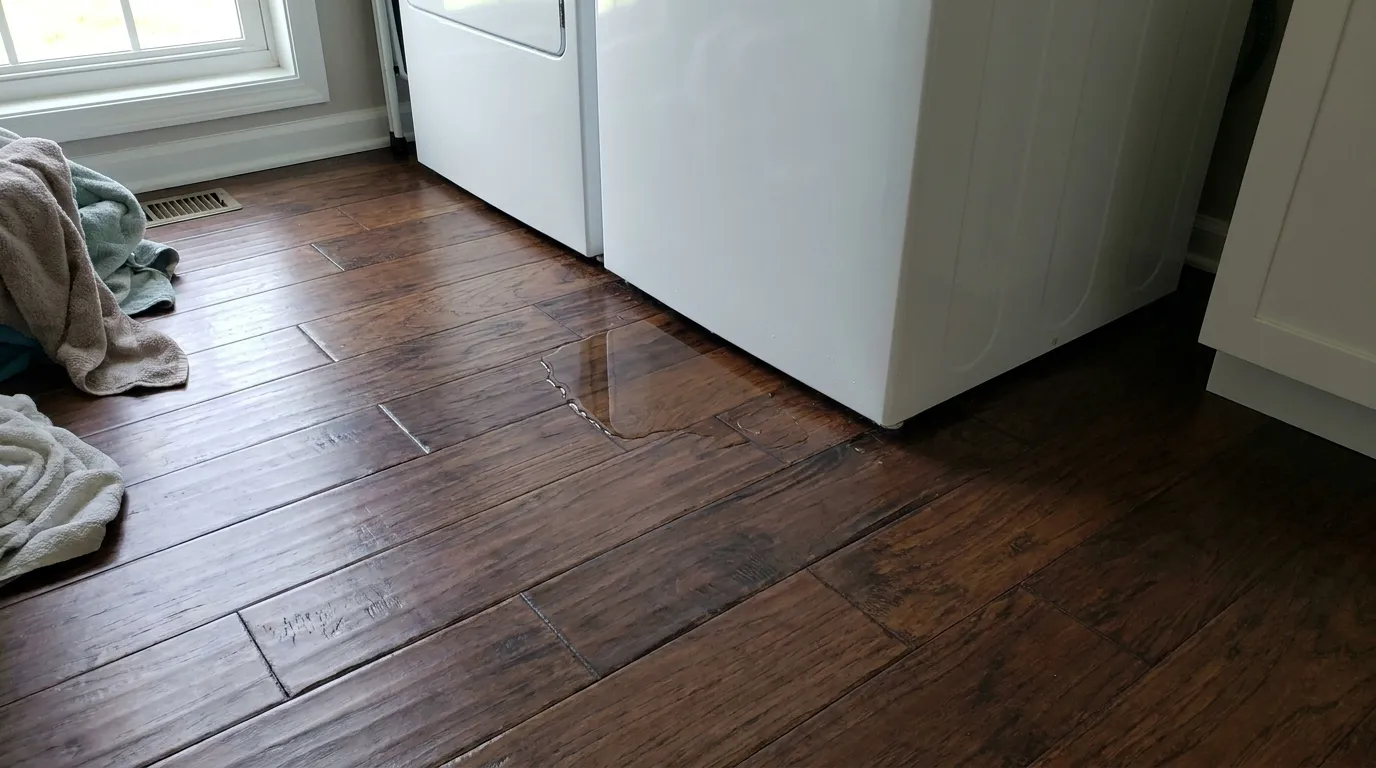
First Actions (To Do Immediately)
- 1 Stop using the toilet and close the angle-stop valve behind it.
- 2 Check whether the bowl rocks and whether the floor around the base is soft or discolored.
- 3 Inspect the ceiling or basement directly below the toilet for stains or drips.
- 4 Photograph any staining, soft spots, and damaged flooring before repairs.
DO NOT DO
- ✕ Do not just crank down the closet bolts on a rocking toilet; overtightening cracks the porcelain, and the broken wax seal will still leak.
- ✕ Do not caulk all the way around the base; leave the back open so a leak shows up instead of rotting the subfloor.
- ✕ Do not reset the toilet on a soft or rotted subfloor without repairing it first.
How the Water May Be Spreading
CROSS-SECTION: FAILED TOILET WAX RING LEAKING INTO SUBFLOOR
What This Usually Means
The wax ring seals the toilet's outlet horn to the closet flange in the floor. When it fails, a little water escapes at the base with every flush and soaks into the subfloor under the flooring, where you cannot see it. By the time stains show up on the floor or the ceiling below, the leak has usually been going on for weeks.
Why Hidden Moisture Matters
Toilet water is not clean, and a slow leak under the floor feeds mold and wood rot in the subfloor and joists. Catching it early means a new wax ring; catching it late can mean replacing the subfloor, the flooring, and the ceiling below.
5 Signs a Toilet Is Leaking Under the Floor
- The toilet rocks or shifts when you sit on it
- Flooring around the base is soft, warped, lifting, or discolored
- A sewer or musty smell near the base of the toilet
- Water appears at the base after flushing
- A stain or drip on the ceiling directly below the bathroom
Wax Ring or Something Else?
Water that appears at the base after every flush points to the wax ring. Water that is there even without flushing points to the supply line, angle stop, or tank-to-bowl gasket. Condensation on the tank in humid weather can also drip to the floor, but it stops once the tank is dry.
What a Wax Ring Repair Involves
The toilet is pulled, the old wax is scraped off, the flange is checked and repaired if cracked, and the toilet is reset on a new wax or wax-free seal with new closet bolts. If the subfloor is soft, the rotted section has to be cut out and replaced before the toilet goes back down.
What You Can Check Safely
- Listen for dripping or running water: Can help identify active leaks behind walls or above ceilings.
- Check the water meter: If all fixtures are off but the meter is spinning, you have an active plumbing leak.
- Inspect adjacent rooms: Water travels horizontally along floor joists and subfloors.
What Professionals Look For
- Thermal imaging (infrared) to detect temperature anomalies indicating hidden moisture.
- Moisture meters to test the exact saturation levels of wood, drywall, and masonry.
- Borescope inspections to look inside wall cavities without removing large sections of drywall.
- Hygrometers to measure the relative humidity of the affected rooms and evaluate the risk of condensation and mold.
Severity Matrix: Medium
Requires professional extraction equipment and dehumidifiers. Moderate risk of mold and structural damage.
Who to Call
Licensed Plumber or Water Damage Restoration Professional
Insurance & Documentation
- Documentation and claim context only; no coverage conclusion
Frequently Asked Questions
How do you know if your toilet is leaking under the floor?
Look for a toilet that rocks, soft or discolored flooring around the base, a sewer smell, or a stain on the ceiling below. Water that shows up at the base after flushing is a strong sign of a failed wax ring.
Can a leaking wax ring damage the floor?
Yes. Each flush can push a little water under the flooring, and over weeks it can rot the subfloor and joists and stain the ceiling below.
Should I caulk around the base of my toilet?
Caulking the front and sides is common, but leave a gap at the back. If the seal fails, water can then escape where you can see it instead of being trapped against the subfloor.
Get Professional Help Now
Connect with a local water damage expert immediately.