Subfloor Wet but Carpet Dry? Where the Water Is Hiding
Emergency Answer
If the subfloor is wet but the carpet on top is dry, the water did not come from above. It is reaching the subfloor from the side or from below—a leak in the wall or under the floor, a plumbing line, crawlspace or basement moisture, or water wicking under the wall plate. Pull back the carpet and pad at the tack strip to see how far it goes.
- Pull Back the Carpet: Grab a corner with pliers, lift it off the tack strip, and fold back the carpet and pad to expose the wet area.
- Map the Wet Area: Use a moisture meter on the subfloor to find where readings are highest; the source is usually at that edge.
- Check Below and Beside: Look in the basement or crawlspace under the spot, and check nearby walls, plumbing, and HVAC lines for leaks.
- Dry the Subfloor: Keep the carpet and pad lifted and run a dehumidifier and air movers until readings are back to normal.
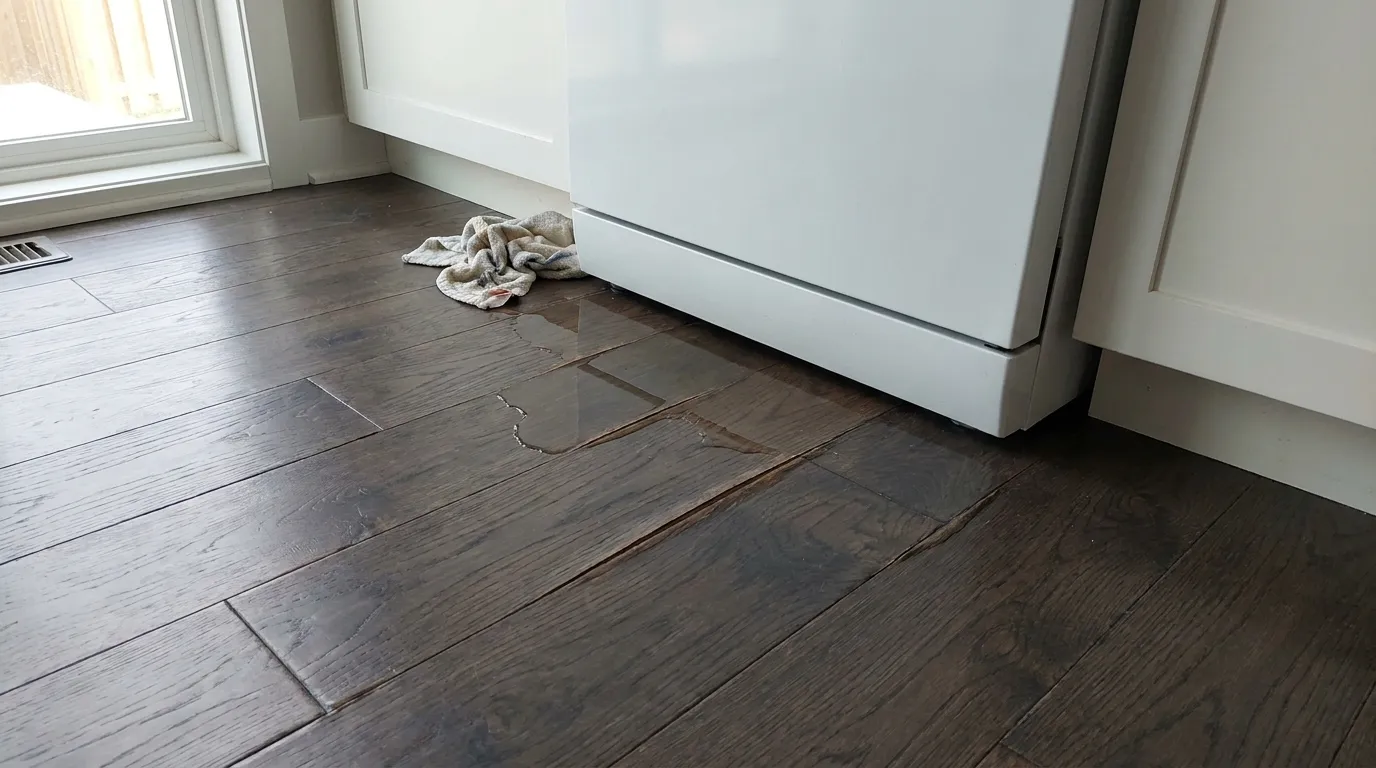
First Actions (To Do Immediately)
- 1 Lift the carpet and pad along the nearest wall to expose the wet subfloor.
- 2 Check the room below or the crawlspace for drips, wet joists, or standing water.
- 3 Look for nearby plumbing runs, HVAC condensate lines, or exterior walls where water could enter.
- 4 Remove soaked carpet pad; pad holds water and usually cannot be dried in place.
DO NOT DO
- ✕ Do not lay the carpet back down until the subfloor reads dry.
- ✕ Do not assume the problem is small because the carpet surface is dry.
- ✕ Do not walk heavily on soft or spongy subfloor sections.
How the Water May Be Spreading
CUTAWAY: SLOW DISHWASHER LEAK TO SQUISHY, BOUNCING SUBFLOOR
What This Usually Means
Carpet and pad sit on top of the subfloor, so water from a spill soaks the carpet first. When the subfloor is wet and the carpet is not, the water is arriving from underneath or from the edges of the room. That makes the source harder to spot and means more of the floor system may be wet than the surface suggests.
Why Hidden Moisture Matters
A subfloor that stays wet can delaminate, rot, and grow mold under the pad without any visible sign on the carpet. The joists, sill plate, and bottom of nearby walls may be wet too. Finding the source and drying it now prevents a soft floor and a full carpet replacement later.
How to Check Under Carpet Without Ruining It
Start in a corner near the wet area. Use pliers to pull the carpet up off the tack strip, then fold it back along with the pad. Carpet released carefully can usually be re-stretched and reinstalled once the subfloor is dry; the pad underneath is usually replaced.
Common Hidden Sources
- Supply or drain lines running under the floor or through nearby walls
- HVAC condensate lines and floor registers
- Crawlspace humidity or groundwater wetting the underside of the subfloor
- Exterior doors, slab edges, or foundation cracks along the wall
Drying the Subfloor
Keep the carpet and pad lifted, run dehumidification, and aim air movers at the exposed subfloor. The IICRC S500 dehumidifier and air mover calculator gives a starting equipment count for the room. If wall drywall reads wet too, the drywall flood-cut calculator helps plan removal.
What You Can Check Safely
- Listen for dripping or running water: Can help identify active leaks behind walls or above ceilings.
- Check the water meter: If all fixtures are off but the meter is spinning, you have an active plumbing leak.
- Inspect adjacent rooms: Water travels horizontally along floor joists and subfloors.
What Professionals Look For
- Thermal imaging (infrared) to detect temperature anomalies indicating hidden moisture.
- Moisture meters to test the exact saturation levels of wood, drywall, and masonry.
- Borescope inspections to look inside wall cavities without removing large sections of drywall.
- Hygrometers to measure the relative humidity of the affected rooms and evaluate the risk of condensation and mold.
Severity Matrix: Medium
Requires professional extraction equipment and dehumidifiers. Moderate risk of mold and structural damage.
Who to Call
Licensed Plumber or Water Damage Restoration Professional
Insurance & Documentation
- Documentation and claim context only; no coverage conclusion
Frequently Asked Questions
How can the subfloor be wet if the carpet is dry?
The water is coming from below or from the side, such as a leaking pipe under the floor, a wall leak, crawlspace moisture, or water entering at an exterior wall. It soaks the subfloor without passing through the carpet.
Can I dry a subfloor without removing the carpet?
Restoration crews can sometimes float carpet with air underneath, but in most homes it is faster and safer to lift the carpet, remove the wet pad, and dry the subfloor directly.
Do I need to replace the carpet?
Often not. If the carpet itself stayed clean and dry, it can usually be reinstalled after the subfloor dries. The pad underneath is usually replaced.
Get Professional Help Now
Connect with a local water damage expert immediately.