Does a Musky or Musty Smell Mean Mold? How to Find the Source
Emergency Answer
Usually, yes. A musty or musky odor comes from microbial volatile organic compounds (MVOCs) released by mold and bacteria growing on something that has stayed damp—often behind a baseboard, under a sink or vanity, or inside a wall after a leak. The smell means growth has likely started; the fix is finding and drying or removing the wet material, not masking the odor.
- Follow Your Nose: Smell low along baseboards, inside sink and vanity cabinets, around the toilet base, and near exterior walls; the odor is strongest closest to the source.
- Meter the Suspect Area: Scan drywall, trim, and subfloor with a moisture meter. Readings well above nearby dry areas pinpoint the hidden wet zone.
- Stop the Water: Fix the leak, condensation, or drainage problem that keeps the area damp before any cleanup.
- Dry or Remove: Materials caught within 24 to 48 hours can often be dried in place; anything with visible growth or a smell that lingers after drying needs to be cut out.
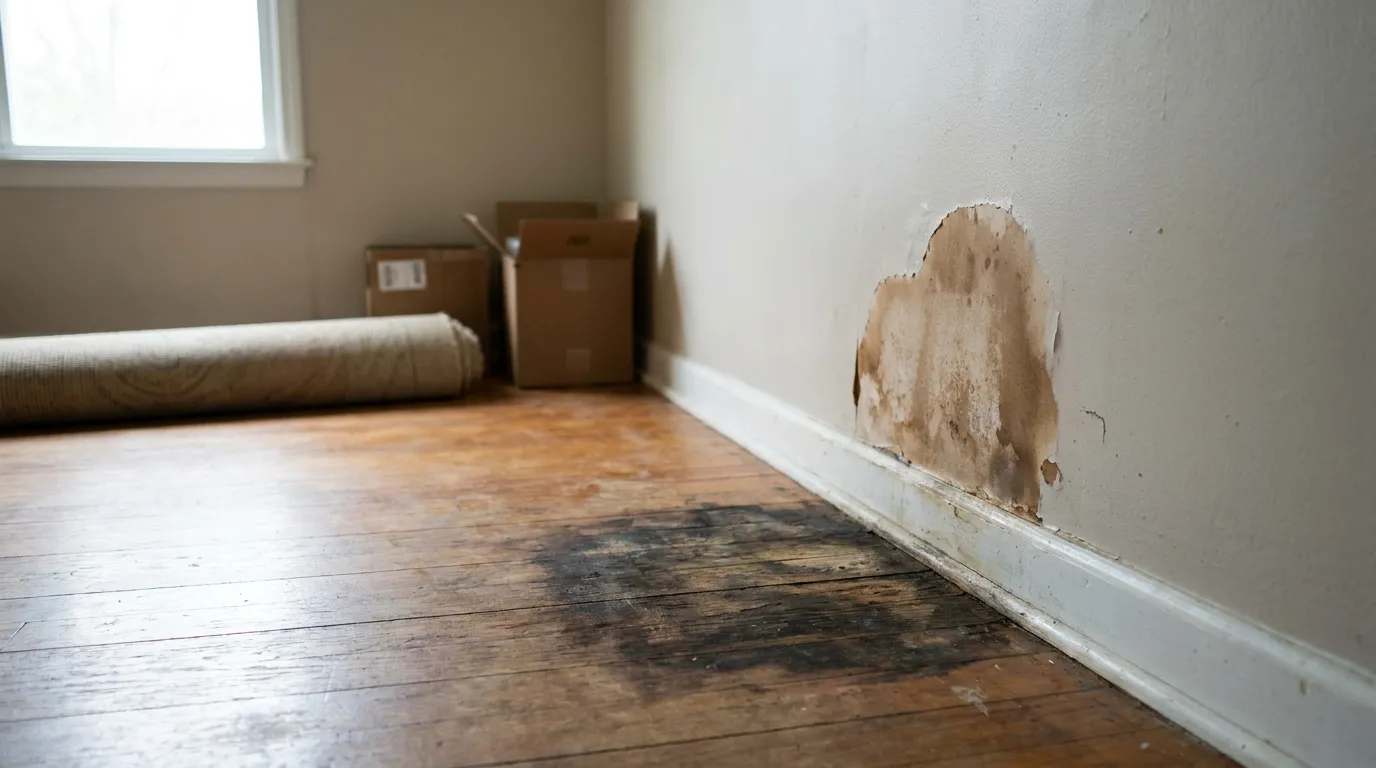
First Actions (To Do Immediately)
- 1 Check under sinks, around toilets and tubs, behind the washer, and along exterior walls for active leaks or damp materials.
- 2 Run a dehumidifier and keep indoor humidity below 50 percent while you investigate.
- 3 Use a moisture meter on walls and floors near the strongest smell.
- 4 Photograph any staining, visible growth, and meter readings.
DO NOT DO
- ✕ Do not cover the smell with air fresheners, candles, or ozone machines; they hide the problem without removing the growth.
- ✕ Do not spray bleach on porous drywall or wood; it does not kill growth rooted below the surface.
- ✕ Do not disturb moldy areas larger than about 10 square feet without containment and protective equipment.
How the Water May Be Spreading
MOLD COLONIZATION TIMELINE & HIDDEN CAVITY DETECTION
What This Usually Means
Mold and bacteria release microbial volatile organic compounds as they digest damp materials like drywall paper, wood, and carpet backing. You can smell those compounds before you can see any growth, so a musty odor is often the first sign of a hidden moisture problem behind a wall, under flooring, or inside a cabinet.
Why Hidden Moisture Matters
Growth that produces an odor keeps spreading as long as the material stays damp, and it can damage drywall, subflooring, and framing over time. Mold exposure can also aggravate allergies and asthma. Finding the moisture source early usually keeps the fix to a small cutout instead of a full remediation.
Musty vs. Musky: Is There a Difference?
People use both words for the same earthy, damp-basement odor. A sour or sewage-like smell points to a drain or sewer problem instead. If the smell is earthy and gets stronger after rain, in humid weather, or when a closed room is opened, moisture-driven growth is the likely cause.
Where Hidden Mold Usually Starts
- Behind baseboards and the bottom 12 inches of drywall after a floor leak
- Inside sink and vanity cabinets where a drain or supply line drips
- Under carpet pad and around the toilet base
- In wall cavities behind showers and tubs
- Basement walls, crawlspaces, and HVAC drain pans
Dry It Out Before Mold Takes Hold
Wet materials need to be dried quickly, typically within 24 to 48 hours. Use the IICRC S500 dehumidifier and air mover calculator to estimate how many dehumidifiers and air movers a room needs. If drywall stays wet or keeps smelling after drying, use the drywall flood-cut calculator to plan how much of the wall to remove.
House Smells Musty but No Visible Mold
Check humidity first: a cheap hygrometer reading above 60% is enough on its own to make carpet, cardboard, and closets smell musty. Then check the usual hidden spots: the AC drain pan and coil, a front-load washer door gasket, the crawlspace, under the kitchen and bathroom sinks, and carpet pad near exterior doors. Run a dehumidifier to keep it between 30% and 50%. If the smell stays after a week at that level, something is wet.
What You Can Check Safely
- Listen for dripping or running water: Can help identify active leaks behind walls or above ceilings.
- Check the water meter: If all fixtures are off but the meter is spinning, you have an active plumbing leak.
- Inspect adjacent rooms: Water travels horizontally along floor joists and subfloors.
What Professionals Look For
- Thermal imaging (infrared) to detect temperature anomalies indicating hidden moisture.
- Moisture meters to test the exact saturation levels of wood, drywall, and masonry.
- Borescope inspections to look inside wall cavities without removing large sections of drywall.
- Hygrometers to measure the relative humidity of the affected rooms and evaluate the risk of condensation and mold.
Severity Matrix: Medium
Requires professional extraction equipment and dehumidifiers. Moderate risk of mold and structural damage.
Who to Call
Licensed Plumber or Water Damage Restoration Professional
Insurance & Documentation
- Documentation and claim context only; no coverage conclusion
Frequently Asked Questions
Does a musty smell always mean mold?
Not always, but usually. Mold and bacteria growing on damp materials cause most musty odors. Damp carpet, wet cardboard, or high humidity can smell similar, but all of them mean moisture is present and growth is likely to follow.
How do I find mold I can't see?
Follow the smell to where it is strongest, then use a moisture meter on nearby walls, floors, and cabinets. A professional can look inside the wall with a borescope through a small hole or use thermal imaging without opening it.
Will a musty smell go away on its own?
No. The smell keeps coming back until the moisture source is fixed and the affected material is dried or removed. Air fresheners and ozone only mask it.
What's the difference between musty and musky?
Musty means stale, damp, and moldy, like an old basement. Musky means smelling of musk: warm, strong, and animal-like, as in perfume. For a damp-house odor, musty is the right word, though many people say musky for the same smell.
Is it bad to breathe in a musty smell?
The smell itself is not toxic, but it means mold or bacteria are growing nearby. Mold can trigger stuffy nose, coughing, itchy eyes, and asthma flare-ups, especially in children and people with allergies, so find and dry the source.
Mildew vs. mold smell: is there a difference?
Mildew is mold growing flat on a surface and smells milder and dusty. Mold growing into drywall, wood, or carpet pad smells stronger and earthier. Both mean moisture; mildew wipes off a hard surface, mold in porous material usually has to be removed.
Get Professional Help Now
Connect with a local water damage expert immediately.