Wet, Swelling Baseboards? Water Is Wicking Into the Wall
Emergency Answer
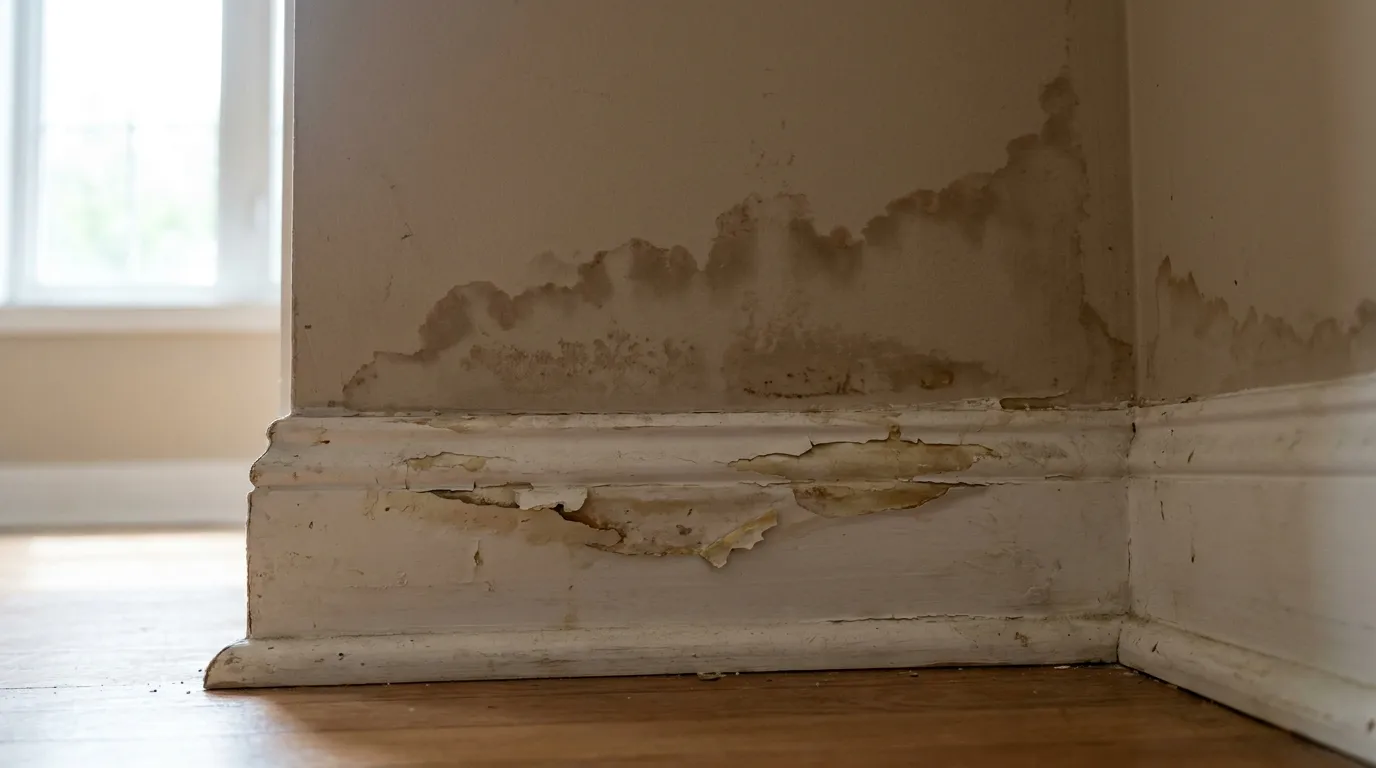
Swelling baseboards mean water has soaked into the trim and is already wicking up the drywall behind it. MDF trim will not shrink back, and the hidden sill plate stays wet long after the floor looks dry, so pull the trim and start drying the wall cavity within 48 hours.
- Stop the Source: Check the nearest toilet, tub, dishwasher, water heater, or exterior door for the leak and close its supply valve.
- Pull the Baseboard: Score the caulk line, pry the trim off with a flat bar against a scrap block, and set it aside to dry, or discard it if it is swollen MDF.
- Meter the Wall: Scan the drywall upward with a moisture meter until readings drop to normal; that line shows how high the water wicked.
- Vent the Cavity: Drill 1-inch holes between studs behind where the trim sat, then run fans and a dehumidifier so the sill plate can dry.
First Actions (To Do Immediately)
- 1 Close the supply valve on whatever fixture or appliance sits closest to the wet trim.
- 2 Remove the baseboard along the wet section so air reaches the bottom edge of the drywall.
- 3 Check the drywall with a moisture meter every 12 inches up the wall to find the top of the wet zone.
- 4 Aim fans along the wall and run a dehumidifier with the room closed.
DO NOT DO
- ✕ Do not caulk or nail swollen trim back into place; it seals moisture against the sill plate.
- ✕ Do not assume the drywall is dry because the paint looks fine; gypsum wicks water internally.
- ✕ Do not leave wet carpet pad pushed against the wall; it holds water against the bottom plate.
How the Water May Be Spreading
CROSS-SECTION: BASEBOARD & DRYWALL CAPILLARY WICKING
What This Usually Means
Water on the floor or inside the wall has soaked into the bottom edge of the baseboard. MDF trim absorbs water like a sponge and swells permanently, while pine trim darkens and may dry flat. The drywall behind the trim pulls water upward through its gypsum core, usually 6 to 12 inches, and the wood sill plate underneath stays wet the longest.
Why Hidden Moisture Matters
Baseboards hide the bottom of the drywall and the sill plate, which is exactly where mold and rot start. With the trim left on, that area can stay wet for weeks even after the room feels dry. Drying it early often saves the drywall; waiting usually means cutting out the bottom of the wall.
MDF vs. Wood Baseboards
Most newer homes use MDF trim. Once MDF swells at the bottom edge it does not shrink back, and the paint usually cracks, so plan to replace it. Solid pine or poplar trim can often be dried, sanded, and reinstalled if it has not split or grown mold.
How High Should You Cut the Drywall?
If the wall still reads wet above the trim line after a few days of drying, or the water was dirty, the bottom of the drywall has to come out. Use the drywall flood-cut calculator to set the cut height based on how high the moisture reached and the type of water involved.
Signs the Wall Cavity Is Still Wet
A musty odor near the floor, paint bubbling just above the trim line, drywall that feels soft when pressed, or meter readings that stay high after several days of fans all point to a wet sill plate or insulation inside the wall. That calls for opening the cavity or a professional drying setup.
What You Can Check Safely
- Listen for dripping or running water: Can help identify active leaks behind walls or above ceilings.
- Check the water meter: If all fixtures are off but the meter is spinning, you have an active plumbing leak.
- Inspect adjacent rooms: Water travels horizontally along floor joists and subfloors.
What Professionals Look For
- Thermal imaging (infrared) to detect temperature anomalies indicating hidden moisture.
- Moisture meters to test the exact saturation levels of wood, drywall, and masonry.
- Borescope inspections to look inside wall cavities without removing large sections of drywall.
- Hygrometers to measure the relative humidity of the affected rooms and evaluate the risk of condensation and mold.
Severity Matrix: Medium
Requires professional extraction equipment and dehumidifiers. Moderate risk of mold and structural damage.
Who to Call
Licensed Plumber or Water Damage Restoration Professional
Insurance & Documentation
- Documentation and claim context only; no coverage conclusion
Frequently Asked Questions
Why are my baseboards swelling?
Water has soaked into the bottom edge of the trim. MDF baseboards are especially absorbent and swell, bubble, or split when they stay wet. The water usually comes from a nearby leak, an overflow, or water that pooled on the floor.
Can swollen baseboards be fixed?
Swollen MDF trim usually needs replacing. Solid wood trim can often be dried, sanded, and repainted. Either way, take it off first so the wall behind it can dry.
How do I know if the wall behind the baseboard is wet?
Use a moisture meter on the drywall above the trim and again after removing it. Readings well above dry sections of the same wall, soft drywall, or a musty smell mean the cavity is wet.
Get Professional Help Now
Connect with a local water damage expert immediately.