Wet Drywall After a Small Leak? When to Dry It and When to Cut It
Emergency Answer
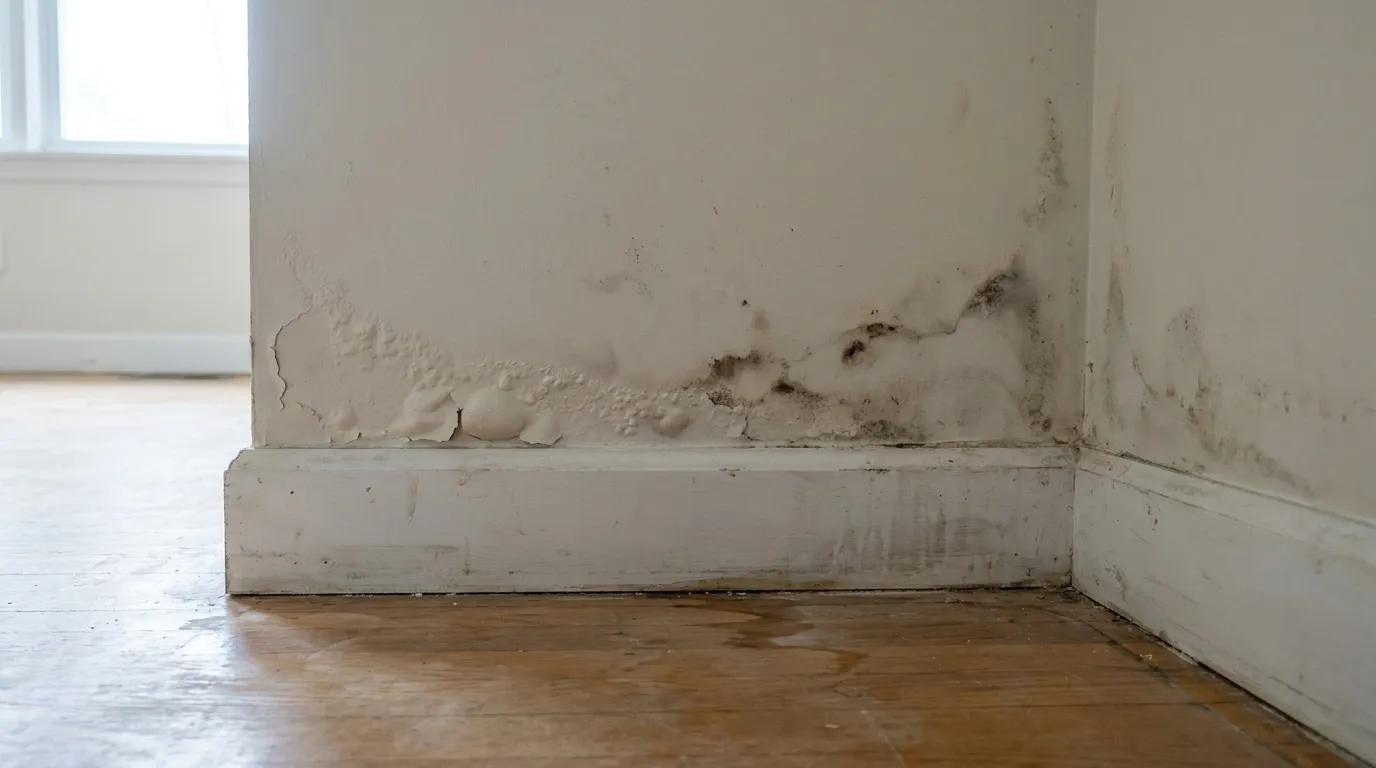
Drywall soaked by a small, clean-water leak can often be dried in place if the leak is stopped and drying starts within 24 to 48 hours. If the drywall is soft, sagging, crumbling, stained by dirty water, or still reads wet after several days of drying, cut out the wet section instead.
- Stop the Leak: Shut off the supply valve or main water and fix the source.
- Press and Measure: Firm drywall with readings that drop each day can be dried. Soft, swollen, or sagging drywall should come out.
- Open It Up: Pull the baseboard and drill small holes behind it, or remove the bottom of the wall, so air reaches the cavity.
- Dry It Fast: Run a dehumidifier and fans aimed at the wall, and check readings daily until they match a dry section of the same wall.
First Actions (To Do Immediately)
- 1 Stop the leak and shut off power to any outlets in the wet wall.
- 2 Remove baseboards and anything stored against the wall.
- 3 Measure moisture at several heights to find how far up the water wicked.
- 4 Set up a dehumidifier and air movers aimed along the wet wall.
DO NOT DO
- ✕ Do not paint, patch, or caulk wet drywall; it seals the moisture in.
- ✕ Do not leave insulation behind wet drywall without checking it.
- ✕ Do not try to dry drywall soaked by toilet, sewage, or floodwater; it needs to be removed.
How the Water May Be Spreading
CROSS-SECTION: BASEBOARD & DRYWALL CAPILLARY WICKING
What This Usually Means
Drywall is a gypsum core wrapped in paper. Water soaks into the core and wicks upward, often well above the visible stain. Clean water caught early usually leaves the core intact once dried, but prolonged wetting softens the gypsum and the paper facing becomes food for mold.
Why Hidden Moisture Matters
Wet drywall that is closed up or painted over can grow mold on its back side and inside the wall cavity, where insulation and framing stay wet. Acting within the first day or two is the difference between a dry-out and a demolition.
Dry in Place or Cut It Out?
- Dry in place: Clean water, caught within 48 hours, drywall still firm, readings falling daily.
- Cut out: Soft or sagging drywall, dirty or contaminated water, visible mold, or readings that stay high after 3 to 5 days.
- Check the cavity: Soaked insulation behind the wet section usually needs to come out too.
How High to Cut
Meter the wall to find the top of the wet zone, then cut above it. The drywall flood-cut calculator calculates a cut height that clears the wet line and lands on a convenient size for patching.
Drying Equipment for a Wet Wall
A single dehumidifier and one or two fans handle many small leaks. Larger areas need more equipment; the IICRC S500 dehumidifier and air mover calculator estimates the number of dehumidifiers and air movers for the room size and how wet it is.
What You Can Check Safely
- Listen for dripping or running water: Can help identify active leaks behind walls or above ceilings.
- Check the water meter: If all fixtures are off but the meter is spinning, you have an active plumbing leak.
- Inspect adjacent rooms: Water travels horizontally along floor joists and subfloors.
What Professionals Look For
- Thermal imaging (infrared) to detect temperature anomalies indicating hidden moisture.
- Moisture meters to test the exact saturation levels of wood, drywall, and masonry.
- Borescope inspections to look inside wall cavities without removing large sections of drywall.
- Hygrometers to measure the relative humidity of the affected rooms and evaluate the risk of condensation and mold.
Severity Matrix: Medium
Requires professional extraction equipment and dehumidifiers. Moderate risk of mold and structural damage.
Who to Call
Licensed Plumber or Water Damage Restoration Professional
Insurance & Documentation
- Documentation and claim context only; no coverage conclusion
Frequently Asked Questions
Can wet drywall dry out on its own?
Small amounts of clean water can dry out of drywall, but it needs airflow and dehumidification, and the leak must be fixed. Without help, the inside of the wall can stay wet long enough to grow mold.
How long does wet drywall take to dry?
With dehumidifiers and fans, often 2 to 5 days. Track it with a moisture meter instead of guessing.
When does wet drywall need to be replaced?
If it is soft, sagging, crumbling, moldy, wet from dirty water, or still reads wet after several days of drying, replace that section.
Get Professional Help Now
Connect with a local water damage expert immediately.