Condensation or a Leak? How to Tell Where the Water Is Coming From
Emergency Answer
Condensation forms when warm, humid air touches a cold surface, so it appears evenly across that surface, comes and goes with the weather, and stops when the air is drier. A leak follows a path from one source, keeps going regardless of humidity, and often comes with a moving water meter or a stain that keeps growing.
- Dry and Watch: Wipe the surface completely dry and check it again in an hour. Even beading across the whole surface points to condensation; a trail or drip from one spot points to a leak.
- Run the Foil Test: Tape a square of aluminum foil to a damp wall for 24 hours. Moisture on the room side is condensation; moisture underneath means water is coming through the wall.
- Check the Water Meter: Turn off every fixture and watch the meter for 15 minutes. If it moves, there is a plumbing leak.
- Measure Humidity: A hygrometer reading above about 60 percent makes condensation likely on cold pipes, windows, and exterior walls.
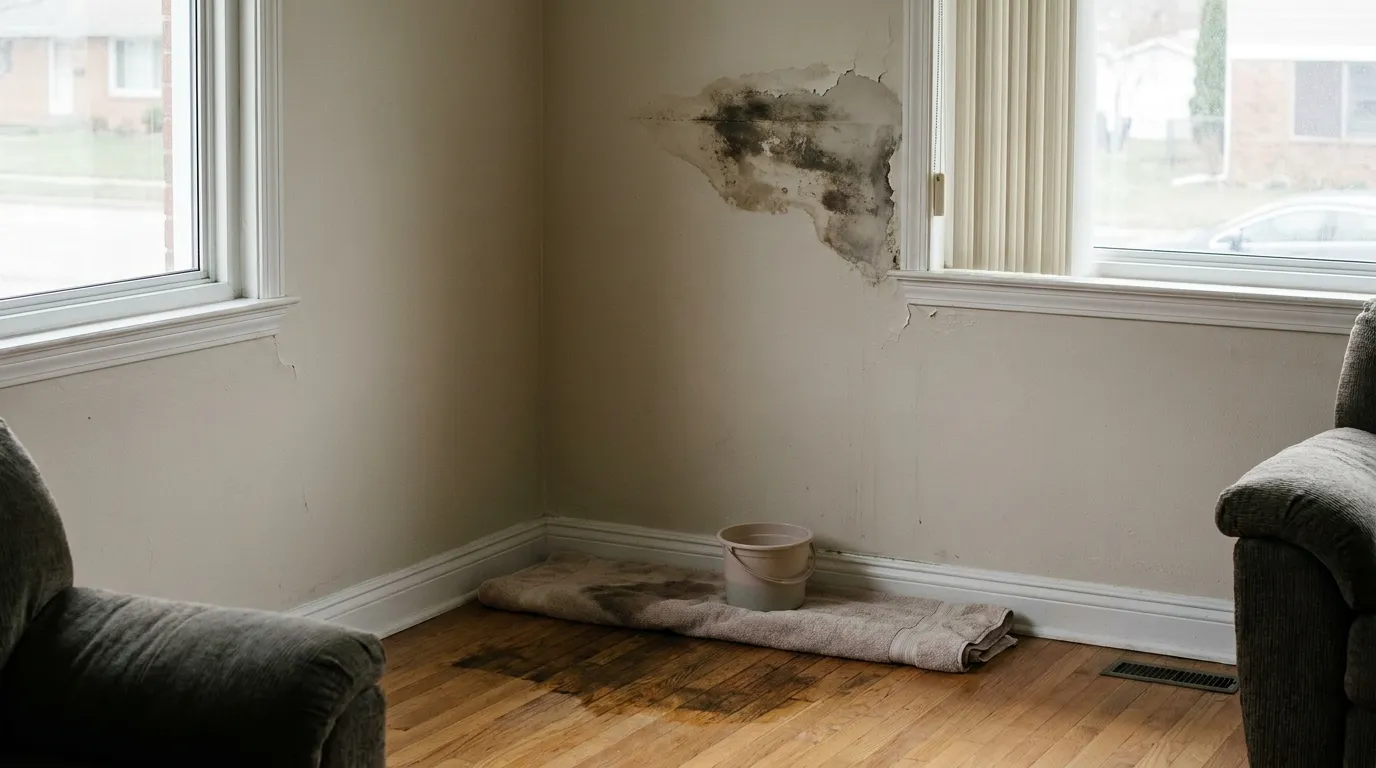
First Actions (To Do Immediately)
- 1 Dry the wet area completely and note where and how fast water comes back.
- 2 Turn off all fixtures and check whether the water meter is still moving.
- 3 Measure indoor humidity with a hygrometer.
- 4 Feel the surface: condensation forms on things colder than the room air, such as cold water pipes, toilet tanks, ducts, and exterior walls.
DO NOT DO
- ✕ Do not paint over or seal a damp wall until you know the source; you can trap a leak behind it.
- ✕ Do not assume it is condensation if water appears in only one spot or the stain keeps spreading.
- ✕ Do not ignore persistent condensation either; it can still rot window sills and grow mold.
How the Water May Be Spreading
CROSS-SECTION: BASEBOARD & DRYWALL CAPILLARY WICKING
What This Usually Means
Both condensation and leaks leave water behind, but they behave differently. Condensation is a surface event caused by humid air meeting a cold surface, so it shows up evenly and tracks the weather. A leak has a source and a path, so it concentrates in one area, often leaves a growing stain, and continues regardless of humidity.
Why Hidden Moisture Matters
Treating a leak as condensation lets water keep soaking drywall, insulation, and framing out of sight. Treating condensation as a leak can lead to unnecessary demolition. Knowing which one you have tells you whether you need a plumber, a roofer, or better ventilation and insulation.
Signs It's Condensation
- Water beads evenly across a pipe, window, tank, or duct
- It appears in humid weather or when the AC runs, then dries up
- Running a dehumidifier makes it stop
- No stain spreading outward from a single point
Signs It's a Leak
- Water or staining concentrated in one area or along a line
- The stain grows or stays wet in dry weather
- The water meter moves with all fixtures off
- Drywall reads wet well above the floor or behind fixtures
What to Do Next
For condensation, lower humidity, insulate cold pipes and ducts, and improve ventilation. For a leak, fix the source and dry the area quickly: the IICRC S500 dehumidifier and air mover calculator helps estimate drying equipment, and the drywall flood-cut calculator helps plan removal if drywall stays wet.
What You Can Check Safely
- Listen for dripping or running water: Can help identify active leaks behind walls or above ceilings.
- Check the water meter: If all fixtures are off but the meter is spinning, you have an active plumbing leak.
- Inspect adjacent rooms: Water travels horizontally along floor joists and subfloors.
What Professionals Look For
- Thermal imaging (infrared) to detect temperature anomalies indicating hidden moisture.
- Moisture meters to test the exact saturation levels of wood, drywall, and masonry.
- Borescope inspections to look inside wall cavities without removing large sections of drywall.
- Hygrometers to measure the relative humidity of the affected rooms and evaluate the risk of condensation and mold.
Severity Matrix: Medium
Requires professional extraction equipment and dehumidifiers. Moderate risk of mold and structural damage.
Who to Call
Licensed Plumber or Water Damage Restoration Professional
Insurance & Documentation
- Documentation and claim context only; no coverage conclusion
Frequently Asked Questions
How can I tell if water on my wall is condensation or a leak?
Dry the wall and tape aluminum foil to it for a day. If moisture forms on the outside of the foil, it is condensation from room air. If moisture is behind the foil, water is coming through the wall from a leak or from outside.
Can condensation cause water damage?
Yes. Constant condensation on windows, pipes, or exterior walls can rot wood, stain drywall, and grow mold, especially in bathrooms, basements, and attics.
Why is my cold water pipe dripping?
Usually condensation: cold pipes sweat when warm, humid air touches them. If the drips stop when you wipe the pipe dry and lower the humidity, it is condensation; if drips come from one fitting or joint, it is a leak.
Get Professional Help Now
Connect with a local water damage expert immediately.