Bubbling Ceiling After Rain? Roof Water Is Pooling Above You
Emergency Answer
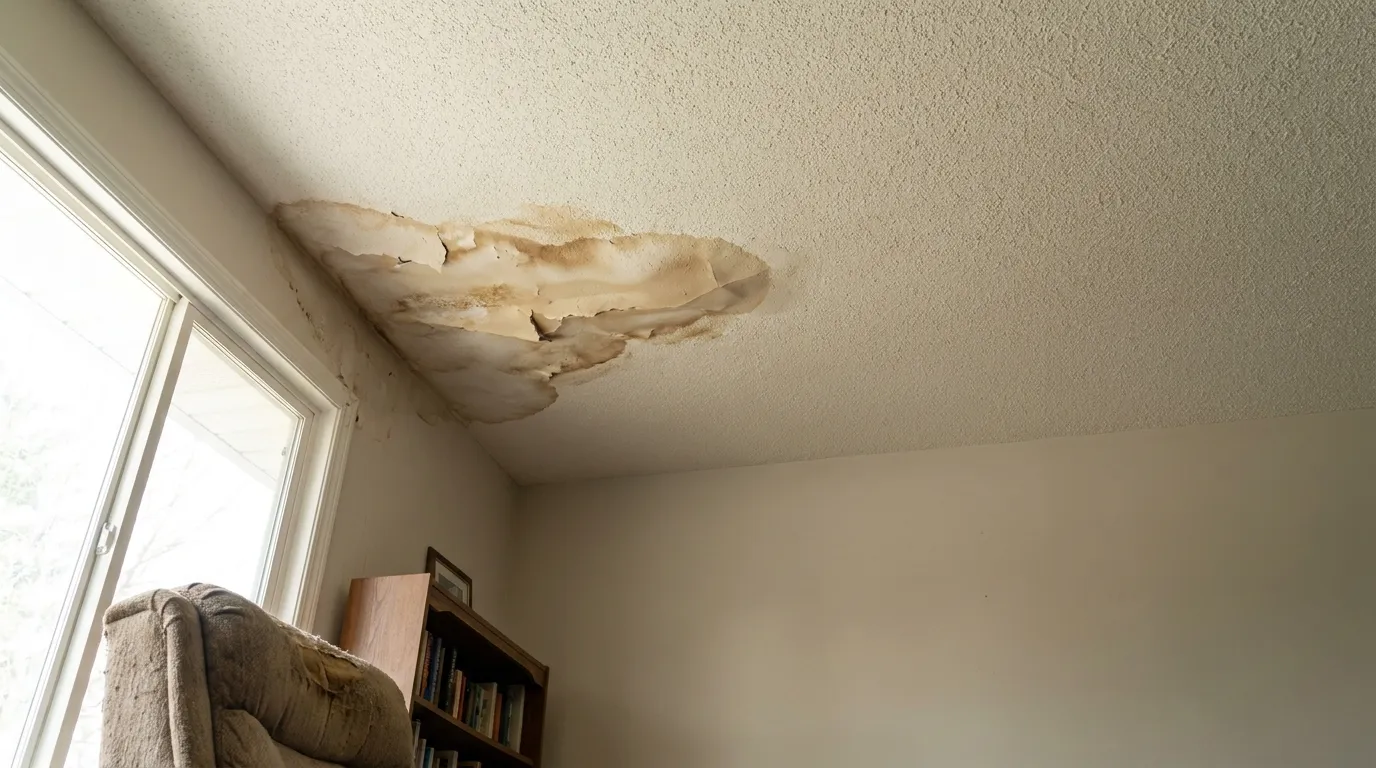
A ceiling that bubbles after rain means roof water has found a path through shingles, flashing, or a vent boot and is now pooling on top of your drywall. Saturated gypsum can drop 30–50 lbs of wet ceiling without warning, so treat the blister as a collapse hazard, not a cosmetic paint problem.
- Cut Power to the Room: Switch off the breaker for the ceiling lights and outlets below the bubble before you go near it.
- Clear the Drop Zone: Move people, pets, and furniture out from under the blister, then slide a bucket and tarp in from the side.
- Relieve the Weight Safely: If the bubble is sagging, make one off-center 1/4-inch screwdriver puncture while standing outside the drop zone so water drains into the bucket.
- Track the Roof Entry: Once the rain stops, check the attic above with a flashlight for wet decking, stained rafters, or soaked insulation that marks the entry point.
First Actions (To Do Immediately)
- 1 Turn off the breaker feeding the ceiling fixtures and outlets in the affected room.
- 2 Clear the area under the bubble and place a bucket and plastic sheeting from the side, not from directly beneath.
- 3 Photograph the bubble, the stain, and the roofline above it before draining, for your insurance record.
- 4 In the attic, lift soaked insulation off the ceiling drywall while standing on the joists, never on the drywall between them.
DO NOT DO
- ✕ Do not slice the blister with a utility knife; a long cut tears the softened drywall and can drop the whole bay at once.
- ✕ Do not turn on the ceiling light or fan under the bubble—water can track along the cable into the fixture box.
- ✕ Do not paint over the stain once it dries; repeated wet-dry cycles leave weakened gypsum and hidden mold above.
How the Water May Be Spreading
CROSS-SECTION: CEILING WATER BLISTER & CONTROLLED DRAINAGE
What This Usually Means
Rainwater has entered through the roof, traveled along rafters or the attic floor, and collected on the back of the ceiling drywall. The latex paint film stretches like a balloon around that water while the gypsum core underneath softens. The bubble is often several feet away from the actual roof entry point because water runs along framing before it drops.
Why Hidden Moisture Matters
Wet ceiling drywall loses most of its strength, and a pocket holding a few gallons of water can tear free of its screws without warning. Every storm re-wets the same area, so attic insulation, ceiling joists, and roof decking can start growing mold within 24 to 48 hours of each rain until the roof is repaired.
How to Find Where the Roof Is Leaking
Start in the attic directly above the bubble, then work uphill along the rafters toward the ridge. Look for darkened sheathing, rusty nail tips, water trails on the rafters, and compressed or stained insulation. Common entry points are chimney flashing, plumbing vent boots, skylight curbs, and valleys where two roof planes meet.
Can the Ceiling Drywall Be Saved?
If the ceiling feels firm after it drains and a moisture meter reads normal within a few days, the panel may only need stain-blocking primer and paint. If it stays soft, sags, or crumbles around the screws, the wet section has to be cut out and replaced. If rainwater also ran down into the walls, use the drywall flood-cut calculator to work out how high to cut the wet wall drywall.
Roofer or Restoration Company First?
You usually need both: a roofer to stop the water entry and a water damage restoration company to dry the attic and ceiling cavity. If the bubble is larger than a dinner plate, the ceiling is sagging, or water reached a light fixture, get the drying started first so the structure is dry before the next storm.
Bubbling After Rain but the Roof Looks Fine
Rain can get in without a bad shingle. Wind-driven rain gets behind siding, through window head flashing, or where a wall meets a lower roof, which is why some leaks show up only when the wind blows from one direction. Clogged gutters overflow behind the fascia into the wall top. In winter, ice dams push melting snow up under the shingles. And drips on a top-floor ceiling during a cold snap with no rain are usually attic condensation, not a roof leak. See condensation or a leak.
How to Fix a Ceiling That Bubbled After Rain
Go in this order. Stop the water first: a roofer, or a temporary tarp if more rain is coming. Drain the bubble, then pull wet insulation off the back of the drywall in the attic, because it holds water against the ceiling. Dry the area and confirm with a moisture meter. Then repair: a firm, dry spot gets loose paint scraped off, an oil- or shellac-based stain-blocking primer, and paint. A soft or sagging section gets cut out and replaced. Painting before the roof is fixed and the drywall is dry brings the bubble back. If the attic insulation is blown-in, see wet blown-in cellulose insulation.
What You Can Check Safely
- Listen for dripping or running water: Can help identify active leaks behind walls or above ceilings.
- Check the water meter: If all fixtures are off but the meter is spinning, you have an active plumbing leak.
- Inspect adjacent rooms: Water travels horizontally along floor joists and subfloors.
What Professionals Look For
- Thermal imaging (infrared) to detect temperature anomalies indicating hidden moisture.
- Moisture meters to test the exact saturation levels of wood, drywall, and masonry.
- Borescope inspections to look inside wall cavities without removing large sections of drywall.
- Hygrometers to measure the relative humidity of the affected rooms and evaluate the risk of condensation and mold.
Severity Matrix: High
Requires immediate professional intervention. High risk of structural weakening, electrical hazards, and mold.
Who to Call
Licensed Plumber or Water Damage Restoration Professional
Insurance & Documentation
- Documentation and claim context only; no coverage conclusion
Frequently Asked Questions
Why is my ceiling bubbling after it rains?
Rainwater is getting through the roof, usually at flashing, a vent boot, or damaged shingles, and pooling on top of the ceiling drywall. The paint stretches into a bubble around the trapped water.
Can a bubbling ceiling collapse?
Yes. Wet gypsum loses most of its strength, and a bubble holding a few gallons of water can pull through the drywall screws and fall. Keep people out from under it until it has been drained.
Will the bubble go away once the ceiling dries?
The paint may shrink back, but the roof leak is still there and the drywall core may already be weakened. Fix the roof entry, confirm the ceiling is dry with a moisture meter, and replace any section that stays soft.
Why am I getting water droplets on my ceiling?
Usually condensation: humid air from a shower, cooking, or a humid house hitting a cold ceiling. On a top-floor ceiling in cold weather it often means warm air is leaking into the attic and the attic needs better ventilation or air sealing. Droplets only after rain point to a leak.
Does homeowners insurance cover a ceiling damaged by a roof leak?
Usually, if a storm opened the roof (wind or hail) and the ceiling damage resulted from it. Leaks from an old or worn roof are often excluded. See [does homeowners insurance cover roof leaks](/insurance/does-homeowners-insurance-cover-water-damage-from-roof-leak/).
Get Professional Help Now
Connect with a local water damage expert immediately.