Can a Leaky Roof Cause an Electrical Fire? Yes—Here's How
Emergency Answer
Yes. Roof water that reaches attic junction boxes, cable splices, or ceiling light fixtures can cause short circuits, arcing, and corrosion that keeps creating fire risk long after the leak stops. If water is near any wiring or fixture, turn off that circuit at the breaker now.
- Kill the Circuit: Switch off the breaker for any light, fan, or outlet near the leak. If you cannot tell which breaker it is, or the panel area is wet, call an electrician.
- Watch for Warning Signs: Buzzing, flickering lights, a hot or burning smell, scorch marks on a fixture, or a breaker that keeps tripping mean the power should stay off.
- Catch the Water: Place a bucket under drips from the side and keep people out from under wet ceiling fixtures.
- Get the Wiring Checked: Have a licensed electrician inspect wet boxes, fixtures, and attic splices before the circuit is restored.
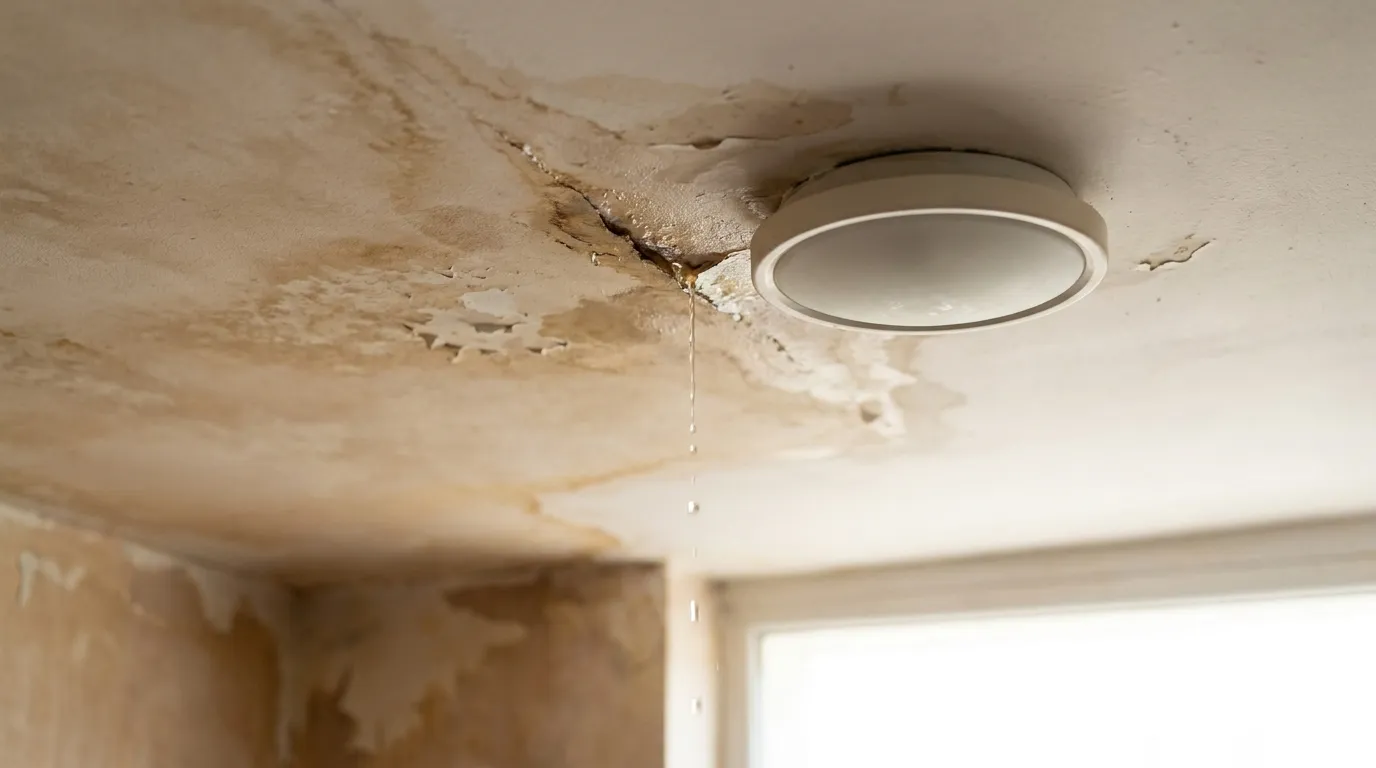
First Actions (To Do Immediately)
- 1 Turn off the breaker serving the ceiling lights, fans, and outlets under the leak.
- 2 Keep people and pets out of the room if water is dripping from or near a fixture.
- 3 Look in the attic with a flashlight—without touching any wiring—for wet junction boxes, cable runs, or insulation piled on fixture housings.
- 4 Call a licensed electrician to test the affected circuit before it is turned back on.
DO NOT DO
- ✕ Do not flip a wet light switch or reset a tripping breaker to test whether the circuit still works.
- ✕ Do not touch wet fixtures, cover plates, or attic wiring, even if you believe the power is off.
- ✕ Do not assume the danger ends when the fixture dries; corroded connections can arc weeks later.
How the Water May Be Spreading
ELECTRICAL FIRE HAZARD: WATER INSIDE CEILING JUNCTION BOX
What This Usually Means
Roof water does not stay in one spot. It runs along rafters, ceiling joists, and the cables stapled to them until it finds an opening, and ceiling fixture boxes and recessed lights are common low points. Water bridging the connections inside a box can trip breakers, cause arcing, or leave corrosion that keeps degrading the connection.
Why Hidden Moisture Matters
An electrical fault caused by water can smolder inside a ceiling or attic where you cannot see it, and the corrosion it leaves behind can cause problems weeks after the roof is repaired. Shutting off the circuit and having it inspected costs far less than repairing fire damage.
Warning Signs of Water in Your Wiring
- Lights flicker, dim, or buzz during or after rain
- A breaker trips repeatedly or will not reset
- A burning, hot-plastic, or fishy smell near a fixture or outlet
- Brown or black scorch marks around a light fixture or cover plate
- Water dripping from or collecting inside a light fixture
Which Wiring Is Most at Risk
Recessed can lights, bath exhaust fans, and junction boxes mounted on top of ceiling joists sit directly in the path of attic water. Soffit lights and exterior outlets under a leaking roof edge are also exposed. Wiring in conduit or sealed boxes is better protected but still needs inspection if water reached it.
Roof Repair and Electrical Inspection Go Together
Fix the roof entry first so the area stops getting wet, then have an electrician test the circuit, replace corroded connectors or fixtures, and confirm it is safe to energize. Keep the electrician's findings with your insurance documentation.
What You Can Check Safely
- Listen for dripping or running water: Can help identify active leaks behind walls or above ceilings.
- Check the water meter: If all fixtures are off but the meter is spinning, you have an active plumbing leak.
- Inspect adjacent rooms: Water travels horizontally along floor joists and subfloors.
What Professionals Look For
- Thermal imaging (infrared) to detect temperature anomalies indicating hidden moisture.
- Moisture meters to test the exact saturation levels of wood, drywall, and masonry.
- Borescope inspections to look inside wall cavities without removing large sections of drywall.
- Hygrometers to measure the relative humidity of the affected rooms and evaluate the risk of condensation and mold.
Severity Matrix: Critical
Life-safety hazard. Evacuate if necessary. Requires complete professional mitigation and potential reconstruction.
Who to Call
Licensed Plumber or Water Damage Restoration Professional
Insurance & Documentation
- Documentation and claim context only; no coverage conclusion
Frequently Asked Questions
Can rainwater get into electrical wiring through the roof?
Yes. Water from a roof leak follows framing and cables and often ends up in junction boxes, recessed lights, and ceiling fixtures, where it can cause shorts, tripped breakers, and corrosion.
Is it safe to use the lights after a roof leak?
Not if water reached the fixture or the ceiling around it. Keep that circuit off at the breaker until the area is dry and an electrician has checked the connections.
How long after a leak can wiring cause a fire?
Damage can show up right away as a short, or weeks later as corroded connections heat up. That delay is why wet wiring should be inspected even if everything seems to work.
Get Professional Help Now
Connect with a local water damage expert immediately.