Wet Blown-In Cellulose Insulation in the Attic or Walls: What to Do
Emergency Answer
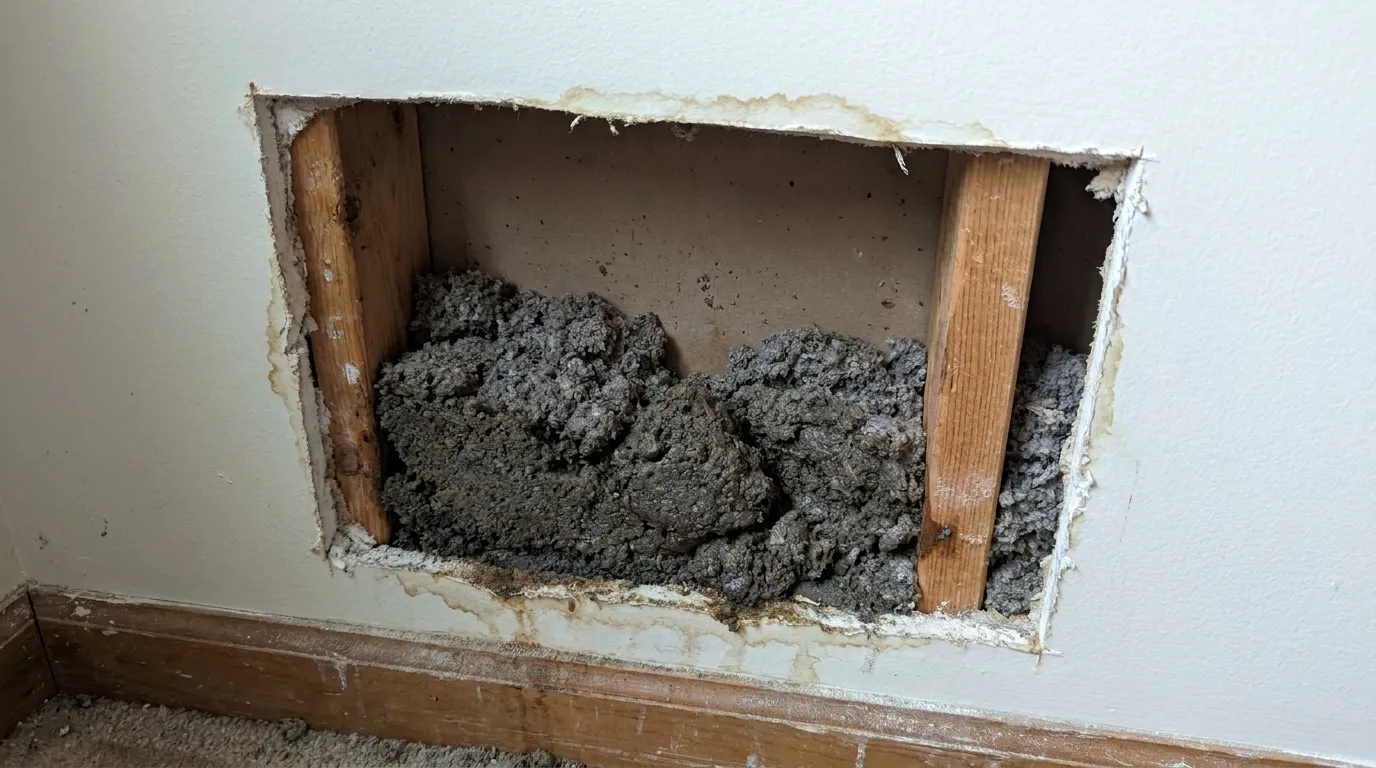
Blown-in cellulose is shredded recycled paper, so it absorbs water, mats into heavy clumps, and dries very slowly. In walls, wet cellulose usually has to be removed because it slumps to the bottom plate and holds water against the framing. In attics, a small damp patch from a quickly fixed leak may dry, but soaked or matted areas should be vacuumed out and replaced.
- Fix the Leak First: Stop the roof, plumbing, or condensation source feeding the wet insulation.
- Check the Ceiling Below: Wet cellulose is heavy. If the ceiling under it is stained, bulging, or sagging, keep people out from under it.
- Probe the Insulation: From a joist in the attic, reach down to the ceiling drywall; matted, heavy, or dark clumps are soaked.
- Remove, Dry, Replace: Vacuum out soaked cellulose with an insulation removal vacuum, dry the framing and drywall, then blow in new insulation.
First Actions (To Do Immediately)
- 1 Stop the water source and cover any active roof leak.
- 2 Look for staining, bulging, or sagging in the ceiling below the wet area.
- 3 In the attic, stand only on joists or boards and check how far the wet area spreads.
- 4 Photograph the wet insulation and the source for your records.
DO NOT DO
- ✕ Do not step on the ceiling drywall between attic joists.
- ✕ Do not rake wet cellulose around to dry it; it spreads moisture and mold.
- ✕ Do not close a wall that still has damp cellulose inside.
How the Water May Be Spreading
WALL CAVITY INSULATION: WET FIBERGLASS VS. CELLULOSE FAILURE
What This Usually Means
Cellulose works by trapping air between loose paper fibers. When it gets wet, the fibers absorb water, collapse together, and form a dense mat that no longer insulates. With little air moving through the mat, the water inside evaporates very slowly, giving mold time to grow on the paper fibers and the wood around them.
Why Hidden Moisture Matters
Wet cellulose adds weight to ceiling drywall, which can sag or collapse, and it keeps the framing and the back of the drywall wet. Inside walls it can hide a leak for a long time. Prompt removal limits mold, protects the ceiling, and restores the insulation value.
Attic vs. Wall Cellulose
- Attic, small damp spot: May dry if the leak is fixed quickly and the area is small and still loose.
- Attic, soaked or matted: Vacuum out the wet area, dry the drywall and joists, and re-blow insulation.
- Inside walls: Usually removed. Wet dense-pack cellulose slumps and holds water at the bottom plate.
How Wet Cellulose Is Removed
Contractors use a high-powered insulation removal vacuum that pulls cellulose through a hose into collection bags. In walls, the drywall is cut open so all damp material can be extracted; the drywall flood-cut calculator helps plan where to cut. The cavity is then dried with air movers and a dehumidifier, and the IICRC S500 dehumidifier and air mover calculator gives a starting equipment count.
Signs of Wet Insulation Above a Ceiling
Look for brown stains, bulges, nail pops, or sagging in the ceiling, a musty smell in upstairs rooms, or ice dams and icicles along the roof edge in winter. Treat any sagging ceiling below wet insulation as a collapse hazard.
What You Can Check Safely
- Listen for dripping or running water: Can help identify active leaks behind walls or above ceilings.
- Check the water meter: If all fixtures are off but the meter is spinning, you have an active plumbing leak.
- Inspect adjacent rooms: Water travels horizontally along floor joists and subfloors.
What Professionals Look For
- Thermal imaging (infrared) to detect temperature anomalies indicating hidden moisture.
- Moisture meters to test the exact saturation levels of wood, drywall, and masonry.
- Borescope inspections to look inside wall cavities without removing large sections of drywall.
- Hygrometers to measure the relative humidity of the affected rooms and evaluate the risk of condensation and mold.
Severity Matrix: Medium
Requires professional extraction equipment and dehumidifiers. Moderate risk of mold and structural damage.
Who to Call
Licensed Plumber or Water Damage Restoration Professional
Insurance & Documentation
- Documentation and claim context only; no coverage conclusion
Frequently Asked Questions
Can wet cellulose insulation dry out?
Small, lightly damp areas in an open attic sometimes can. Soaked, matted, or compressed cellulose, and any wet cellulose inside a wall, usually needs to be removed and replaced.
Does wet cellulose insulation cause mold?
It can. Cellulose is made of paper, so when it stays wet it becomes food for mold and holds moisture against the wood and drywall around it.
Is wet insulation in the attic dangerous?
It can be. Wet cellulose is heavy enough to make ceiling drywall sag or fall, and leaks near attic wiring add an electrical risk. Keep people out from under any sagging area.
Get Professional Help Now
Connect with a local water damage expert immediately.