Wet Fiberglass Insulation Behind Drywall: Dry It or Replace It?
Emergency Answer
Fiberglass itself does not absorb water, but a soaked batt holds water between its fibers, sags, loses most of its insulating value, and keeps the studs and drywall wet. Lightly damp insulation from clean water can sometimes dry once the cavity is opened, but batts that are soaked, compressed, stained, or wet from dirty water should be removed and replaced.
- Stop the Leak and Cut Power: Fix the water source and turn off outlets on the wet wall.
- Open the Cavity: Remove the baseboard and cut the drywall above the wet line so you can see the insulation.
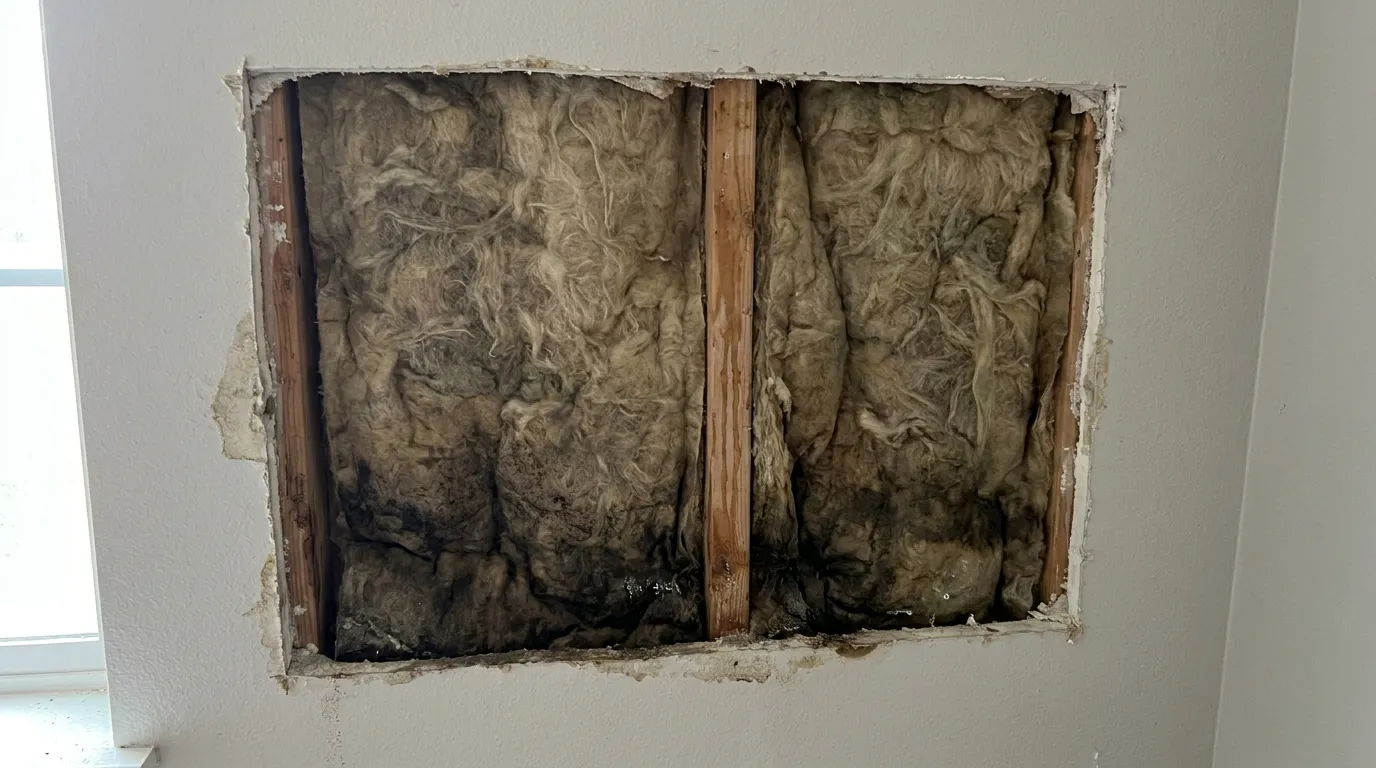
- Squeeze Test: Batts that drip or feel heavy, have slumped down the cavity, or smell musty need to come out.
- Dry the Framing: With the wet insulation removed, dry the studs and bottom plate before installing new batts.
First Actions (To Do Immediately)
- 1 Stop the leak and shut off power to outlets in the affected wall.
- 2 Remove baseboards and check the bottom of the drywall with a moisture meter.
- 3 Cut an inspection opening above the wet line to check the batt and framing.
- 4 Wear gloves, long sleeves, and a dust mask when handling wet fiberglass.
DO NOT DO
- ✕ Do not close the wall over damp insulation; it can hold moisture against the studs for weeks.
- ✕ Do not reuse batts soaked by toilet, sewage, or floodwater.
- ✕ Do not stuff wet batts back into the cavity; compressed fiberglass loses its insulating value.
How the Water May Be Spreading
WALL CAVITY INSULATION: WET FIBERGLASS VS. CELLULOSE FAILURE
What This Usually Means
Fiberglass batts trap air between glass fibers, and that trapped air is what insulates. When water fills those spaces, the batt gets heavy, slumps down the cavity, and stops insulating. Kraft paper facing also wicks water and can grow mold. Behind it, the studs and bottom plate stay wet as long as the batt holds water against them.
Why Hidden Moisture Matters
Wet insulation keeps the wall cavity damp long after the drywall surface looks dry, which leads to mold on the back of the drywall and rot in the framing. It also leaves a cold, uninsulated spot in the wall. Replacing batts is inexpensive compared with repairing rotted framing.
Dry or Replace?
- May dry: Lightly damp batts from clean water, caught quickly, with the cavity opened for airflow.
- Replace: Soaked, sagging, compressed, or stained batts; any batt wet from dirty water; batts with a musty odor or visible mold.
- Always check: The studs and bottom plate behind the batt must read dry before the wall is closed.
How Much Drywall to Remove
Cut above the highest wet reading so you can pull out every wet section of insulation. The drywall flood-cut calculator sets a cut height based on the water line and how far moisture wicked.
Drying the Cavity
With the insulation out, air movers and a dehumidifier dry the framing much faster. The IICRC S500 dehumidifier and air mover calculator estimates equipment for the room. Re-insulate only after the framing reads dry.
What You Can Check Safely
- Listen for dripping or running water: Can help identify active leaks behind walls or above ceilings.
- Check the water meter: If all fixtures are off but the meter is spinning, you have an active plumbing leak.
- Inspect adjacent rooms: Water travels horizontally along floor joists and subfloors.
What Professionals Look For
- Thermal imaging (infrared) to detect temperature anomalies indicating hidden moisture.
- Moisture meters to test the exact saturation levels of wood, drywall, and masonry.
- Borescope inspections to look inside wall cavities without removing large sections of drywall.
- Hygrometers to measure the relative humidity of the affected rooms and evaluate the risk of condensation and mold.
Severity Matrix: Medium
Requires professional extraction equipment and dehumidifiers. Moderate risk of mold and structural damage.
Who to Call
Licensed Plumber or Water Damage Restoration Professional
Insurance & Documentation
- Documentation and claim context only; no coverage conclusion
Frequently Asked Questions
Can wet fiberglass insulation dry out?
Lightly damp batts from clean water can sometimes dry once the wall is opened. Soaked, sagging, or contaminated batts should be replaced because they lose insulating value and hold moisture against the framing.
Does wet fiberglass insulation grow mold?
The glass fibers themselves do not feed mold, but dust, kraft paper facing, and the wood and drywall around a wet batt do. Mold often grows where the batt touches the studs and drywall.
How do I know if the insulation behind my drywall is wet?
Moisture meter readings on the drywall, a musty smell, or water at the base of the wall suggest it is wet. The only way to confirm is to open the wall or look through a small hole with a borescope.
Get Professional Help Now
Connect with a local water damage expert immediately.