Hardwood Floor Cupping After a Water Leak? Dry It Before You Sand
Emergency Answer
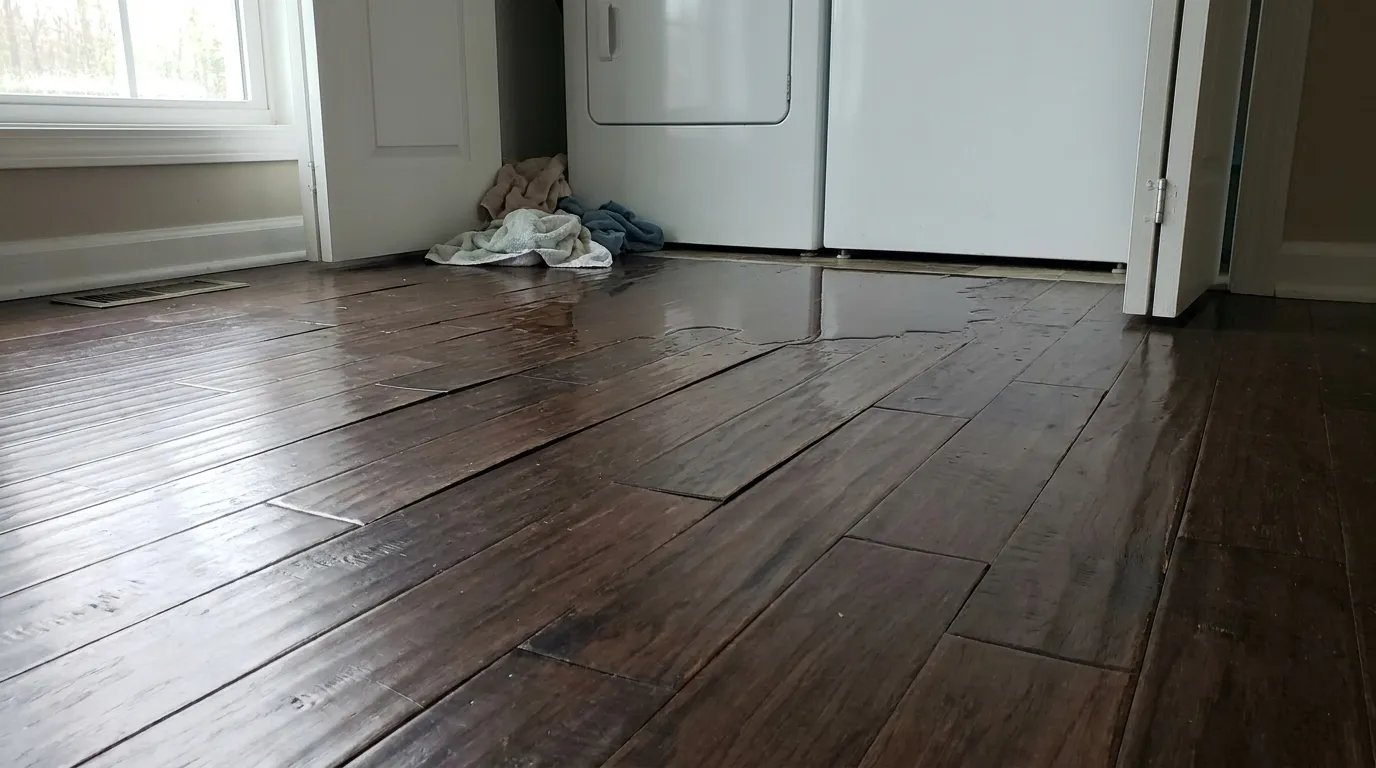
Hardwood cups when the underside of the boards absorbs more moisture than the top, usually from a leak that soaked the subfloor, so the edges rise above the center. Stop the water, start drying the subfloor right away, and give the boards time to flatten before anyone sands or replaces them.
- Stop the Source: Find and shut off the leak—dishwasher, fridge line, sink, or exterior water—before anything else.
- Extract and Dehumidify: Pull standing water off the surface and run dehumidifiers with the room closed; fans alone are not enough when the subfloor is wet.
- Measure, Don't Guess: Take moisture readings on the boards and the subfloor (from below if you can) and log them daily.
- Wait to Sand: Sand or refinish only after board and subfloor readings are back in the normal range for your home and the floor has settled.
First Actions (To Do Immediately)
- 1 Shut off the water source and remove any standing water.
- 2 Close the room and run a dehumidifier; add fans once the surface water is gone.
- 3 Check the subfloor from the basement or crawlspace for wet wood and drips.
- 4 Take dated photos and moisture readings of the affected boards.
DO NOT DO
- ✕ Do not sand cupped boards flat while they are still wet; they will crown once the bottom dries.
- ✕ Do not cover the floor with rugs or plastic, which traps moisture against the wood.
- ✕ Do not blast the floor with heat; drying too fast can split boards and open gaps.
How the Water May Be Spreading
CROSS-SECTION: SUBFLOOR MOISTURE GRADIENT & HARDWOOD CUPPING
What This Usually Means
Wood swells as it absorbs moisture. When the subfloor is wet, the bottom of each board takes on water and expands while the top stays drier, so the board bends into a shallow cup with raised edges. Cupping is a symptom: it tells you water is still below the floor.
Why Hidden Moisture Matters
A wet subfloor can grow mold and rot out of sight, and boards left wet too long may never flatten fully. Sanding too early creates the opposite problem, crowning, once the bottom dries and shrinks. Drying first is what decides whether the floor can be saved.
Can Cupped Hardwood Flatten on Its Own?
Often, yes. Mild cupping frequently relaxes over several weeks once the subfloor dries and the moisture difference between the top and bottom of the boards evens out. Severe cupping, boards that have buckled off the nails, or floors that stayed wet for weeks are less likely to recover fully.
How to Dry a Cupped Floor
Dehumidification does most of the work; fans help move air across the surface. Use the IICRC S500 dehumidifier and air mover calculator to size the equipment for the room. Restoration crews may also use floor drying mats that pull moisture up through the boards.
When to Sand, Refinish, or Replace
Wait until moisture readings on the boards and subfloor are stable and back in the normal range, which can take weeks. Then a flooring pro can sand out any remaining cupping. Boards that are split, black-stained, or moldy usually need to be replaced.
What You Can Check Safely
- Listen for dripping or running water: Can help identify active leaks behind walls or above ceilings.
- Check the water meter: If all fixtures are off but the meter is spinning, you have an active plumbing leak.
- Inspect adjacent rooms: Water travels horizontally along floor joists and subfloors.
What Professionals Look For
- Thermal imaging (infrared) to detect temperature anomalies indicating hidden moisture.
- Moisture meters to test the exact saturation levels of wood, drywall, and masonry.
- Borescope inspections to look inside wall cavities without removing large sections of drywall.
- Hygrometers to measure the relative humidity of the affected rooms and evaluate the risk of condensation and mold.
Severity Matrix: Medium
Requires professional extraction equipment and dehumidifiers. Moderate risk of mold and structural damage.
Who to Call
Licensed Plumber or Water Damage Restoration Professional
Insurance & Documentation
- Documentation and claim context only; no coverage conclusion
Frequently Asked Questions
Why is my hardwood floor cupping after a leak?
The bottom of the boards absorbed water from the wet subfloor and expanded more than the dry top surface, pushing the edges up. The subfloor needs to dry for the boards to settle.
How long does it take cupped hardwood to flatten?
Usually several weeks after the subfloor is dry, depending on how wet it got and how much drying equipment is used. Track moisture readings rather than waiting a fixed amount of time.
Should I sand my cupped hardwood floor?
Not until the floor is fully dry. Sanding wet cupped boards flat leaves the edges thinner, so when the bottom dries the boards crown in the middle instead.
Get Professional Help Now
Connect with a local water damage expert immediately.