Water Bubbles in Your Ceiling: What to Do
Emergency Answer
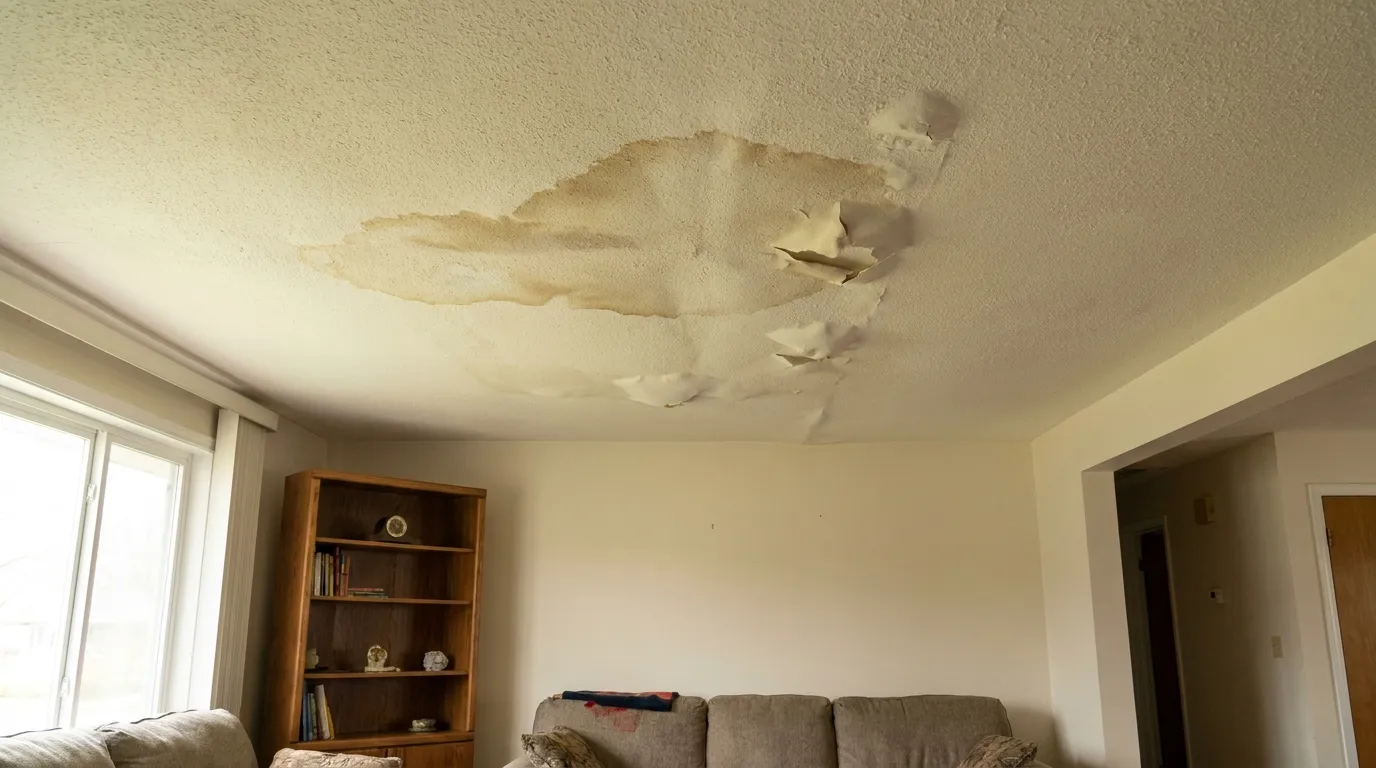
A water bubble in a ceiling usually means water has collected above or within the ceiling material. Keep people away from sagging or swollen drywall, do not stand beneath the bubble, and do not puncture it casually. Stop the water source if it can be done safely and keep clear of wet lights, outlets, or wiring.
First Actions (To Do Immediately)
- 1 Clear people, pets, and valuable items out from under the bulging, sagging, or dripping ceiling area.
- 2 Identify the likely water source directly above: upstairs bathroom, plumbing line, leaking appliance, roof or rain intrusion, or HVAC condensation.
- 3 Stop the water source at the fixture or main valve if safe to reach, or stop water use on upper floors immediately.
- 4 Turn off power at the breaker panel to any light fixtures, ceiling fans, or electrical outlets in the affected ceiling area.
- 5 Photograph the ceiling bubble, surrounding stains, and source area before any containment or repair.
- 6 Contact a professional to inspect hidden joist cavities, assess structural integrity, and perform controlled drying.
DO NOT DO
- ✕ Do not stand directly beneath sagging drywall, plaster, or bulging water bubbles.
- ✕ Do not casually puncture or pop a water bubble in the ceiling without safety preparation and containment.
- ✕ Do not operate light switches, fans, or electrical fixtures connected to a wet ceiling.
- ✕ Do not assume draining visible water resolves hidden moisture trapped inside the ceiling joists or insulation.
How the Water May Be Spreading
What This Usually Means
A ceiling water bubble forms when water seeps past drywall, plaster, or paint layers and pools against flexible surface paint or sagging drywall paper. The visible bubble represents only the collection point—water travels horizontally along joists, pipes, and electrical conduit, soaking surrounding insulation and ceiling framing. Spreading stains, bulging seams, or nearby light fixture drips indicate an active leak that requires source control and concealed cavity drying.
Why Hidden Moisture Matters
Hidden moisture matters because it provides the perfect environment for secondary damage. Mold can begin developing within 24 to 48 hours in dark, damp spaces like wall cavities, under subfloors, or inside HVAC ducts. Additionally, prolonged exposure to moisture degrades structural integrity—wood rots, drywall crumbles, and metal fixtures can corrode. The longer the materials stay wet, the more complex and expensive the restoration process becomes.
How Serious Is It?
A bulging ceiling is a high-severity situation because saturated drywall can fail without warning, releasing heavy debris and trapped water. Risk is highest near light fixtures or electrical wiring. Stop the source immediately and keep clear until the area can be evaluated and dried.
What You Can Check Safely
- Listen for dripping or running water: Can help identify active leaks behind walls or above ceilings.
- Check the water meter: If all fixtures are off but the meter is spinning, you have an active plumbing leak.
- Inspect adjacent rooms: Water travels horizontally along floor joists and subfloors.
What Professionals Look For
- Thermal imaging (infrared) to detect temperature anomalies indicating hidden moisture.
- Moisture meters to test the exact saturation levels of wood, drywall, and masonry.
- Borescope inspections to look inside wall cavities without removing large sections of drywall.
- Hygrometers to measure the relative humidity of the affected rooms and evaluate the risk of condensation and mold.
Severity Matrix: High
Requires immediate professional intervention. High risk of structural weakening, electrical hazards, and mold.
Who to Call
Licensed Plumber or Water Damage Restoration Professional
Insurance & Documentation
- Documentation and claim context only; no coverage conclusion
Frequently Asked Questions
What causes a water bubble in the ceiling?
Water bubbles form when a plumbing leak, upstairs appliance overflow, roof leak, or HVAC condensation pan overflows into the ceiling space and pools behind the surface paint or drywall.
Is a water bubble in the ceiling dangerous?
Yes. Saturated drywall or plaster loses structural strength and can collapse suddenly under the weight of trapped water. Additionally, water dripping near ceiling lights creates short-circuit and electrical fire hazards.
How can I tell where the ceiling water is coming from?
Look directly above the bubble for bathrooms, laundry rooms, or water lines. If there are no rooms above, inspect the attic space or roof area for leaks near chimneys, vents, or valleys.
Get Professional Help Now
Connect with a local water damage expert immediately.