Wet Subfloor Under Tile? Hollow Sounds and Loose Tiles Explained
Emergency Answer
Tile that starts sounding hollow or coming loose after a leak usually means water has reached the subfloor or underlayment and broken the thinset bond. Tile and grout slow drying, so the subfloor underneath can stay wet much longer than the surface suggests. Stop the leak, map the hollow area, and check the subfloor from below before deciding whether to re-tile.
- Stop the Water: Find the source—toilet, tub, shower pan, dishwasher, or supply line—and shut it off.
- Tap Test: Tap tiles with a coin or screwdriver handle. A hollow, drummy sound means the tile has lost its bond; mark those tiles with painter's tape.
- Check From Below: Look at the underside of the subfloor from the basement or crawlspace for dark stains, drips, or soft wood.
- Meter the Grout and Edges: Moisture readings through grout lines and at the floor edges show how far the water spread.
First Actions (To Do Immediately)
- 1 Shut off the water source and dry the tile surface.
- 2 Tap-test the floor and mark hollow or loose tiles.
- 3 Inspect the subfloor from below for staining, drips, or soft spots.
- 4 Check the toilet base, tub edge, and shower threshold for failed caulk or seals.
DO NOT DO
- ✕ Do not re-grout or seal over a wet floor; it traps moisture under the tile.
- ✕ Do not glue loose tiles back down until the subfloor is dry and solid.
- ✕ Do not ignore cracked tiles over a soft area; the subfloor may be failing.
How the Water May Be Spreading
CROSS-SECTION: WHY VINYL PLANK TRAPS DISHWASHER WATER AGAINST THE SUBFLOOR
What This Usually Means
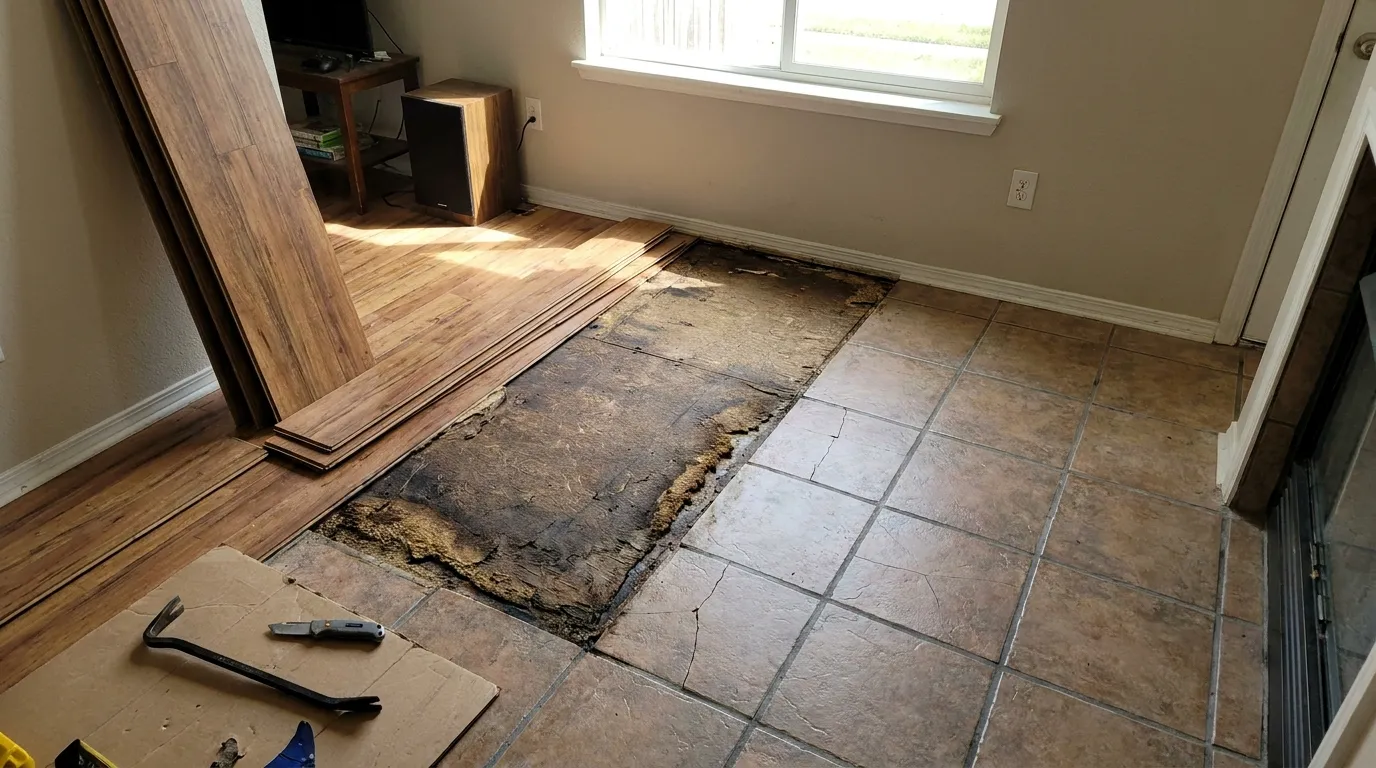
Tile is bonded to the subfloor or backer board with thinset mortar. When water soaks the layer underneath, wood subfloors swell and move, the bond releases, and tiles start to sound hollow, crack, or pop loose. Because tile and grout let moisture escape very slowly, the wood underneath can stay wet for weeks.
Why Hidden Moisture Matters
A wet wood subfloor under tile can delaminate, rot, and grow mold out of sight, and tile set over a soft subfloor will keep cracking. Catching it early may mean replacing a few tiles; waiting can mean tearing out the tile, backer board, and subfloor.
Why Tile Sounds Hollow After a Leak
A fully bonded tile sounds dull when tapped. When water swells the subfloor or weakens the thinset, small gaps open under the tile and it sounds hollow. Hollow spots that spread over time point to an ongoing leak.
Can a Subfloor Under Tile Dry Out?
Small, recent leaks can sometimes dry from below with dehumidification in the basement or crawlspace. Larger or long-term leaks usually need the tile removed so the subfloor can be dried or replaced. The IICRC S500 dehumidifier and air mover calculator helps estimate equipment for the space.
When to Replace the Subfloor
Replace sections that are soft, delaminated, black-stained, or moldy, or that flex when walked on. Plywood tolerates a short soaking better than OSB or particle board, which swell and lose strength at the edges.
What You Can Check Safely
- Listen for dripping or running water: Can help identify active leaks behind walls or above ceilings.
- Check the water meter: If all fixtures are off but the meter is spinning, you have an active plumbing leak.
- Inspect adjacent rooms: Water travels horizontally along floor joists and subfloors.
What Professionals Look For
- Thermal imaging (infrared) to detect temperature anomalies indicating hidden moisture.
- Moisture meters to test the exact saturation levels of wood, drywall, and masonry.
- Borescope inspections to look inside wall cavities without removing large sections of drywall.
- Hygrometers to measure the relative humidity of the affected rooms and evaluate the risk of condensation and mold.
Severity Matrix: High
Requires immediate professional intervention. High risk of structural weakening, electrical hazards, and mold.
Who to Call
Licensed Plumber or Water Damage Restoration Professional
Insurance & Documentation
- Documentation and claim context only; no coverage conclusion
Frequently Asked Questions
Why does my tile sound hollow after a leak?
Water has reached the subfloor or underlayment and weakened the bond between the tile and the surface beneath it. The tile is no longer fully attached, so it sounds hollow when tapped.
Can I fix loose tiles without removing the floor?
Only if the subfloor is dry and solid. Loose tiles can be lifted, cleaned, and reset with fresh thinset. If the subfloor is wet or soft, it has to be dried or repaired first.
How long does a subfloor under tile take to dry?
Much longer than an exposed floor, often weeks, because tile and grout block evaporation. Drying from below or removing the tile speeds it up.
Get Professional Help Now
Connect with a local water damage expert immediately.