Pipe Burst? What to Do in the First 20 Minutes
Emergency Answer
Shut off the main water, stay away from wet electrical, close the water heater's cold-water valve, open the faucets to drain the pipes, then photograph everything before cleanup.
- Stop the Water: Close the main shutoff. Lever handle: a quarter turn so it sits across the pipe. Round wheel: clockwise until it stops. If the leak is right at one fixture and its own valve is there, close that instead.
- Make the Electrical Safe: If water is reaching lights, outlets or appliances, turn off the main breaker, but only from a dry spot with dry hands. If you'd have to step in water to reach the panel, stay out and call the power company or an electrician.
- Protect the Water Heater and Drain the Lines: Close the valve on the cold-water pipe going into the water heater. Then open the faucets, starting with the lowest one in the house, and flush the toilets once.
- Photograph Before Cleanup: Walk through every wet room on video, then photograph the break, the wet ceilings, walls and floors, and damaged belongings.
- Call a Plumber, Then Your Insurer: The plumber fixes the pipe. If water got into ceilings, walls or several rooms, a water damage restoration company dries it out.
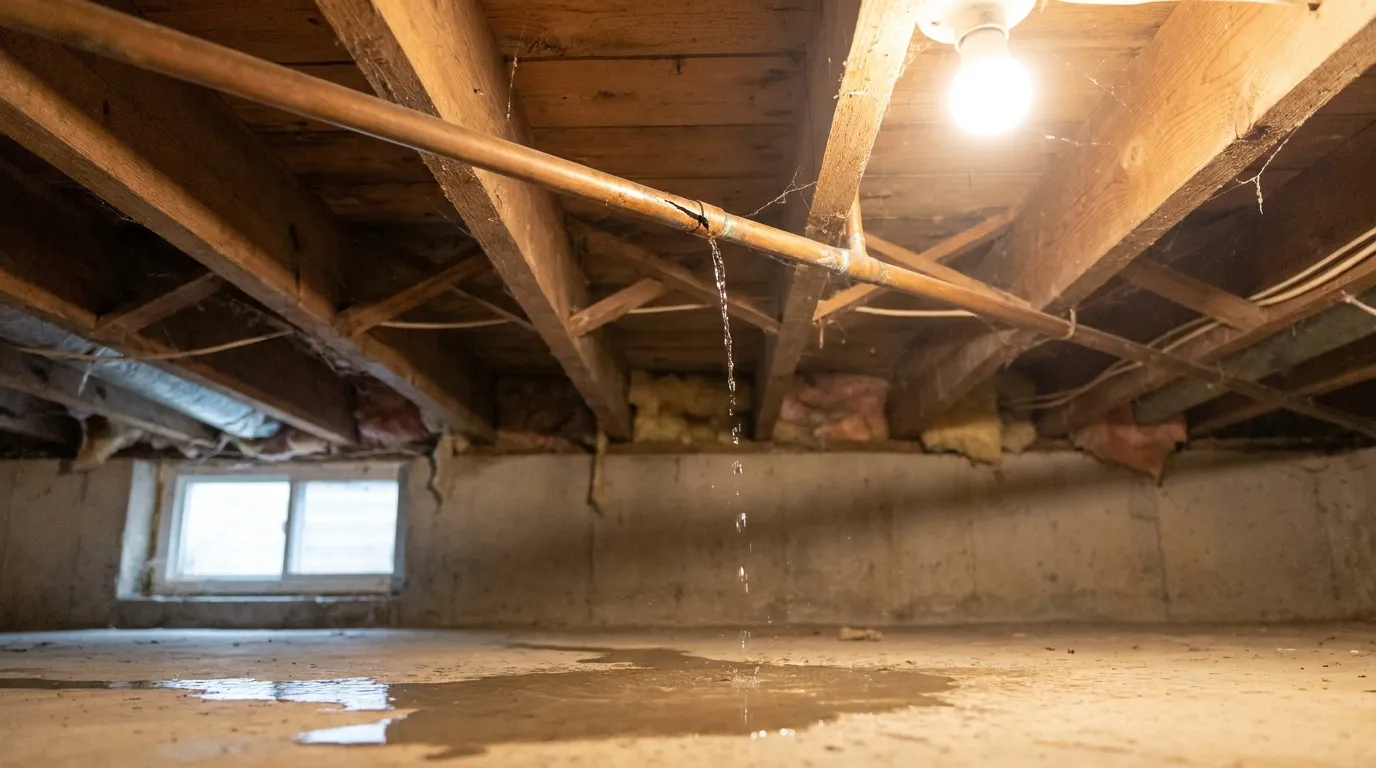
First Actions (To Do Immediately)
- 1 Close the main water shutoff, or the fixture's own valve if the leak is right at a sink, toilet or appliance.
- 2 If water is near outlets, cords, light fixtures or the panel, turn off the main breaker from a dry spot, or call the power company if you can't reach the panel without touching water.
- 3 Close the valve on the water heater's cold-water inlet, then open the faucets, starting with the lowest one.
- 4 Move people, pets and valuables away from sagging ceilings and wet electrical.
DO NOT DO
- ✕ Do not walk into standing water that's touching outlets, cords, appliances or the electrical panel, and never touch the panel with wet hands.
- ✕ Do not flip the wall switch or touch a ceiling light while it's dripping. Use the main breaker.
- ✕ Do not turn the power back on until an electrician has checked anything that got wet.
- ✕ Do not force a shutoff valve that won't turn, and never use a pipe or long wrench for leverage. The stem can snap and leave it stuck open.
- ✕ Do not stand under a ceiling that's sagging or bulging with water.
- ✕ Do not throw out damaged belongings or the broken piece of pipe before you've photographed them for the insurer.
Which Pipe Is Leaking?
The First 20 Minutes, in Order
A burst supply pipe is under full house pressure. It keeps pouring until someone closes a valve, so the shutoff comes before everything except your own safety.
- Minutes 0–3: Stop the water. Close the main shutoff. If you can't find it, can't turn it, or it's broken, call your water utility's 24-hour emergency line; many will shut the water off at the street. Call a plumber at the same time. In an apartment, call the property manager or building maintenance.
- Minutes 3–6: Make it safe. If water has reached outlets, lights, appliances or wiring, turn off the main breaker from a dry spot. If you'd have to stand in water to reach the panel, leave it and call the power company or an electrician. Keep everyone out from under sagging ceilings; see whether to pop a water bubble in the ceiling.
- Minutes 6–10: Protect the water heater and drain the pipes. Close the valve on the cold-water pipe going into the water heater. Turn off an electric water heater at its breaker, or set a gas one to pilot or vacation, so it isn't heating a tank that may be partly draining. Then open the faucets, starting with the lowest one, and flush each toilet once, so the water left in the pipes comes out there instead of through the break. If you have hot-water heat (radiators or baseboard) and the break is on a heating pipe, turn the thermostat down.
- Minutes 10–15: Record the damage. Before you move anything, take a slow video through every affected room, then photos of the break, the water, and each damaged item.
- Minutes 15–20: Get the water out and call for help. Mop, towels, and a wet-dry vacuum plugged into an outlet in a dry room; pull up rugs and lift furniture off wet floors. Call a plumber, then your insurer, and a restoration company if water reached ceilings, walls or more than one room.
Which Pipe Is It? Read the Drip
When water comes through a ceiling, when it drips tells you what's leaking, and whether closing the main will stop it.
- Drips all the time, whether or not anything is running: a water supply pipe, which stays under pressure until the main is closed. It slows and stops as the pipes drain, which also confirms it.
- Drips only after a flush, a shower or a sink is used upstairs: that fixture's drain or the toilet seal. Drains aren't under pressure, so closing the main won't stop it. Stop using that fixture until a plumber looks at it.
- Drips only when the air conditioning runs: the drain pan or condensate line of an attic unit. Turn the AC off.
- Drips only when it rains: a roof, window or flashing leak, not plumbing. Call a roofer.
- Water runs along the top of the drywall and the joists, so the drip can be several feet from the leak. Light fixtures are a low point with a hole in the ceiling, so water often shows up there first. See what to do with a water-damaged ceiling light.
Which Valve to Close
- Leak at one fixture (toilet, sink, washing machine, fridge, dishwasher): its own small valve, on the wall or floor behind it, is the fastest. See how to shut off a toilet, a fridge or a dishwasher.
- Leak in a wall, a ceiling, or a pipe you can't trace: the main shutoff. Most are where the water line enters the house: in the basement near the water heater or meter, at the front of the house near the outdoor faucet, or in the garage. See where to find your main water shutoff.
- Condo or apartment: you may not have a shutoff you can reach. Look behind an access panel under the kitchen or bathroom sink or in the laundry closet; if there's nothing, call the property manager right away.
- The valve won't turn, or there isn't one: don't force it. Call the water utility's emergency line to shut it off at the street, and see what to do if your shutoff valve is stuck.
- Renting a house: shut the water off first, then call your landlord or property manager.
If the Burst Is Outside the House
A pipe can break in the yard, at an outdoor faucet, or on the line that brings water from the street.
- Water bubbling up in the yard or along the foundation: close the main shutoff. If the leak is between the meter and the house, that stops it. If it doesn't stop, or you can't reach the main, call your water utility's 24-hour line.
- Water coming up in the street or sidewalk: that's probably a water main break, which is the utility's to fix. Report it on the same emergency line.
- Who pays: repairs on your side of the meter are usually yours. Where your part starts varies by city: in Saint Paul, Minnesota, the utility owns the line under the street, while in Minneapolis the homeowner owns the whole line back to the city main.
- The water bill: a hidden outdoor leak can run for days before anyone notices. Once it's repaired, ask your utility for a leak adjustment; many lower the bill, and Portland's water bureau is one that offers this.
- An outdoor faucet that split in a freeze: close the indoor valve that feeds it, leave the outdoor faucet open to drain, and have a plumber replace it before you use it again.
Photos and Records for the Insurance Claim
- Before anything is moved: a slow video walkthrough of every affected room, saying what you're filming. Open closets and cabinets to show water inside.
- Then photos: the broken pipe or fitting, water on floors, stains, sagging ceilings, and each damaged item. Add one of the front of the house.
- Keep the broken section of pipe after the plumber cuts it out, and ask the plumber to write on the invoice what broke, where, and what got wet.
- Keep every receipt: emergency plumber, fans or dehumidifier rental, and a hotel and meals if you can't stay in the house.
- What policies usually cover: a sudden and accidental discharge of water. That generally pays for the water damage, but not for repairing the pipe or appliance it came from.
- Freeze bursts: standard policies cover damage from freezing only if you used reasonable care to keep the heat on, or shut off the water and drained the pipes. See whether homeowners insurance covers burst pipes.
- Report it promptly and describe what you saw. Don't guess at how long it leaked or how much water came out. If you don't know, say so. See also starting cleanup before the insurer approves it.
Utility, Plumber or Restoration Company: Who to Call
- Still leaking, and the valve is broken, missing or won't turn: your water utility's emergency line, to shut the water off at the street, plus an emergency plumber.
- Water is off and only a small, unfinished area got wet: a licensed plumber. After a freeze, ask them to check other pipes along cold walls; one cold snap can crack more than one pipe.
- Water came through ceilings, into several rooms, or into walls: the plumber plus a water damage restoration company with IICRC-certified technicians, to measure moisture inside walls and floors and dry them out.
- Anything electrical got wet: an electrician, before the power goes back on.
- Insurers often suggest a restoration company they work with. You can use theirs or choose your own. Either way, get the scope of work in writing and read the contract before signing, including what you owe if the insurer doesn't pay.
While You Wait for Help
- Pull up area rugs and wet carpet pad. Pad soaks up water and rarely dries in place.
- Lift furniture off wet floors onto blocks, and move electronics and papers to a dry room.
- Pop off the toe kicks under kitchen and bathroom cabinets so air reaches the space underneath.
- Run fans and a dehumidifier if you have them, plugged into outlets in a dry room.
- Leave the water off until the pipe is fixed. Water held in insulation or pooled on top of a ceiling can keep dripping for hours after the supply is off.
- The clock: the EPA advises drying wet materials within 24 to 48 hours to prevent mold. Drywall can often be dried in place if it isn't swollen and the seams are intact; wet ceiling tiles and insulation are usually replaced. Surfaces feel dry long before the inside of a wall is, so a moisture meter, not touch, tells you when it's done. See what to do about wet drywall.
After the Repair: Turning the Water Back On
- Close the faucets you opened, except one cold tap on the lowest floor.
- Open the main slowly, a little at a time, so the pipes don't bang. Close the open tap once water runs without sputtering air.
- Open the water heater's cold-water valve, then open a hot faucet and let it run until the water comes out steadily with no air. That means the tank is full again.
- Only then turn the water heater's power or gas back on. Water heater makers warn that powering an electric heater with a partly empty tank burns out the heating elements.
- With every tap and water-using appliance off, watch the leak indicator on your water meter (a small triangle, star or dial) for a few minutes. If it moves, water is still escaping somewhere.
- If the burst came from a freeze, have the plumber check other pipes along outside walls before the next cold night.
Sources
- Centers for Disease Control and Prevention, Protect Yourself From Electrical Hazards.
- Electrical Safety Foundation, Flood Electrical Safety: High Water, High Stakes.
- Portland Water Bureau, How to Prepare Your Plumbing for Winter Weather (what to do if your pipes break) and How to Check for Leaks.
- U.S. EPA, A Brief Guide to Mold, Moisture and Your Home and Mold Remediation Guide, Table 1: Water Damage Cleanup and Mold Prevention.
- National Association of Insurance Commissioners, Will My Homeowners Insurance Policy Cover Water Damage From a Burst Pipe?
- DC Department of Insurance, Securities and Banking, If My Frozen Pipes Burst, Am I Covered by Insurance?
- American Water Heater, Residential Electric Water Heater Instruction Manual.
- City of Minneapolis Public Works, Frozen Water Service Lines, and Saint Paul Regional Water Services, Plumbing Information for Home Owners.
Severity Matrix: Critical
Life-safety hazard. Evacuate if necessary. Requires complete professional mitigation and potential reconstruction.
Who to Call
Licensed Plumber or Water Damage Restoration Professional
Insurance & Documentation
- Mitigation/documentation support only; no coverage conclusion
Frequently Asked Questions
What is the first thing to do when a pipe bursts?
Shut off the main water valve. The only thing that comes first is your safety: if water is reaching outlets, lights or the electrical panel, stay out of it, and turn off the main breaker only if you can reach it from a dry spot.
Should I turn off the electricity if a pipe bursts?
If water has reached outlets, lights, appliances or wiring, yes: turn off the main breaker, but only from a dry spot with dry hands. If you'd have to step in water to reach the panel, call the power company or an electrician instead. Leave the power off until an electrician has checked anything that got wet.
Does homeowners insurance cover a burst pipe?
Usually the water damage from a sudden burst is covered, but not repairing the pipe itself. Damage from a slow leak over weeks usually isn't, and a freeze burst can be denied if the heat wasn't kept on or the water wasn't shut off and drained. See [whether homeowners insurance covers burst pipes](/insurance/does-homeowners-insurance-cover-burst-pipes/).
How can you tell if a pipe burst in the wall?
Look for stains or damp patches on drywall, bubbling paint, a hissing or running-water sound with every tap off, a musty smell, or a water bill that jumps. To confirm it, turn off every tap and appliance and watch the leak indicator on your water meter. If it keeps moving, water is escaping somewhere.
How long does it take to dry out after a burst pipe?
Longer than it looks. The EPA advises drying wet materials within 24 to 48 hours to prevent mold, and the inside of walls, insulation and subfloor take longer than surfaces. A restoration company measures moisture until materials are back to normal readings, instead of going by how the surface feels.
Get Professional Help Now
Connect with a local water damage expert immediately.
Related Resources
- →Where Is My Main Water Shut Off? How to Find It by House Type
- →Frozen Pipes: What to Do, How to Tell If One Burst, and How to Thaw It Safely
- →Water Shut Off Valve Stuck in Open Position: How to Free Gate & Ball Valves Without Breaking the Pipe
- →Does Homeowners Insurance Cover Burst Pipes? (What's Covered vs. Excluded)