Water in an Electrical Outlet? What to Do First
Emergency Answer
Turn off the breaker from a dry spot before touching anything, unplug, and replace the outlet if it sparked or got dirty water, urine or floodwater in it.
- Hands Off Until It's Off: Don't touch the outlet, the cord, or the water around it. Never wipe a live outlet with a cloth.
- Breaker Off From a Dry Spot: Turn off the breaker for that room, or the main if you're not sure which. If the panel is in standing water, stay out and call the utility.
- Unplug Everything: Once the power is off, unplug what was in the outlet and any wet power strip or extension cord.
- Fire Signs Mean It Stays Off: Sparks, smoke, a burning smell or melted plastic: leave the breaker off. If anything is burning, get out and call 911.
- Replace, Don't Rush: An outlet that sparked, or got dirty water, urine or floodwater in it, gets replaced. Don't blow-dry it to get the power back.
First Actions (To Do Immediately)
- 1 Don't touch the outlet, anything plugged into it, or the water around it while it may be live.
- 2 Turn off that circuit at the breaker, or the main, from a dry spot. If the panel is in standing water, call the electric utility.
- 3 Once the power is off, unplug everything from the outlet and pull out wet power strips and cords.
- 4 If outlets went dead, look for a tripped GFCI in the kitchen, bathrooms, garage, basement and outside before calling anyone.
DO NOT DO
- ✕ Do not wipe water off an outlet with a cloth or paper towel while it's live.
- ✕ Do not walk into standing water that has reached outlets, cords or a power strip, or wade to a panel in a flooded basement.
- ✕ Do not pull the electric meter or cut the utility's seal to get the power off. Call the utility.
- ✕ Do not plug something into an outlet that just sparked or smoked, to test it or to find which breaker it's on.
- ✕ Do not blow-dry or heat a wet outlet or GFCI to get the power back sooner. The manufacturers' guidance is not to dry and reuse wiring devices that got wet.
- ✕ Do not wrap a wet or sparking outlet or cable in electrical tape or duct tape and turn the power back on.
- ✕ Do not assume an outlet with nothing plugged in is harmless. Outlets are usually wired in a chain, and power for other outlets and lights passes through its screws.
- ✕ Do not keep forcing a GFCI that trips again right away. Leave it off until the wet outlet has dried or an electrician has found the fault.
Why a Wet Outlet Can Stay Live, and When to Replace It
The First Few Minutes
Most outlet spills end with a tripped breaker or GFCI and nothing worse. The two real risks are a shock while the outlet is still live, and damage inside it that you can't see and that heats up later.
- Keep your hands off. Don't touch the outlet, anything plugged into it, or water that's touching it. A wet cloth on a live outlet can put you in the circuit.
- Turn the power off at the panel, from a dry spot. Switch off the breaker labeled for that room. If the labels are wrong or missing, turn off the main breaker. Don't touch the panel with wet hands or while standing on a wet floor.
- If the panel is in a flooded basement, don't go down there. Call your electric utility to disconnect the power, or 911 if someone is in danger. Don't pull the meter yourself.
- Unplug once it's off. Pull out plugs, power strips and extension cords that got wet, and move cords off the floor.
- Look for fire signs. Sparks, smoke, a burning smell, or melted or blackened plastic mean the breaker stays off and the outlet gets replaced. If anything is burning, get everyone out and call 911.
- Take a photo of the outlet and where the water came from, especially if you rent or the water came from a leak.
- Keep the fridge shut if it's on the dead circuit. The USDA says a closed refrigerator keeps food safe for about 4 hours and a full freezer for about 48 (24 if half full). For longer, move food to a cooler with ice.
Why a Wet Outlet Can Still Be Live
A breaker that didn't trip doesn't mean the outlet is safe.
- A regular breaker protects the wiring, not you. It trips at 15 or 20 amps. Water across an outlet often carries far less than that, so the outlet can stay live.
- A GFCI protects people. It compares the current going out with the current coming back and cuts the power when as little as 4 to 6 milliamps goes missing, for example through water to ground. That's the range UL 943 sets for the GFCIs used in homes, and it's why GFCIs trip after spills and rain when breakers don't.
- A GFCI doesn't cover everything. It protects its own outlet and the outlets wired after it, not the wires feeding it. And it only reacts to current leaking to ground; it can't tell a person touching both slots from a lamp.
- Standing in water makes it worse. Touching something live while you're in water, or touching a faucet, pipe or furnace, gives the current a path through you.
- The damage can show up later. What's dissolved in the water, such as minerals, soap, urine or silt, corrodes the metal contacts. Corroded contacts resist the current and heat up under load. NEMA, the electrical manufacturers' association, notes that contaminants can stay inside devices even after they've dried. In one case we read, a urine-soaked outlet kept working for about a year before part of the house lost power and the owner found the wiring corroded.
- Unused doesn't mean idle. Outlets are usually wired in a chain. Power for the outlets and lights further along passes through the wet outlet's screws, so it can heat up with nothing plugged into it.
Dry It Out or Replace It?
NEMA's guidance says receptacles, switches, GFCIs and surge protectors that got wet should be replaced, and that drying or washing them shouldn't be attempted, because contaminants stay inside after they dry. That guidance was written for floods and other large water events. For a small splash, electricians in the threads we read split: 5 said an outlet is fine once it's dry, 8 said replace it. Our view: a standard outlet costs a few dollars and the damage is inside where you can't see it, so replacing it is the safer choice.
- A small splash of clean water, no trip, no sparks, a modern outlet: the lowest risk. Keep the power off, take the cover plate off and check for water in the box. Many electricians would reuse it once it's completely dry; replacing it is cheap and removes the doubt.
- It sparked, popped, smoked, sizzled or smelled burnt: replace it, and have the wire ends checked for heat damage. Don't dry it and test it.
- Dirty, soapy or sugary water (dishwater, a drink, mop water): replace it. What's dissolved in the water stays behind and corrodes the contacts.
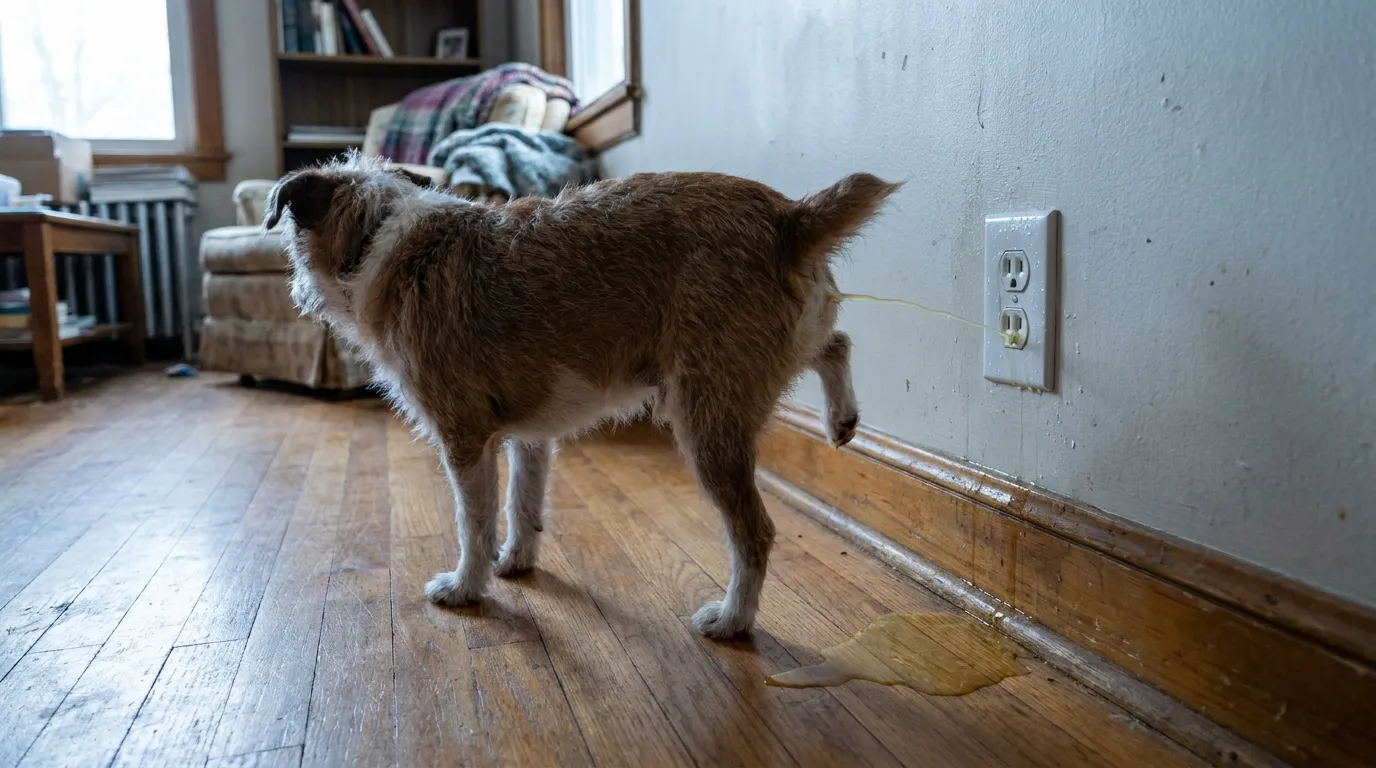
- Urine: replace the outlet and throw out the power strip or cord. See the urine section below.
- Floodwater, or the outlet was underwater: replace it, along with the box if it isn't rated for wet locations, and have an electrician check the wiring before the power goes back on.
- A GFCI, power strip or surge protector got wet: replace it. NEMA lists GFCIs and surge protectors among the devices to replace.
- An old outlet (loose, cracked, no ground hole, plugs fall out): replace it now. The spill is a good reason.
What Happened in About 50 Cases We Read
We read about 40 Reddit threads describing a first-hand case, plus first-hand replies, about 50 incidents in all, posted between 2013 and 2026, along with three electricians' videos. People post when something trips, sparks or won't come back on, so these show how cases play out, not how often water in an outlet causes damage.
- Spills and splashes (9 threads): a breaker or safety switch tripped in 5; 4 fizzed, sparked, smoked or smelled burnt; none caught fire. Two were back in use after a reset. One father dried the outlet overnight, found it worked, and replaced it anyway.
- Rain in an outdoor outlet (8 threads): an indoor GFCI that protected the outdoor outlet tripped. In 4, the tripped GFCI was somewhere the owner didn't expect: an upstairs bathroom, the kitchen, the basement, the garage. In 4, it would only reset after drying, which took from 6 hours to several days.
- Water coming out of the wall or ceiling (7 threads): the outlet was where the water came out, not where it started: a rusted attic HVAC drain pan, an upstairs tub overflow, a roof leak, a window leak, a leak in a shared wall, and suspected condensation.
- Pet urine (8 threads, about 12 incidents): 5 had visible damage, from a blackened outlet to wiring corroded through. One person recalled a childhood fire from cat urine in an outlet.
- Flooding up to outlet height (6 threads): one person felt a tingle near a submerged extension cord, and two couldn't reach a panel that was in the flooded basement.
Outlets Dead After a Spill or Rain? Find the GFCI
One GFCI often protects several outlets, sometimes in other rooms. In 4 of the rain cases we read, the tripped GFCI was in a different part of the house.
- Unplug everything on the dead outlets, including outdoor lights and extension cords.
- Check every GFCI, the outlets with TEST and RESET buttons, in the kitchen, bathrooms, garage, basement, laundry area and outside. Press RESET firmly.
- Check the panel. A tripped breaker sits in the middle, not fully off, so it can look on. Push it all the way off, then back on. A breaker with its own TEST button is a GFCI breaker and protects the whole circuit.
- Flip nearby wall switches on. A GFCI fed through a wall switch, like the one under many kitchen sinks for the disposal, won't reset with the switch off. In one thread, that fixed it for the poster and at least 6 other people who replied.
- In an apartment, the breaker may be outside your unit, in a hallway or meter room. In one case we read, that's where the trip was. Ask the building.
- If it trips again right away, stop. Water is probably still in an outlet on that circuit, often an outdoor one. Leave it off and try again once it's dry.
- Red light and won't reset? GFCIs made since June 29, 2015 test themselves. Manufacturers say a solid or flashing red light that stays on after TEST and RESET, or a GFCI that won't reset with power on the circuit, means it has to be replaced. A GFCI also won't reset if no power is reaching it or it was wired backward.
- Still dead? Call an electrician. They can disconnect the outlets after the GFCI to tell a bad GFCI from water further along the circuit.
Water Coming Out of the Outlet
If water is dripping out of an outlet or a ceiling light and nothing was spilled, the box is just where the water comes out. Water runs along framing and cables inside the wall and drips out at the first opening.
- Turn off the breaker for that outlet and any lights nearby, and keep it off.
- Find the water. Look above it: a bathroom, a tub, a window, the roof, or an attic air handler. In one case we read, it was an air conditioner drain pan rusted through in the attic, right above the outlet.
- Call for the source first: a plumber, roofer or HVAC technician to stop the water. Then an electrician to replace the wet outlet or fixture.
- Wet only in humid weather, on an outside wall? It may be condensation behind the cover plate rather than a leak. Foam gaskets behind the plates helped in one case. See condensation or a leak?
- Ceiling light dripping? See what to do with a water-damaged ceiling light and can water dripping from a light cause a fire?
Pet Urine on an Outlet or Power Strip
Urine is worse than water because of what it leaves behind when it dries. In the cases we read, urine-soaked outlets went black, sizzled, and corroded the wiring until part of the house lost power.
- Breaker off, then unplug. Don't touch a wet power strip or cord while it's plugged in.
- Replace the outlet, and throw out the power strip or cord. Don't clean and reuse them.
- If you rent, tell the landlord. Hiding it delays the repair, and the electrician will see the corrosion anyway.
- Prevent a repeat with outlet covers or plug guards, and mount power strips off the floor. For a cat that keeps marking, talk to a vet.
If the Outlet Was Underwater
Flooding is different from a splash. NEMA and the Electrical Safety Foundation say submerged receptacles, switches, GFCIs, breakers and indoor cable have to be replaced, and that the power should stay off until an electrician has checked the system.
- Don't go into the water if it's above the outlets, baseboard heaters or furnace, or near the panel. Have the utility disconnect the power.
- A breaker that didn't trip doesn't make the water safe. One poster felt a tingle near a submerged extension cord.
- What gets replaced: receptacles, switches, GFCIs, breakers and fuses, outlet boxes not rated for wet locations, and indoor cable (NM, often called Romex) that was underwater. Whether the panel itself can be reconditioned is the electrician's call with the manufacturer; Minnesota requires submerged panel interiors to be replaced.
- See how to handle a flooded basement.
Preventing a Repeat
Rain in outdoor outlets was the clearest pattern in the threads, and the fix is usually cheap.
- Use an in-use cover outside. The electrical code requires outdoor outlets to have a cover that stays weatherproof with a plug in it (the deep "bubble" type, marked "extra-duty") and to be weather-resistant (marked WR). Old flat flip covers only seal with nothing plugged in. A cord for a camera or holiday lights held the cover open in 2 cases we read.
- Check the gasket. The foam gasket behind an old outdoor cover crumbles with age; in one case it was the whole cause.
- Caulk around an outdoor cover on the top and sides only, leaving the bottom open so water that gets in can drain.
- Indoor cable buried without conduit soaks up groundwater and trips the GFCI every time it rains; it needs rewiring. That was the cause in one thread.
- Outdoor outlets taking down the garage freezer? They're probably wired after the garage GFCI. An electrician can give the outdoor outlets their own GFCI.
- Don't tape over an outdoor outlet. In one case water was running out of the bottom of a taped-up box.
- GFCI protection indoors: the 2023 National Electrical Code requires it for outlets in kitchens, bathrooms, garages, basements, laundry areas, crawl spaces, outdoors and within 6 feet of a sink. Older homes may not have it everywhere. The CPSC says to test GFCIs monthly: press TEST, check that a lamp plugged in goes off, then press RESET.
- Pets: outlet covers, and power strips off the floor.
If Someone Got Shocked
- Don't touch the person while they're still in contact with the current. Turn the power off first, or move the source away with something dry that doesn't conduct, like wood or plastic.
- Call 911 for burns, confusion, trouble breathing, an irregular heartbeat, muscle pain or twitching, a seizure, or passing out. Start CPR if they show no signs of breathing, coughing or movement.
- Even if they feel fine, Mayo Clinic says anyone injured by electricity should see a healthcare professional.
Renters, Landlords and Insurance
- If you rent, stop using the outlet, tell the landlord in writing with a photo, and let them send an electrician. Six of the threads we read were from tenants, and every reply said the same.
- The outlet itself is cheap. A standard outlet costs a few dollars; most of the cost is the electrician's visit, which usually has a minimum service charge.
- The insurance question is about the water, not the outlet. A burst pipe, a roof leak and a flood are treated very differently. See does insurance cover water damage repair? and roof leak coverage.
Who to Call
- 911: fire, smoke, or someone hurt.
- Electric utility: the panel is in floodwater or you can't reach it safely.
- Electrician: sparks, smoke or a burning smell; urine or floodwater; a GFCI that won't reset; outlets that stay dead; a wet panel or breaker.
- Plumber, roofer or HVAC technician: water coming out of an outlet or light when nothing was spilled.
- Landlord or building maintenance: if you rent. In apartments, the breaker may be outside your unit.
Sources
- National Electrical Manufacturers Association, NEMA CS 70006-2026, Evaluating Water-Damaged Electrical Equipment, Sections 1, 3.1, 3.5, 3.6 and 3.7.
- Electrical Safety Foundation, Water-Damaged Electrical Equipment and Flood Electrical Safety.
- Minnesota Department of Labor and Industry, Recommendations for electrical equipment damaged by floodwaters.
- U.S. Consumer Product Safety Commission, GFCI Fact Sheet, Home Electrical Safety Checklist, and Considerations for Installation of Smoke Alarms on Residential Branch Circuits, Section 3.2 (citing the UL 943 trip range of 4 to 6 mA).
- National Electrical Code, Section 406.9(B)(1), Receptacles in Wet Locations, as reproduced in IRC E4002.9 on UpCodes.
- National Electrical Code (2023), Section 210.8(A), GFCI protection in dwellings, as summarized by the City of Sycamore, Ill. and Mike Holt Enterprises.
- UL 943 self-test requirement, effective June 29, 2015: Hubbell and Leviton. GFCI lockout and end-of-life indicators: Eaton and Leviton installation instructions.
- USDA Food Safety and Inspection Service, Keep Your Food Safe During Emergencies.
- Mayo Clinic, Electrical shock: First aid.
- Reported cases: about 50 first-hand accounts in about 40 Reddit threads (r/electricians, r/AskElectricians, r/askanelectrician, r/HomeImprovement, r/DIY, r/homeowners, r/HomeMaintenance and pet and UK/Australia forums), 2013 to 2026, plus three electricians' YouTube videos, read and counted by Emergency Damage Pros in November 2026.
Severity Matrix: Critical
Life-safety hazard. Evacuate if necessary. Requires complete professional mitigation and potential reconstruction.
Who to Call
Licensed Plumber or Water Damage Restoration Professional
Insurance & Documentation
- Mitigation/documentation support only; no coverage conclusion
Frequently Asked Questions
Is it safe to use an outlet after water got in it?
Not until the power has been off and it's completely dry, and not at all if it sparked, smoked, or got dirty water, urine or floodwater in it; those get replaced. For a small splash of clean water, many electricians say it's fine once dry, but NEMA's guidance is to replace wiring devices that got wet, and a new outlet costs a few dollars.
How long does a wet outlet take to dry?
There's no safe number. In the outdoor rain cases we read, a GFCI would reset after anything from 6 hours to several days. A GFCI resetting only tells you the leak to ground has stopped, not that the contacts aren't corroded. Don't use a hair dryer or heater to speed it up.
Can water in an outlet cause a fire?
It can, though rarely right away. Of the 9 spill cases we read, 4 fizzed, sparked or smoked and none caught fire. The bigger risk is later: water and what's dissolved in it corrode the contacts, and corroded contacts heat up under load. Urine is the worst case; one person recalled an outlet that caught fire after a cat sprayed it.
Why didn't the breaker trip when water got in the outlet?
A regular breaker trips at 15 or 20 amps, to protect the wiring. Water often carries far less than that, so the outlet stays live. A GFCI trips at about 5 milliamps leaking to ground, which is why GFCI outlets trip after spills and rain when breakers don't.
Why won't my GFCI reset after it rained?
Usually water is still in an outlet it protects, often an outdoor one, and it will reset once that dries. Check that no wall switch controls it and that the breaker is fully on. If it shows a red light and won't reset with power on the circuit, it failed its self-test and has to be replaced. If it trips every time it rains, the outdoor outlet needs an in-use cover or the wiring needs checking.
My cat peed on an outlet or power strip. What do I do?
Turn off the breaker before touching anything, then unplug. Replace the outlet and throw out the power strip or cord rather than cleaning them; what urine leaves behind when it dries keeps corroding the contacts. If you rent, tell your landlord.
Is a wet outlet dangerous if nothing is plugged into it?
It can be. Outlets are usually wired in a chain, and power for the outlets and lights further along passes through its screws. Keep the breaker off until it's dry or replaced.
Get Professional Help Now
Connect with a local water damage expert immediately.