Does Progressive Cover Mold?
Emergency Answer
Only when the mold comes from a covered water loss, like a burst pipe or a water heater that failed suddenly. On Progressive Home (ASI) policies, mold is capped at $5,000 for the whole policy period, and that one amount covers the mold damage, removal, tear-out to reach it, and testing. Leaks that ran 14 days or more are excluded unless they were hidden inside a wall, floor or ceiling and unknown to you. Progressive also sells policies from other insurers, such as Homesite, so check the company named on your declarations page.
- Find the insurer's name on your declarations page: Progressive Home policies are written by its ASI companies; others sold through Progressive come from separate insurers such as Homesite. The mold limit and rules come from that company's policy.
- Look for the fungi limit: On Progressive Home (ASI) policies it's the "Limited Fungi, Wet or Dry Rot, or Bacteria" endorsement, form ASI HO LF, with a $5,000 limit.
- Stop the water and start drying: The ASI form pays for mold only if "all reasonable means were used to save and preserve the property." The EPA says to dry water-damaged areas within 24 to 48 hours.
- Photograph where the leak was before anything is cut out: Inside a wall, under a floor or above a ceiling matters. The ASI form lifts the 14-day rule for leaks that were hidden there and unknown to you.
- Say when you found it, and don't guess how long it ran: Tell the insurer what you saw and when. Let the plumber or adjuster estimate the leak's age from the evidence.
First Actions (To Do Immediately)
- 1 Shut off the water to the leak, or the main shutoff if you can't isolate it.
- 2 Take photos and video of the leak, the wet areas and any mold before you move, cut or clean anything.
- 3 Have a plumber fix the leak and write down what failed, where it was, and whether it could be seen without opening a wall or floor.
- 4 Start drying: fans, a dehumidifier, and wet carpet or pad pulled up. Keep the receipts.
- 5 Call the claims number for the insurer named on your declarations page and ask for the mold limit before mold work begins.
- 6 Get a written estimate that separates water damage from mold removal. Only the mold part comes out of the $5,000.
- 7 Keep every letter and email. Ask for every denial reason in writing.
DO NOT DO
- ✕ Do not assume Progressive handles the claim. Homesite's site says "Progressive is not responsible for the insurance claims" on the policies Homesite writes.
- ✕ Do not tear out or bleach moldy areas before photographing them. The adjuster needs to see where the leak was and whether it was hidden.
- ✕ Do not guess at how long the leak ran. A guess of "two weeks" can put you past the 14-day line.
- ✕ Do not let a contractor start mold removal before you know the limit. Testing, tear-out and removal can use up $5,000 fast.
- ✕ Do not leave water sitting while you wait for the adjuster. The ASI form requires reasonable steps to protect the property.
- ✕ Do not skip a requested mold sign-off. One Progressive customer was told to get a licensed contractor to sign off on mold remediation before the policy would renew.
Which Mold Gets Paid, and What the Limit Has to Cover
When Progressive Pays for Mold
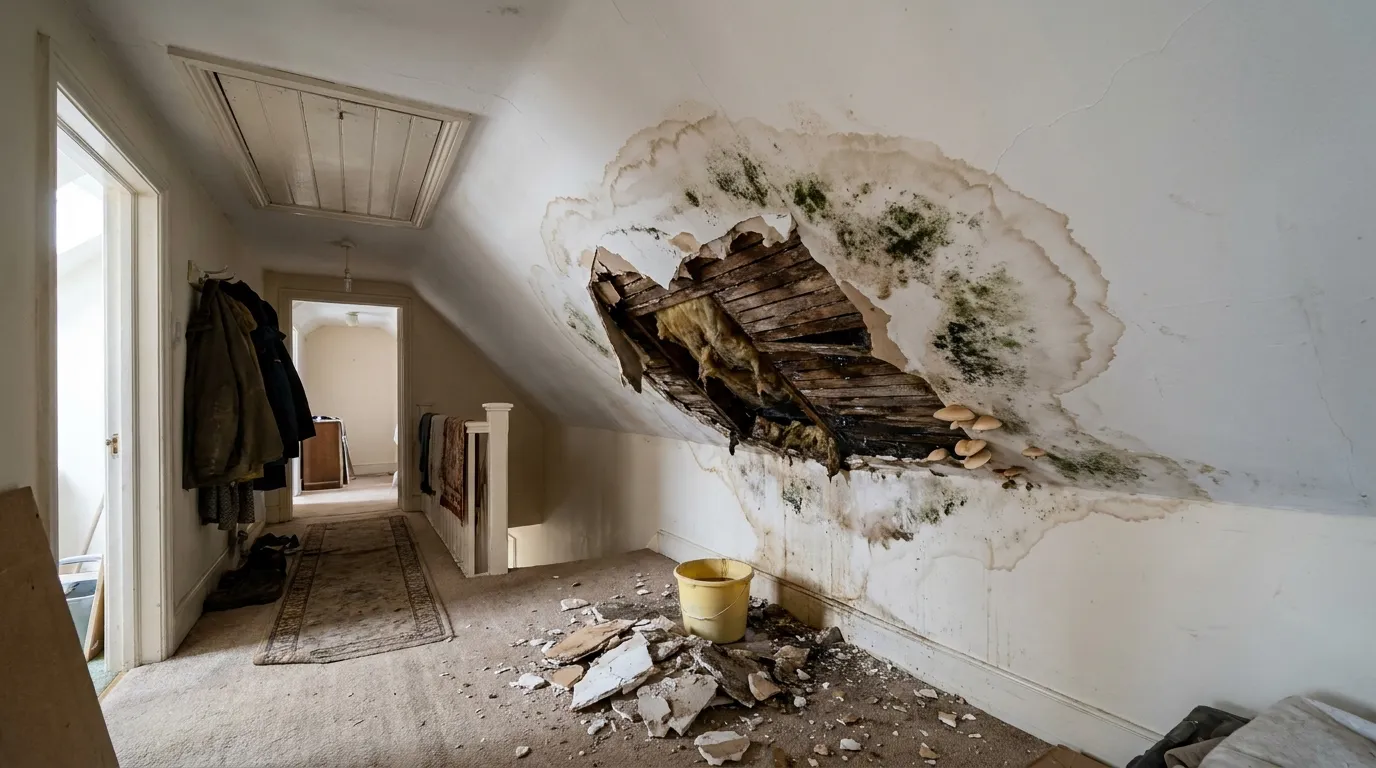
Progressive's own article: "Homeowners insurance doesn't usually cover mold damage or removal unless it's the result of a covered peril." Its examples of covered mold are a burst pipe, a water heater that bursts and floods the basement, or a fire put out with hose water that leaves the house damp. "However, if the mold has been around for weeks or longer, your policy likely won't cover the expense."
- What Progressive calls neglect: "a pipe leaking under the kitchen sink for months," or "a window isn't properly sealed and rain seeps inside continuously over time."
- Even when it's covered: "Remediation and removal of mold won't be covered... unless the mold resulted from a covered peril, and coverage is often limited."
- After a backup: Progressive says adding water backup coverage "could help cover mold resulting from water backing up into your home or your sump pump malfunctioning." See Progressive water backup coverage.
First, Check Who Insures You
Progressive sells policies from its own Progressive Home, the former American Strategic Insurance (ASI), and from separate insurers including Homesite, Plymouth Rock, Openly, Hippo and others. Homesite's program page: "Progressive is not affiliated with Homesite... Progressive is not responsible for the insurance claims or any other obligations of Homesite."
The rest of this page uses Progressive's own descriptions and the Progressive Home (ASI) policy forms. If another company is named on your declarations page, its mold limit and rules apply.
What the Progressive Home (ASI) Fungi Endorsement Says
We read the mold endorsement in an ASI homeowners filing approved in Tennessee in 2014: form ASI HO LF 11 09, "Limited Fungi, Wet or Dry Rot, or Bacteria Coverage." ASI's filing describes it as providing "a base limit of coverage of $5,000." A Yahoo Finance reviewer found the same in April 2026 on their own Progressive policy: "the limit was $5,000 for fungi, including mold, wet or dry rot, or bacteria." Your state and policy year may use a newer version, so ask for the form number on yours.
- Mold is excluded, then partly given back: the endorsement excludes "the presence, growth, proliferation, spread or any activity of 'fungi', wet or dry rot, or bacteria," then adds a limited coverage when a covered peril caused it.
- When the $5,000 applies: only when the mold is "a result of a Peril Insured Against that occurs during the policy period and only if all reasonable means were used to save and preserve the property from further damage."
- Fire and lightning are different: mold that results from fire or lightning isn't held to the $5,000.
- Water damage isn't capped by it: "If there is covered loss or damage to covered property, not caused, in whole or in part, by 'fungi'... loss payment will not be limited" by the mold limit, except where mold increases the loss.
- One quote showed it as its own line: a buyer comparing quotes said Progressive listed "water backup and mold as separate coverages (limited to $10k and $5k, respectively)."
What the $5,000 Has to Cover
The ASI form says the $5,000 "is the most we will pay" for four things together. The diagram above shows them.
- The mold damage itself: "the total of all loss payable under Section I – Property Coverages caused by 'fungi', wet or dry rot, or bacteria."
- Removal: "the cost to remove 'fungi', wet or dry rot, or bacteria from property."
- Tear-out to reach it: "the cost to tear out and replace any part of the building... as needed to gain access to" the mold.
- Testing: air or surface testing before, during or after removal, but "only to the extent that there is a reason to believe that there is the presence of" mold.
- One limit for the year: it applies "regardless of the number of 'occurrences', the number of claims-made." A second mold claim in the same policy period draws on what's left.
The 14-Day Rule, and the Hidden-Leak Exception
Most policies exclude a leak that went on over "weeks, months or years." ASI's filing says it replaced that phrase with a fixed number: "Stating a limit of 14 or more days reduces ambiguity."
The ASI fungi endorsement then rewrites the exclusion with an exception that matters for mold. It excludes damage "caused by constant or repeated seepage or leakage of water... over a period of 14 or more days unless such seepage or leakage of water... and the resulting damage is unknown to all 'insureds' and is hidden within the walls or ceilings or beneath the floors or above the ceilings of a structure."
- A leak you could see, 14 days or more: excluded, along with the mold it caused.
- A leak hidden inside a wall, floor or ceiling that no one in the house knew about: on this form, the 14-day rule doesn't apply. The water damage can be covered, and the mold up to $5,000.
- Expect a fight over "hidden" and "unknown": stains, a musty smell or a soft floor can be argued as signs you knew. Write down when you first noticed anything and what it was.
- Ask for the wording on your policy. The same Tennessee filing's base policy language has the 14-day rule without the hidden-leak exception; the fungi endorsement adds it. Other states and years may differ.
"Some Hidden When There Is Visible": Homesite Mold Denials
Homesite writes many of the policies sold as "Progressive Home, by Homesite." Two Homesite policyholders described how their mold claims went.
- HVAC pan overflow, denied: the owner said a clogged HVAC pan overflowed during a single day's use. Mold turned up behind a mirror that "would have been visible if we had looked behind it." The underwriter first said hidden damage should be covered, then denied it the next day, saying "there will always be some hidden when there is visible damage and that they wouldn't cover a seepage over time either."
- AC pan sloped the wrong way, $2,500: in a house bought the previous December, an attic AC pan overflowed for about two months and a plaster ceiling collapsed, with mold and mushrooms growing. Homesite paid $2,500 and called it "a supplemental coverage," saying the rest was negligence. A commenter: "Mold tends to be covered only when it a side effect of a covered claim."
- What to take from it: if a leak was hidden, photograph the spot before anything is moved, and get the plumber or HVAC tech to write down why it couldn't be seen.
Crawlspaces and Places You Could Have Checked
An ASI policyholder found mold on the floor joists and an outside wall in the crawlspace, from an outdoor faucet that had been "silently" leaking. The owner had leak detectors, but the water never reached them, and found it while shutting off the water for winter. Progressive sent two people to inspect and denied the claim.
- What an industry commenter said: "The fact that you had access to reasonably see it is not negated by the fact that's it's a crawl space." Another said the wording was standard ISO language, not specific to ASI.
- Why it matters: a crawlspace, attic or unfinished basement may be treated as a place you could have checked, not a leak "hidden within the walls."
- What helps: check the crawlspace and attic a few times a year, with dated photos, and put leak sensors where pipes and drains actually run.
What Happened in the Progressive Claims We Read
- Denied, then paid after six months: an agent helped a Progressive customer whose leak ran about 14 days while she was away. "They initially denied it said it was not covered." After more calls, "they paid $28k to replace the flooring in the entire room" plus access, drywall, tile and the plumbing, about $4.5k of it paid early for emergency plumbing. "It took me 6 months of negotiating total." The agent said she "had an endorsement specifically on the policy that covered losses like this."
- Mitigation paid, mold stalled: a Maryland family's pipe burst in February. Four months later, Progressive had "only paid mitigation—after three months of delay," hadn't agreed to test under the kitchen floor for mold after independent air tests showed it, and the premium had tripled. They estimated $80,000 to $100,000 in damage and were looking at a public adjuster.
- Paid, with a condition to renew: a Texas homeowner's sink-leak claim was followed by a letter requiring "a licensed contractor to sign off mold remediation before they will renew."
- The pattern: sudden leaks got paid; mold tied to a slow or arguably visible leak got denied or capped; and big water claims came with long waits, rate increases and renewal conditions.
Mold Claims and Your Renewal
- A mold sign-off may be required: in the Texas case, Progressive asked for proof of licensed remediation before renewing. A commenter said switching insurers won't hide the claim, since it's already on your CLUE report, and new insurers "will have tons of questions." Keep every remediation document.
- Water claims follow you: a Nevada Progressive customer with two water claims totaling about $8,500 got a non-renewal unless a water-flow monitor with automatic shutoff was installed.
- How they rate on claims: in J.D. Power's 2026 property claims study, Progressive Home scored 704, 7th of 15 and just above the 702 average. Homesite, which writes some policies sold through Progressive, scored 657, last of the 15.
Renters and Liability: No Mold Coverage at All
- Renters: the ASI renters form in the same filing (ASI HO 00 04 10 13) says: "We do not cover any loss due to 'fungi', wet or dry rot, or 'bacteria'." No $5,000 give-back.
- If someone says your mold made them sick: ASI's filing excludes liability for "bodily injury" or "property damage" arising out of "exposure to, existence of, or presence of any 'fungi'." That matters for landlords and anyone with guests or tenants.
- Ask before you need it: if you rent out a unit or have an older house with damp areas, ask your agent what your policy does for mold liability.
Next Steps
If you smell mold but can't see it, start with does a musty smell mean mold. For how mold claims work in general, see does insurance cover mold after a water leak and mold from a roof leak. For other insurers' mold rules, see Travelers mold coverage, Liberty Mutual mold coverage, Farmers mold coverage and Nationwide mold coverage.
Sources
- Progressive, Does Homeowners Insurance Cover Mold? and Property carrier information, read November 2026.
- Homesite, Program Details.
- American Strategic Insurance Corp., Tennessee homeowners form filing, SERFF AMSI-129408484, submitted April 7, 2014, approved (AM Best): forms ASI HO LF 11 09, ASI HO TN SP 12 12 and ASI HO 00 04 10 13, and the filing's explanatory memorandum.
- Yahoo Finance, Does homeowners insurance cover mold?, April 27, 2026.
- J.D. Power, 2026 U.S. Property Claims Satisfaction Study.
- U.S. EPA, A Brief Guide to Mold, Moisture, and Your Home: dry water-damaged areas within 24 to 48 hours.
- About 8 Reddit threads on Progressive, ASI and Homesite mold and leak claims (r/Insurance, r/HomeInsurance, r/classactions, r/personalfinance, r/MontgomeryCountyMD), read by Emergency Damage Pros in November 2026. US posts only. They show what happens in practice, not legal outcomes.
Documentation Checklist
- Take wide-angle photos of the entire affected room.
- Take close-up photos of the specific damage point.
- Save the broken part or pipe if a plumber replaces it.
- Keep all receipts for emergency repairs and mitigation.
- Do not throw away damaged property until the adjuster has seen it.
Severity Matrix: Medium
Requires professional extraction equipment and dehumidifiers. Moderate risk of mold and structural damage.
Who to Call
Licensed Plumber or Water Damage Restoration Professional
Insurance & Documentation
- Coverage depends on policy, cause, timing, exclusions, endorsements, and documentation
- Coverage depends entirely on your specific policy details, the exact cause of the damage, timing, exclusions, endorsements, and your documentation.
- This information is educational and does not constitute a guarantee of coverage or a promise that your claim will be approved.
Frequently Asked Questions
Does Progressive homeowners insurance cover mold?
Only when a covered peril caused it, such as a burst pipe or a water heater that failed. Progressive says mold that "has been around for weeks or longer" likely won't be covered. On Progressive Home (ASI) policies, covered mold is capped at $5,000.
How much does Progressive pay for mold?
Up to $5,000 on the Progressive Home (ASI) form we read, for the whole policy period no matter how many claims. That one amount covers mold damage, removal, tear-out to reach it, and testing. Mold caused by fire or lightning isn't held to it.
Does Progressive cover mold from a slow leak?
Not if the leak could be seen and ran 14 days or more. The ASI form makes an exception when the leak and damage were "unknown to all 'insureds'" and "hidden within the walls or ceilings or beneath the floors or above the ceilings."
Does Progressive pay for mold testing?
Yes, as part of the $5,000, but only when there's "a reason to believe" mold is present and it came from a covered loss. Testing, removal and tear-out all share the same limit.
Who decides my mold claim if I bought through Progressive?
The insurer named on your declarations page. Progressive Home policies are written by ASI companies; others are written by separate insurers like Homesite, which says Progressive is not responsible for its claims.
Does Progressive renters insurance cover mold?
Not on the ASI renters form we read, which says "We do not cover any loss due to 'fungi', wet or dry rot, or 'bacteria'." Check the form named on your renters policy.
Will a mold claim affect my Progressive renewal?
It can. One Texas customer was told to get a licensed contractor's mold remediation sign-off before Progressive would renew. The claim also goes on your CLUE report, which other insurers check.
Is Progressive good at paying mold and water claims?
Progressive Home scored 704 in J.D. Power's 2026 claims study, 7th of 15. Homesite, which writes some Progressive-sold policies, was last at 657. In the claims we read, sudden leaks got paid; slow-leak mold was denied or capped.
Get Professional Help Now
Connect with a local water damage expert immediately.